
It's 2 a.m. and you're on the kitchen floor, or in a spare room, or in a bed that suddenly feels too big. Your phone has three unanswered messages about keys, bills, pickup times. You're not even sure if you're sad, relieved, furious, or numb, because you keep cycling through all four before sunrise.
That's normal in the early phase, and it doesn't mean you're failing at this. Learning how to recover from a divorce isn't about feeling better fast. It's about building a floor under your life while the feelings catch up, in phases you can manage.
The First Days and Nights After Separation
The first nights often feel physical before they feel emotional. You can't sleep, then you crash. You cry in the shower, feel oddly calm while making tea, then get hit by guilt for feeling calm. Insomnia, intrusive thoughts, sudden crying, and relief mixed with guilt are common reactions, not proof that something is wrong with you.
Your brain is also trying to solve logistics at the worst possible moment. Who has the car documents. Whether the joint account still works. What you're supposed to say at work on Monday. Don't try to answer your whole future before breakfast. Separate what protects you tonight from what can wait until next week.
Your First Seventy Two Hours
Keep the list embarrassingly small. You're stabilizing, not rebuilding.
- Call one steady person: Tell one friend, sibling, or trusted colleague what's happened and ask them to check in tomorrow. Don't open this to a group chat yet.
- Lock down the basics: Gather identification, bank cards, keys, medication, and important documents in one safe place. Change passwords if you have any safety concern.
- Decide where you'll sleep: Pick the safest, quietest option for the next few nights, even if it's temporary and imperfect.
- Postpone big decisions: Selling property, quitting a job, moving cities, and long explanatory messages to your ex can wait unless safety forces your hand.
Practical rule: If a decision doesn't protect your safety, your children, or your access to money and documents tonight, it probably belongs on next week's list.
Skip the announcement post. Posting a polished statement on social media before you have a plan invites opinions, screenshots, and questions you don't have energy to answer. Tell the few people who need to know directly, in plain language. Everyone else can learn later, when you choose the words.
Eat something simple. Drink water. Put your phone in another room for an hour if checking it keeps spiking your adrenaline. These moves won't heal grief, but they'll stop exhaustion from making every hard feeling feel like an emergency.
Building the Practical Foundations in Your First Month
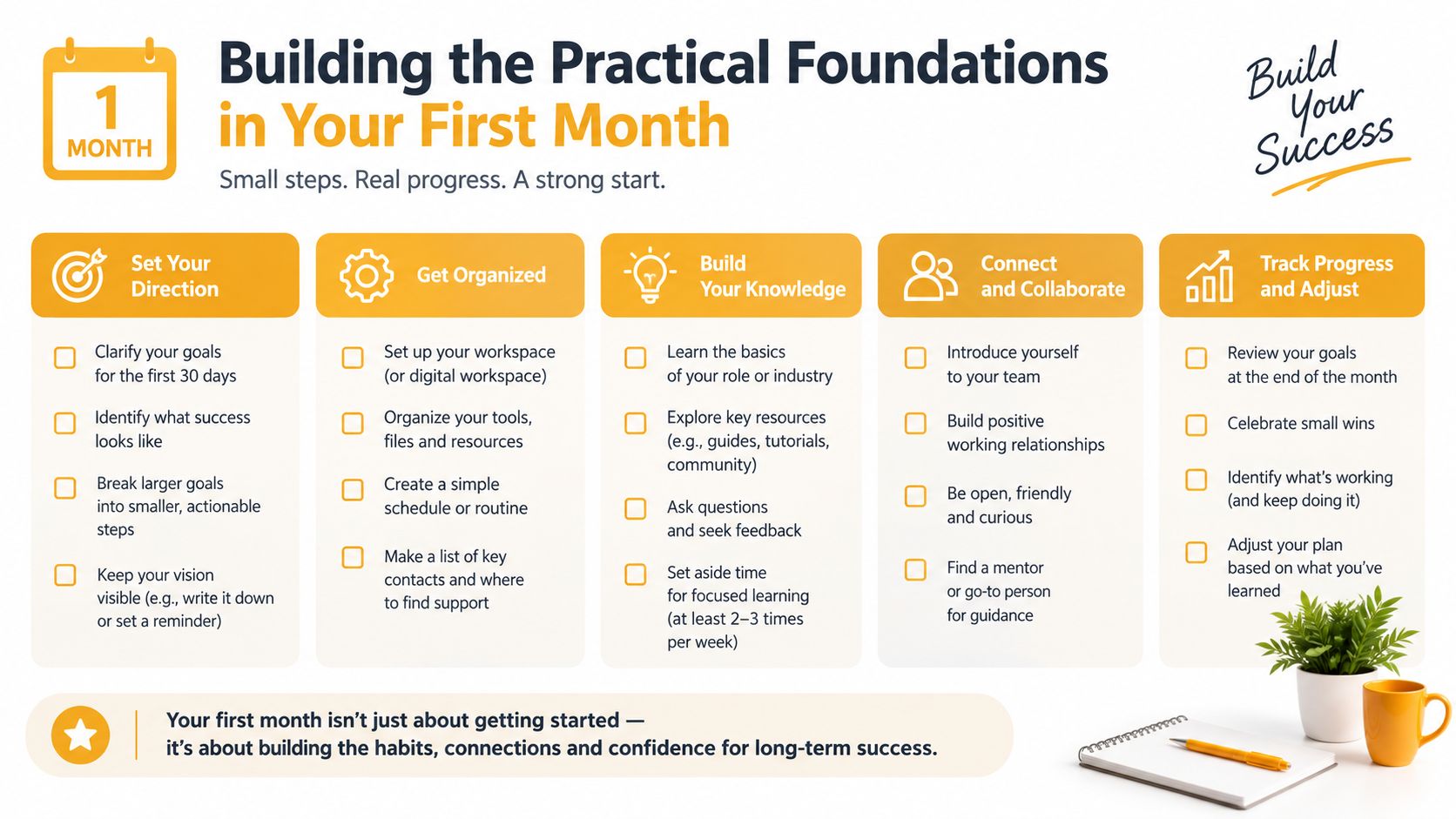
After the acute crash, people don't need inspiration. They need structure that still works on a bad Tuesday. Start with a baseline audit so progress stops feeling invisible. Write down how you're doing with mood, sleep, daily functioning, finances, social support, and safety, then reassess every two to four weeks rather than judging yourself daily.
That audit matters because recovery isn't only an internal mindset project. In longitudinal data following 208 people across a 17 year study, adjustment was associated with resources and circumstances including income, employment, attitudes toward the dissolution, and whether the person initiated the divorce, as described in long term research on divorce adjustment and resources. Unemployment, financial instability, isolation, and loss of structure aren't character flaws. They're problems that need concrete plans.
Two Anchors for Your Day
Build your routine around a consistent wake time and one meal shared with another human, in person or by phone. Add a short walk, a shower, and one small mastery task you can finish, like paying one bill or clearing one drawer. You're teaching your nervous system that the day has edges again.
Then work through the avoided paperwork in short bursts. Separate accounts where appropriate, update beneficiaries, secure tax records, list shared debts, and get child arrangements in writing. This isn't legal advice, and you may need a lawyer for contested issues. It is a reminder to do, delegate, or defer each item deliberately instead of carrying all of it in your head at 3 a.m.
- Do in fifteen minutes: Photograph key documents, list account logins, set a bill reminder, text one person for help with a specific task.
- Delegate if you can: Ask a friend to sit with you during admin, help with a school run, or research local support options.
- Defer on purpose: Major purchases, dating decisions, and nonurgent home changes can wait until sleep and money feel steadier.
By the end of month one, the goal isn't a new life. It's a low drama floor, predictable sleep, food, money visibility, and fewer decisions ambushing you each morning.
Rebuilding People and Support Around You
Isolation makes divorce harder in a measurable way, not just a sentimental one. In an Australian study of marital loss, social support variables explained approximately 37% of the differences in mental health among men who had separated, according to Australian research on social support after separation. Connection isn't a soft extra you add after you've recovered. It's part of how recovery happens.
Structured support helps too. A large Danish randomized controlled trial of an online program started by 1,856 divorcees found, over one year, significantly reduced hostility with a medium sized effect, and a separate randomized study found intervention participants reported an average of 5.82 fewer sick days than controls one year after divorce. That doesn't prove a digital program replaces therapy. It does show that dependable contact plus structured exercises can improve concrete outcomes like hostility and work absence.
Rebuild Your Support Map
Draw three circles on paper. In the center, put people you can call when you're not okay. In the next circle, put people who can do practical things. In the outer circle, put low effort social contact, coworkers, neighbors, a class, a walking group, anyone who gets you out of the house without requiring a full update.
Some friends will pick sides, disappear, or only want the upbeat version. Grieve that, but don't chase everyone. Ask for specific help instead of performing recovery. Say, "Can you call me Thursday evening for twenty minutes" or "Can I come over and cook while we watch something." People respond better to a clear request than to a vague SOS.
Set a modest target of two supportive contacts weekly. If in person support is thin, use structured check ins, guided exercises, or a support group to fill the gap while you rebuild. WHO notes psychological self help can be a scalable way to expand access, and both guided and unguided approaches can reduce symptoms, in its guidance on psychological self help interventions.
Escalate quickly if you have severe depression, self harm thoughts, abuse, coercive control, or you can't function at work or at home. Booking professional help isn't defeat. It's the right level of care for a heavier load.
Working Through Rumination and Grief on Purpose
Rumination is the loop where you replay the last argument, rehearse a better comeback, and audit ten years for the moment it all went wrong. Trying to suppress those thoughts usually gives them more power. You end up monitoring your mind all day, then blaming yourself when the thought returns at night.
A more workable approach comes from Acceptance and Commitment Therapy, or ACT. You identify recurring triggers, practice allowing thoughts without obeying them, clarify what matters to you, and turn that value into a small scheduled action. In a randomized controlled trial of 34 divorced women, eight 90 minute therapist led ACT sessions reduced mean rumination scores from 61.94 to 41.82 and increased distress tolerance scores from 36.59 to 62.06, with both changes statistically significant versus control at p < 0.001, as reported in trial evidence for ACT after divorce. The sample was small and clinically referred, so treat it as support for a structured option, not a promise.

A Worked Example You Can Copy
Take the thought, "I wasted ten years." Instead of arguing with it, label it. Say, "I'm having the thought that I wasted ten years." That small shift is cognitive defusion. You're seeing the thought as a mental event, not a verdict.
Then ask what value is hiding under the pain. Maybe it's security, family, loyalty, or contribution. Convert that value into one action this week, like opening a savings account, planning a steady Sunday routine with your child, or calling a friend you've neglected. Acceptance isn't resignation. It's allowing painful thoughts to be present while you choose behavior that fits your values.
Feeling grief on purpose doesn't mean staying in pain all day. It means giving the loss a place and a time, so it doesn't run every hour.
If you initiated the divorce, your grief still counts. You can mourn the family you hoped for and still believe leaving was right. You can honor what was real without reopening the door. If rumination is wrecking your sleep, work, safety, or daily functioning, add a licensed clinician instead of trying to outthink it alone.
When the Ex Is Part of the Problem High-Conflict and Parallel Parenting
Most standard advice assumes two reasonable adults who just need better communication. That's not your situation if every exchange becomes a threat, a guilt campaign, or a scene in front of the children. In high conflict cases, pushing for friendly cooperation can keep you destabilized and exposed.
Research identifies high conflict and low willingness to co-parent as key factors associated with poorer parental and child outcomes, and recent review evidence describes parallel parenting as more workable in some high conflict separations, in research distinguishing parallel parenting in high conflict cases. Parallel parenting means highly structured, low contact coordination focused only on the children. Less contact can sometimes support better recovery.
What Parallel Parenting Looks Like Daily
Keep communication written, brief, and boring. Use one channel for logistics, state the date, time, place, and need, then stop. Don't debate motives, history, or character in the thread. If a message isn't about a child related decision that requires your input, it usually doesn't need a reply today.
- Written logistics only: Pickup is Friday at 5 p.m. at school. Please confirm.
- Neutral tone: No sarcasm, no late night paragraphs, no explaining yourself to earn approval.
- Document calmly: Save messages, missed pickups, and agreements in one folder. Facts help if legal support becomes necessary.
- Set escalation rules: Decide in advance what triggers a lawyer, mediator, clinician, or emergency contact, and review clear safety guidance for high risk situations before conflict spikes.
Forgiveness isn't a prerequisite for healing, and reconciliation isn't the finish line. If there's abuse, coercive control, stalking, or threats, prioritize safety planning and professional or legal support over any communication technique. Successful post divorce functioning can mean dependable, child centered coordination, not emotional closeness with your former spouse.
Carrying the Load Alone Money Caregiving and Crisis Routines
Sometimes what looks like low motivation is material overload wearing a disguise. You're the only adult awake at 6 a.m., you're covering rent on one income, and a sick child can blow up your whole workweek. Telling yourself to think positive won't fix a capacity problem.
Research on post divorce families during crises describes four linked problems, fragile co-parenting, unequal concentration of parenting work, children carrying emotional burdens, and the need to reorganize boundaries and decision making, as outlined in research on post divorce families under crisis conditions. Emotional, practical, and informational support all contribute to readjustment. So measure resources, not just mood. Track caregiving load, money stress, available help, sleep, and whether you ate a real meal.
Build Low Bandwidth Systems
Start with a childcare map. List who can cover an emergency pickup, who can help for two planned hours, and who is only good for advice. Ask directly and negotiate specifics. "Could you take Saturday morning once a month so I can do admin and sleep" works better than hoping family notices you're drowning.
Create a simple crisis routine before the crisis. Keep a folder with school contacts, medical details, spare keys, a backup driver, and a short script for your employer. Stock a shelf stable dinner, basic medicine, and phone chargers where you can find them half asleep. When the car fails or a child spikes a fever, you follow the routine instead of improvising through tears.
For money, aim first for visibility, then a buffer. List essentials, due dates, and minimum payments. Automate what you safely can, cancel quiet drains, and build toward one month of essentials in small increments if circumstances allow. If debt or legal costs are escalating, get qualified financial or legal advice early. Shame delays help and usually makes the numbers worse.
- Protect sleep like childcare: A fixed wake time, dimmer evenings, and no financial spreadsheets in bed.
- Protect food like medication: Repeat two easy dinners, keep breakfast boring, accept help with groceries.
- Shrink self care: Ten minutes outside, a shower with the door locked, breathing in the car before pickup, one page of journaling.
You don't need more willpower when you're carrying two households worth of labor in one body. You need fewer open loops.
Four Recovery Phases at a Glance
Recovery is usually gradual, and longitudinal evidence supports judging progress over months. A UK study using nine waves from 2009/2010 through 2017/2018 followed 909 adults aged 50 or older and found depressive symptoms rose before and around dissolution, then declined after separation and returned approximately to previous baseline levels, as shown in UK longitudinal findings on symptoms after separation. Childless adults adjusted faster than parents in that study. Use phases to pace yourself, not to grade yourself.
| Phase | Timeframe | Core Focus | Practical Targets | What to Track |
|---|---|---|---|---|
| Stabilize | Days 1 to 14 | Safety and sleep | Documents secured, one trusted contact, temporary sleep plan | Sleep, safety, daily functioning |
| Audit and structure | Weeks 3 to 6 | Routine and resources | Baseline audit, money list, written child logistics | Mood, bills paid, support contacts |
| Practice new patterns | Weeks 7 to 10 | Skills and connection | ACT style defusion, two weekly contacts, crisis routine | Rumination, social connection, energy |
| Consolidate | Months 3 to 4 | Review and decide | Reassess goals, adjust boundaries, plan next steps | Symptom intensity, capacity, unmet needs |
Revisit your progress on the same date each month. Note what's steadier, what still hurts, and what support you need next. Structured check ins, journaling, and protocol based self guided tools can support the work between harder days. They can't diagnose, manage emergencies, or replace clinical care, and WHO frames self care as complementing health workers rather than replacing them in its overview of self care for health and well being.
If warning signs appear, pause expansion and get support. That includes worsening depression, panic that stops you working, unsafe contact from an ex, or caregiving load that leaves you unable to sleep or eat. A smaller plan you can repeat beats a heroic plan that collapses by Friday.
What Most Divorce Advice Skips Real Reader Questions
How Do I Recover When Contact With My Ex Keeps Destabilizing Me
Reduce the surface area. Move communication to writing, limit it to logistics, and give yourself a recovery buffer after handovers, even if it's just a walk around the block before you reenter the house. Don't measure healing by whether you can have a warm conversation. Measure it by whether contact disrupts your sleep and functioning less over time.
If contact involves threats, intimidation, or coercive control, stop treating it as a communication problem. Get legal, clinical, or emergency support. Your plan should prioritize stabilization before reflective exercises about the relationship.
Does Recovery Require Forgiveness
No. You can recover without forgiving, reconciling, or deciding the marriage was secretly a gift. For some people forgiveness comes later and helps. For others, pressure to forgive becomes another way to silence anger and grief. Aim for freedom from daily destabilization, not a performance of peace.
What If My Motivation Collapses for Weeks
Check capacity before you label yourself lazy or broken. Look at sleep, caregiving hours, money pressure, conflict level, and available help. Then shrink the target until it's doable on your worst normal day, one bill, one walk, one text. If low mood is severe, persistent, or paired with hopelessness or self harm thoughts, treat that as a clinical signal and get professional care.
When Is a Self Guided App or Journal Enough
Use self guided tools when you need structure for grief, anger, loneliness, anxiety, sleep, boundaries, or rebuilding routines, and you can still function safely day to day. WHO distinguishes everyday self care actions from evidence based self care interventions, including digital tools used with or without direct supervision, in its fact sheet on self care health interventions. That's the right frame, useful practice, clear limits.
An app can feel like therapy because it organizes reflection and skills practice around your needs, but it isn't therapy, a crisis service, or a diagnosis. If you're unsure where a tool's limits sit, check the answers to common questions about scope and support and choose human care when risk is high.
If you want steady, day by day structure while you work through grief, rumination, sleep disruption, low motivation, or co-parenting stress, Luno: Self Care turns your daily check-ins into a personalized next-day plan you can follow. It feels like therapy in the way it helps you reflect and practice skills, but it is not therapy or a replacement for a licensed clinician. You can find the topic you need most right now, from grief and loss to anxiety, self esteem, relationship patterns, and rebuilding routines, and start with one small step tonight.