You settle onto the cushion, set a timer, close your eyes, and follow three breaths. Then your chin drops. You startle awake, wonder whether you missed the entire practice, and decide you must be bad at meditation.
You're probably asking the wrong question. How do you meditate without falling asleep? depends on what you want from the session. If you want alertness, focus, or a mood lift, you need a wakeful practice. If you're meditating at night because you want to sleep, drowsiness may be the result you're looking for.
The Moment Your Eyes Get Heavy on the Cushion
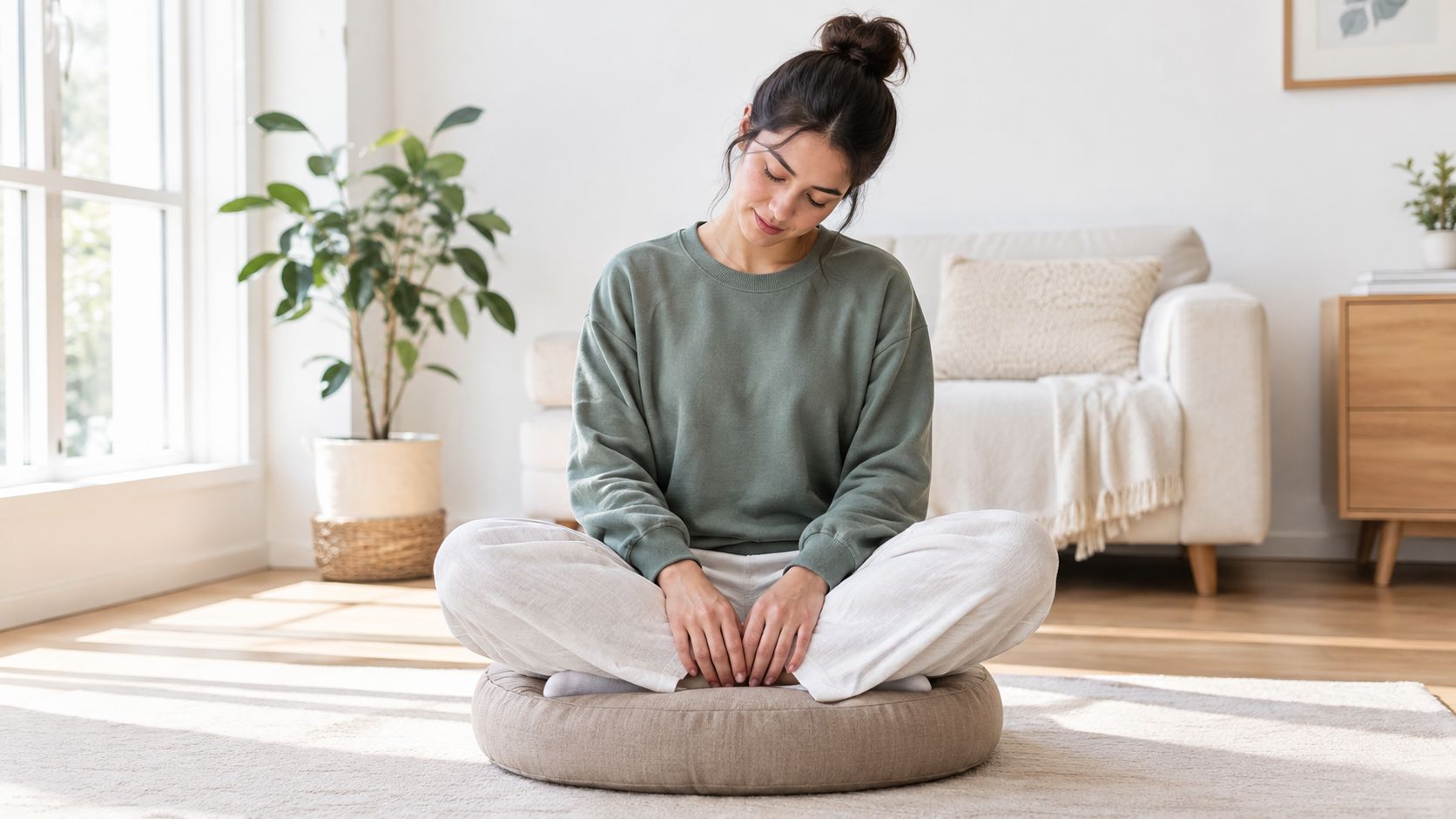
The familiar scene is simple. You've chosen a quiet room, lowered the lights, sat comfortably, and turned your attention toward the breath. Within a few minutes, your eyelids feel weighted, your thoughts become vague, and your head begins to dip.
That doesn't mean meditation has failed. It may mean your body has finally found a quiet enough moment to reveal how tired you already were. It may also mean your chosen posture, time, and technique are sending stronger sleep cues than wakeful-attention cues.
Start with the outcome, not the posture
Before you straighten your spine or open your eyes, answer one question: Am I trying to become more awake, or am I trying to transition into sleep?
Those goals need different conditions. A daytime focus practice should involve more sensory input, a more upright position, and enough structure to keep attention engaged. A bedtime practice can allow the body to soften, the breath to lengthen, and drowsiness to take over.
Mindfulness isn't designed to force sleep onset. Its useful role is to help you notice what's happening clearly, including the fact that you're sleepy, then choose an appropriate response. If you're genuinely tired at bedtime, ending the session and going to bed may be better meditation than fighting your biology.
Practical rule: Don't treat sleepiness as a character flaw. Treat it as information about your goal, your energy, and your setup.
Research involving experienced meditators has reported improved psychomotor vigilance and little evidence of sleep debt during meditation. Longitudinal mindfulness findings have also associated practice with increased wakefulness and reduced sleep propensity. That creates an important distinction: meditation can cultivate alert awareness, but it can also expose ordinary fatigue when you sit in stillness.
Most generic advice skips that distinction. It tells everyone to sit straighter and open their eyes, even when they're practicing at night and need rest. The better approach is to decide whether this session is for wakeful attention or sleep transition, then adjust the practice accordingly.
Why Meditation Pulls You Toward Sleep
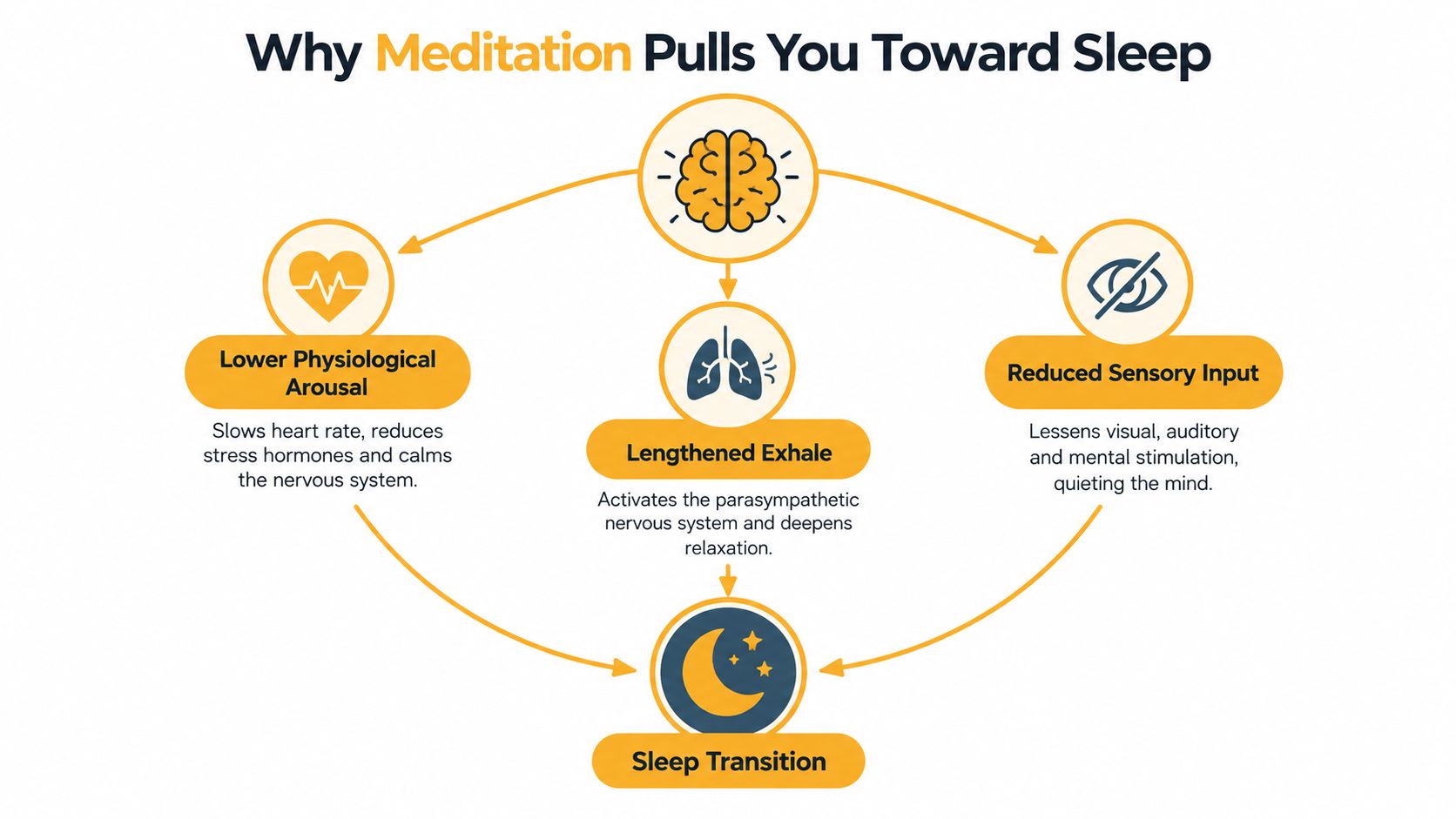
Meditation often removes the stimulation that keeps you awake. You stop checking your phone, reduce visual input, settle your muscles, and attend to a narrow sensory object. Your breathing may become slower and your exhale may lengthen. For an already tired nervous system, that combination can feel like an invitation to sleep.
Meditation-related drowsiness also overlaps with the early stages of sleep. Brain activity during relaxed meditation may resemble brain waves associated with the moment a person begins falling asleep. In everyday terms, the calm state you're entering and the sleep state you're approaching can share some of the same signals.
Relaxation isn't the same as sleep
A relaxed body can still support sharp awareness. The problem appears when the practice removes so much stimulation that awareness loses its grip. Closed eyes, a reclined position, a warm and dim room, a long session, and a natural sleep window all push in that direction.
That's why a person can feel alert when answering emails, then become drowsy within minutes of sitting still. The meditation didn't necessarily create the fatigue. It removed the activity that was masking it.
The same mechanism explains why experienced meditators aren't automatically immune. Skill can improve the ability to notice subtle changes in attention, but it doesn't erase inadequate sleep, shift work, sedating medication, or a possible sleep disorder. If those factors are present, posture alone won't solve the problem.
Drowsiness is a signal, not a verdict
When the mind becomes foggy, distinguish between two experiences:
- Relaxed clarity: Your body feels calm, but you can track the breath, hear sounds, and notice thoughts.
- Sleep transition: Attention becomes discontinuous, the head drops, time disappears, and you wake with little memory of what happened.
The first is a useful meditation state. The second is sleep arriving.
Use that distinction without judgment. If you want to stay alert, increase sensory input before the session collapses. If you're practicing as part of a bedtime routine, let the transition happen instead of turning sleep into a test you must pass.
An Alertness Toolkit You Can Mix and Match
You don't need a perfect meditation posture. You need a few reliable levers that make wakefulness more likely. Choose two or three, not all of them at once, and change the combination when your attention starts to fade.
Posture
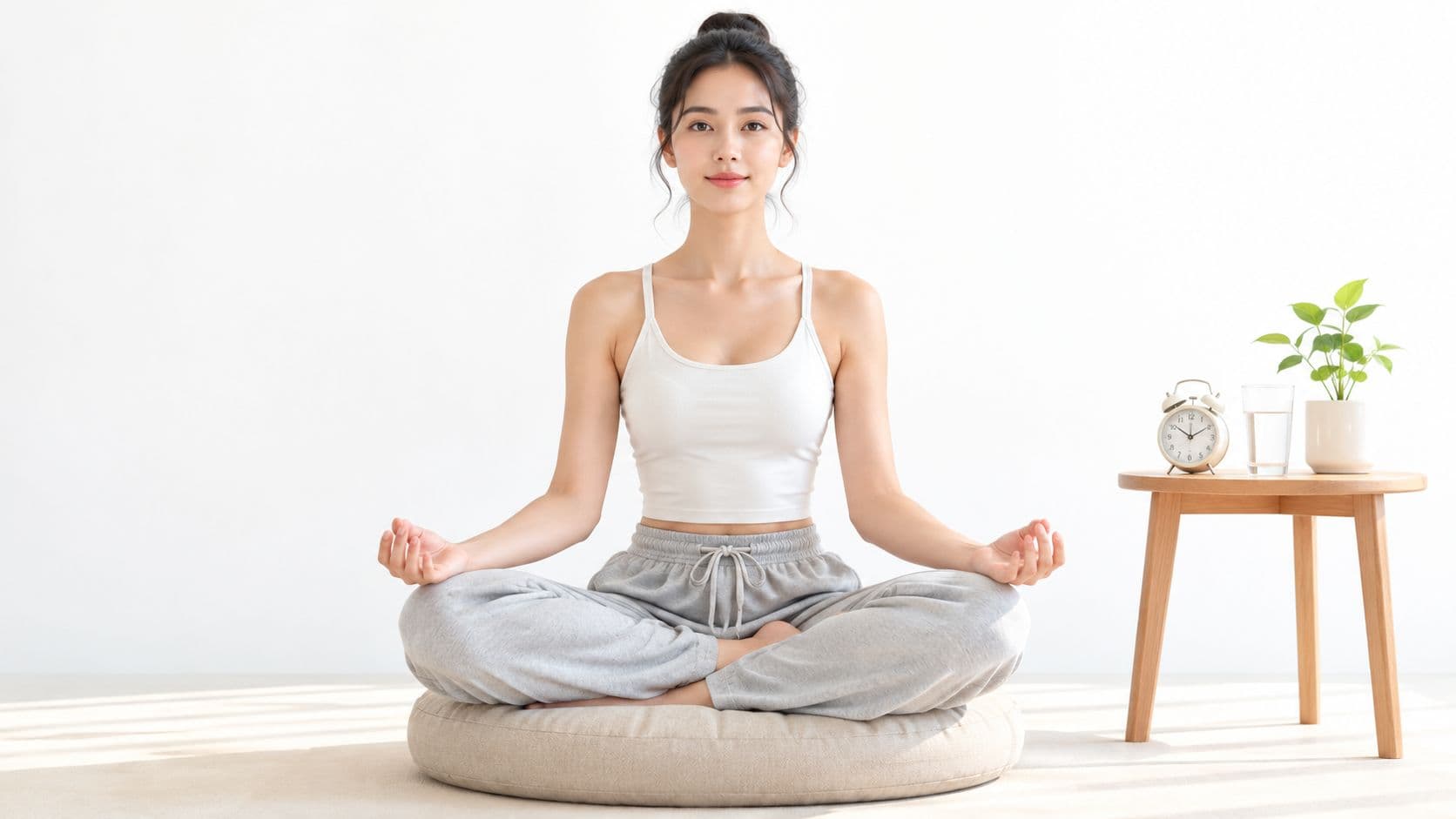
Sit on a cushion or chair with your pelvis supported and your spine tall. Let your shoulders relax without collapsing your chest. If sitting still keeps failing, stand or switch to walking meditation.
Standing works because it makes sleep physically harder. It also changes the message your body receives. You're resting, but you aren't arranging yourself for bed.
Eyes
Closed eyes reduce visual stimulation. If they repeatedly pull you toward sleep, open them and keep a soft downward gaze. Look at one quiet point rather than scanning the room.
Try this: place your gaze a short distance ahead, soften the muscles around your eyes, and continue following the breath without staring intensely. You're adding enough input to remain present without turning the session into visual concentration.
Breath
Natural breathing is usually the best starting point, but an overly passive breath can let attention drift. Add a simple structure when you need more engagement. Count each exhale, count cycles, or notice the beginning, middle, and end of every breath.
Don't force deep breathing or strain to create alertness. The aim is a clear anchor, not respiratory effort.
Sensory anchors
Give the mind a task with edges. Count breaths, repeat a short phrase, feel the contact between your feet and the floor, or scan the body in a deliberate sequence. A sensory anchor works better than a vague instruction to “stay mindful.”
Micro-movement
Small movements can interrupt the slide into sleep without destroying the meditation. Flex your fingers, press thumb and forefinger together, roll your shoulders, or shift from seated practice to slow walking.
Use movement as a reset, not a constant distraction. When you notice your head dipping, make one deliberate adjustment, re-establish the anchor, and continue.
A brief, upright practice is often a better first experiment than a long, comfortable session. The Luno FAQ can also help readers understand how self-guided wellness support fits into a broader care routine.
The fastest rescue sequence is simple: open your eyes, straighten your posture, add a counting anchor, and move if needed. If that doesn't restore clear attention, stop trying to win and decide whether your body needs sleep.
Daytime Practice vs Bedtime Practice A Decision Rule
Most advice assumes every meditation should produce the same state. That's a mistake. A meditation at seven in the morning shouldn't be designed exactly like one at eleven at night.
Use this decision rule:
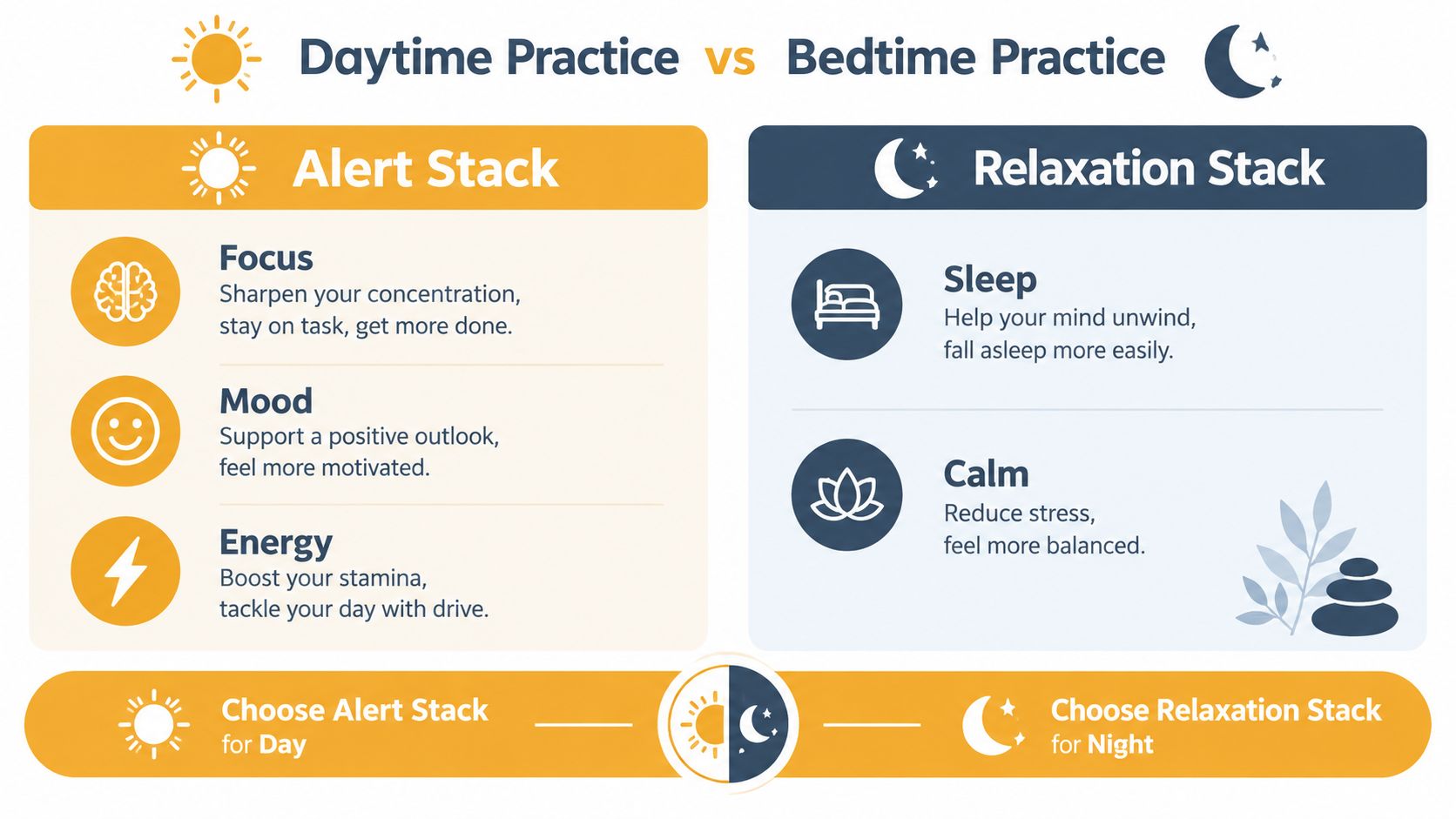
- If you want focus, alertness, or a mood lift, choose the alert stack.
- If you want calm and a transition toward sleep, choose the relaxation stack.
The alert stack
Use an upright chair or cushion. Keep your eyes open or softly focused downward. Choose a brighter space with slightly cooler air, and use a short timer. Breath counting, a body scan with active attention, or walking meditation can keep the mind involved.
This stack suits a morning reset, a midday pause, or any practice where you need to return to work with greater clarity. If your attention becomes dull, change position immediately rather than waiting for sleep to take over.
The relaxation stack
Use a reclined or comfortably supported position if that's safe and appropriate. Lower the lights, let the breath become easy, and allow the exhale to lengthen naturally. You don't need to keep your eyes open or maintain a rigid spine.
At bedtime, drowsiness is not an interruption. It may be the bridge between mental activity and sleep. Trying to remain perfectly alert at that point can create performance pressure and make winding down harder.
Read the switch signals
Switch from alert practice to rest when your body shows clear sleep-transition signs and you're near bedtime. Switch from gentle practice to a more active method when you need to function, but your attention is repeatedly breaking apart.
Forcing alertness at seven in the morning after too little sleep usually won't work through determination alone. Likewise, forcing wakefulness late at night can turn a useful wind-down into another task you feel compelled to perform.
The mature goal isn't to defeat drowsiness every time. It's to recognize which state serves your life right now and choose the practice that supports it.
Timing, Length and Environment That Keep You Awake
A session begins before you close your eyes. If you sit after a heavy meal, in a warm room, at the end of an exhausting day, you've already stacked the conditions toward sleep. Change the setup before blaming your concentration.
For alertness, practice earlier in the day or after light movement. A short walk, gentle stretching, or a few standing exercises can make the transition into stillness less abrupt. Natural light and a room with some visual clarity can also provide wakeful cues.
Keep alertness sessions short enough to preserve quality. A 2018 study cited by Healthline's explanation of meditation-related sleepiness found benefits from sessions as short as 13 minutes, supporting the practical case for brief practice rather than assuming longer is better.
Set up the room deliberately
Wear clothing that lets you sit upright without overheating. Avoid meditating immediately after eating if meals reliably make you sleepy. If you need a quick reset, wash your face with cool water, then sit somewhere with enough light to keep your eyes and mind engaged.
Don't use caffeine as the main solution. If you need it to remain conscious during ordinary daytime tasks, investigate your sleep and health rather than escalating stimulation.
Three ready-made templates
| Session | Length | Posture | Environment | Anchor |
|---|---|---|---|---|
| Morning reset | 5 minutes | Upright chair or standing | Natural light, cool air | Count each exhale |
| Midday focus block | 15 minutes | Upright cushion or chair | Bright, quiet workspace | Open-eye soft gaze and body scan |
| Evening wind-down | 10 minutes | Supported or reclined | Warm, dim lighting | Natural breath and gentle sound |
Start with the template that matches your goal, not the time you think meditation is supposed to happen. If you fall asleep during the morning reset, shorten it further or practice after movement. If the evening session leaves you alert, soften the lighting and remove the demand to maintain wakefulness.
Building a Two-Week Alert Practice With a Self-Guided Companion
Maya did what many beginners do. She treated every sleepy session as a discipline problem. So she pushed harder, stayed on the cushion longer, and kept getting the same result: a drifting mind, heavy eyelids, then a half-nap she called meditation.
What helped first was not more effort. It was better sorting.
She started each morning by rating one thing before she sat: was she tired, tense, or clear? That single check changed the whole practice. If she felt dull, she used a short upright session in a chair and tracked whether attention held for even a few breaths. If sleepiness crept in, she opened her eyes and counted exhalations. If she felt keyed up instead of tired, she dropped the soothing body scan and used a narrower focus exercise.
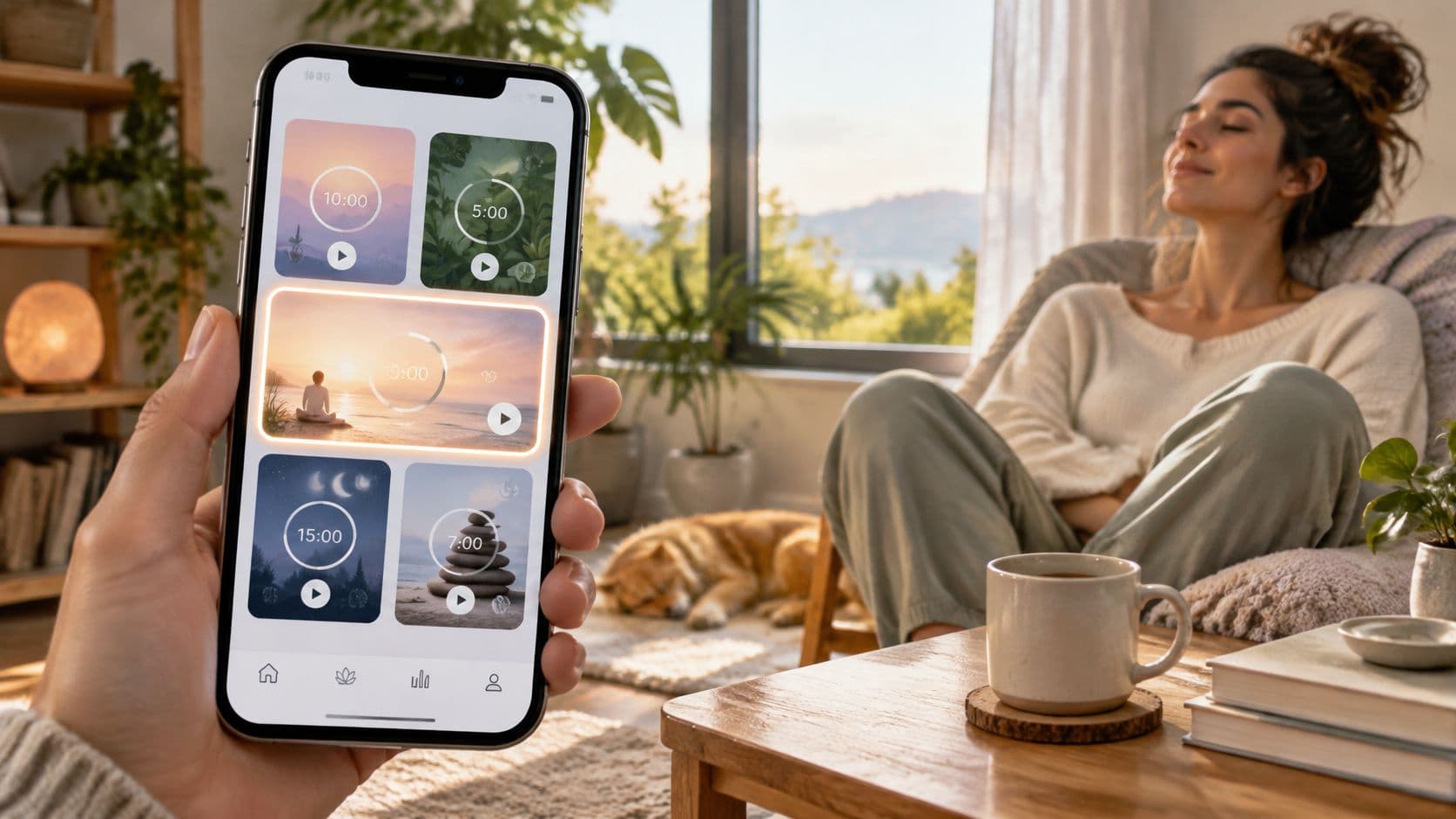
That is the right use for a self-guided companion. It should not lock you into one calming script and call that progress. It should help you choose the practice that fits your state, then notice what happened while it is still fresh. Over two weeks, Maya could compare timing, posture, mood, and alertness without relying on vague memory or self-judgment. A structured tool like the Luno self-guided wellness app can support that kind of daily adjustment.
What the routine builds over two weeks
The point is continuity. You are building pattern recognition.
By the end of two weeks, Maya can see what her body has been saying all along. A brief session after movement keeps her present. A reclined position puts her to sleep. Some mornings call for attention training. Other mornings call for more rest, not another attempt to force alertness.
A useful companion can guide reflection and offer exercises across sleep, anxiety, mood, relationships, or attention. It may resemble therapy in structure because it uses psychological tools, but it isn't therapy, it does not diagnose, and it should not replace a qualified clinician or an ongoing therapeutic relationship.
Keep the boundary clear: Self-guided structure can support practice between professional appointments, but it does not take on the role of psychotherapy.
That is the actual goal here. Perfect wakefulness is not the target. The target is enough honest information to make a clean choice: train attention when you are alert, or stop and sleep when what you need is sleep.
When Drowsiness Is a Signal Worth Taking Seriously
Occasional heaviness during meditation is usually a practice-design problem. Persistent sleepiness during ordinary daytime activities is a different matter.
Track a few details for several sessions: the time you practiced, how much you slept the previous night, caffeine, medication, and whether you also become sleepy while reading, working, or talking. Look for a pattern rather than judging a single session.
Escalation rule: Adapt the practice first, monitor the pattern second, and seek professional input when impairment persists.
Evidence around meditation-related effects is mixed. Mindfulness-based sleep interventions can reduce subjective sleepiness and fatigue, but meditation can also increase arousal or produce unwanted effects for some people. One mixed-methods study reported negative meditation effects in 21% of participants, while 63% viewed meditation as entirely risk-free, a mismatch discussed in the reported study on meditation effects.
Stop any practice that leaves you impaired in an unsafe situation, especially before driving. If excessive daytime sleepiness continues despite adequate sleep, discuss it with a clinician. Fatigue may relate to inadequate sleep, shift work, sedating medication, a sleep disorder, anxiety, low mood, ADHD, or another health concern.
You can also review the Luno safety guidance for the proper limits of self-guided support. The right response isn't to force yourself through every session. It's to adjust intelligently, protect your safety, and ask for professional help when the pattern deserves more than a posture change.
Luno: Self Care offers guided reflections, personalized daily plans, and structured exercises for sleep, anxiety, mood, stress, relationships, and focus. Use its check-ins to build a meditation routine that responds to your actual energy instead of forcing the same practice every day, then explore Luno: Self Care to get started.