You open Headspace before work, settle into a guided session, and feel calmer for a few minutes. Then your workload changes, sleep gets patchy, or your mood dips, and the routine stops fitting. Missing a session becomes missing a week. You don't necessarily need more discipline. You may need a different kind of support.
The most useful Headspace alternatives aren't interchangeable. Some make bedtime easier, some remove subscription costs, and others teach meditation through a structured course. A virtual pet might help you start small; an adaptive plan might suit you better when yesterday's advice doesn't match today's mood.
Luno: Self Care takes that last approach, turning check-ins into personalized next-day plans while remembering helpful exercises and setbacks. It feels like therapy, but it is not therapy. Its ten structured journeys and Custom Package give you a starting point across many topics without turning self-guided support into clinical care.
Choose for the life you have:
- Bedtime and winding down: Calm or Aura.
- Free access and exploration: Insight Timer or Medito.
- Structured learning: Balance, Waking Up, or Healthy Minds Program.
- Gentle routines and family practice: Finch or Smiling Mind.
- Daily adaptive support: Our check-in-led plans, especially when continuity matters more than browsing.
1. Luno Self Care
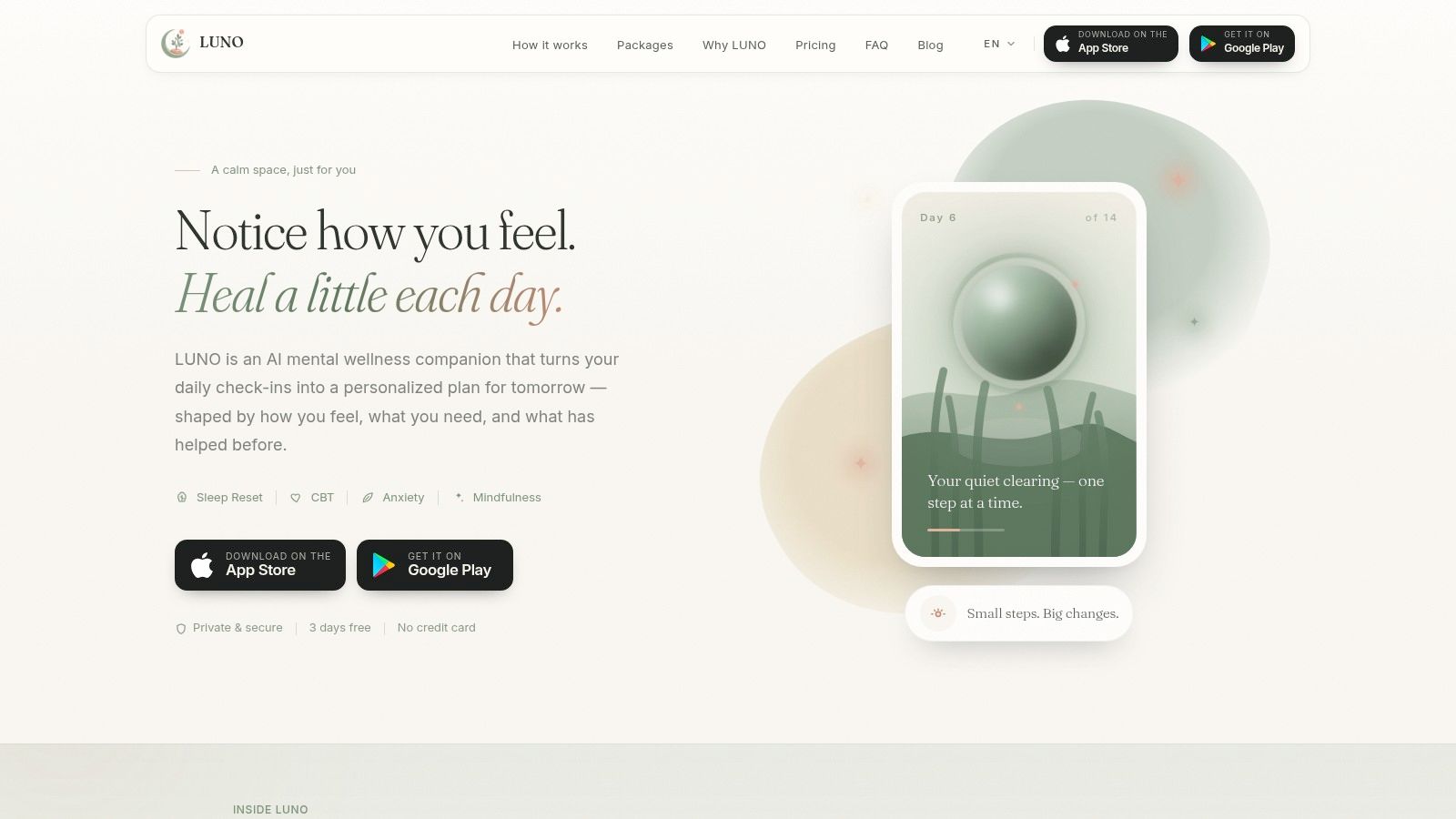
Best for daily support that carries your history forward. Luno: Self Care is an iOS and Android app that turns daily check-ins and reflections into personalized plans for the next day. It remembers earlier patterns, helpful exercises, and setbacks, so after a gap, your support can pick up with relevant context.
Its ten 14-day journeys address anxiety, sleep, burnout, depression, grief, self-esteem, trauma processing, relationships, and focus and ADHD. A Custom Package lets you define a topic. You can switch or add packages when your needs change, carrying relevant history forward.
Structure beyond a meditation library
Plans draw on CBT, CBT-I, ACT, DBT, IFS, schema work, behavioral activation, mindfulness, and somatic methods. Daily check-ins, mood tracking, journaling, and context-aware notifications support follow-through. Voice journaling is available on higher tiers. The structured approach offers more direction than browsing a meditation library, but it remains self-guided rather than clinician-led care.
The National Institute of Mental Health's overview of psychotherapy describes psychotherapy as treatment involving a mental-health professional. Luno provides structured self-care, not that treatment relationship.
- Pricing: Seed is $4.99/month, Grow $9.99/month, and Bloom $12.99/month. Bloom includes a five-seat Family plan. All tiers start with a three-day free trial, with full access to the chosen tier and no credit card required. Cancel anytime before the trial ends.
- Tier limits: Seed includes one active package and no Expert questions. Grow includes three active packages, voice journaling, and Apple Health sync. Bloom adds the Family plan and Oura integration. All plans are available monthly or annually; pricing may vary by region or currency.
- Privacy: Luno encrypts data in transit and at rest, offers data export and account deletion, and does not sell user data or use it to train third-party models.
- Limits: Luno is self-guided support, not therapy, medical treatment, or crisis care. AI-generated content is not reviewed by a human professional unless you use an Expert question.
2. Calm
Bedtime is a specific use case, not just another opportunity to meditate. If you want a familiar voice, a story, or background sound rather than an exercise to complete, Calm is a sensible starting point.
Its Sleep Stories, sleep meditations, music, and soundscapes offer different ways to wind down. Daily Calm sessions, breathing exercises, and guided programs also cover stress, anxiety, and focus. You can use it on iOS, Android, and the web.
Bedtime rule: Choose something soothing before you get into bed. Browsing for the perfect track can become another task.
Some content is free, while Premium opens the full catalog. The trade-off is structure: plenty of listening choices don't necessarily give you a clear progression or explain what to change when sleep remains difficult.
A systematic review of mindfulness and sleep quality found benefits against nonspecific controls, but no meaningful difference against specific active treatments such as CBT-I or exercise. That isn't evidence that Calm treats insomnia.
- Choose Calm for: Enjoyable bedtime listening and flexible relaxation.
- Consider another approach for: Persistent insomnia or a need for sequenced behavioral exercises.
If you want check-ins and a next-day plan rather than primarily listening content, compare that experience with our adaptive self-care approach.
3. Insight Timer
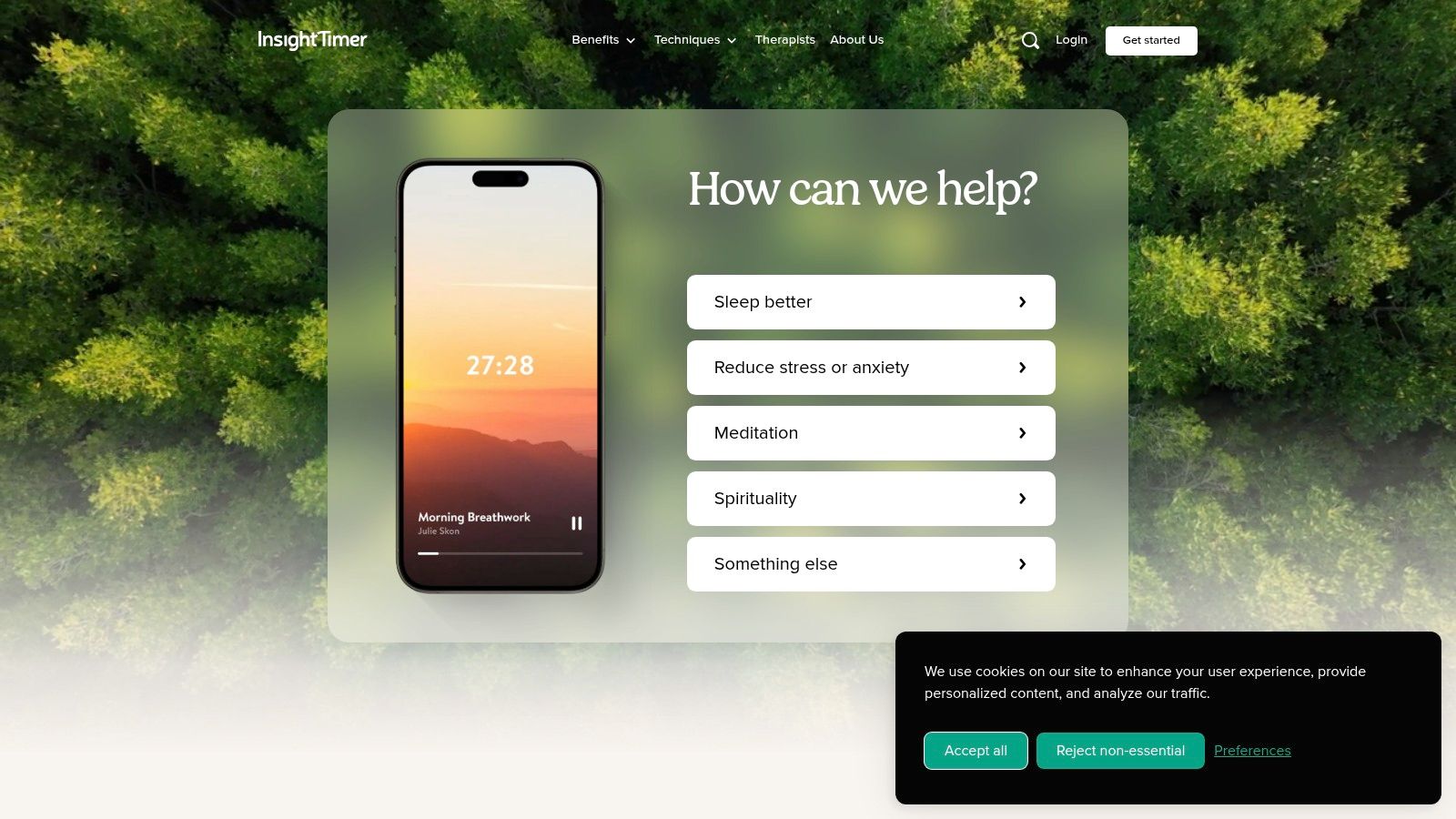
Free exploration is Insight Timer's main appeal. You can try guided practices, music, ambient sounds, and a meditation timer without committing to a subscription. Teachers, groups, and community features add ways to find an approach that feels comfortable.
The variety helps when a particular voice, pace, or meditation style doesn't work for you. It also creates a practical problem: searching can replace practicing. Save a small selection of useful sessions instead of treating the catalog as something you need to work through.
Explore broadly, then narrow your choices
The custom timer includes bells, reminders, and practice tracking, making it useful once you want less spoken guidance. Sleep content, yoga, and breathwork provide alternatives when sitting meditation isn't what you need that day.
- What works: Broad free access and room to sample different instructors, topics, and traditions.
- What takes effort: Teaching styles vary, and finding a good fit requires listening rather than assuming every session will suit you.
- What costs extra: Optional MemberPlus access adds premium courses and tools, including offline-download options.
I'd choose Insight Timer if cost is a barrier or you already know how to select practices. If deciding what to do is precisely where you get stuck, a smaller, guided program may be easier to use consistently.
4. Balance
Balance suits people who want the app to make the next choice easier. It recommends meditation practices around your goals, experience, and preferences, then organizes practice into progressive plans.
That makes it a close Headspace alternative for someone who likes guided meditation but doesn't want an open-ended library. Sleep meditations and sounds give it a second role in an evening routine.
Its Foundations and Advanced plans offer free access, while the broader experience requires a paid membership. Prices can differ by offer and app-store listing, so evaluate the actual subscription screen rather than assuming a promotion applies to you.
A useful personalized routine should make starting simpler, not give you more settings to manage.
- Strength: A defined path reduces the daily question of what to practice.
- Trade-off: Goal-based meditation recommendations aren't the same as broad, symptom-specific self-care support.
- Best test: Notice whether the recommended sessions feel appropriate when your schedule or energy changes.
If you're comparing meditation personalization with our broader journey model, the questions about our self-guided plans explain a different kind of daily structure. Choose Balance when learning and maintaining meditation is the main goal, rather than expecting it to address every difficulty you're working through.
5. Waking Up
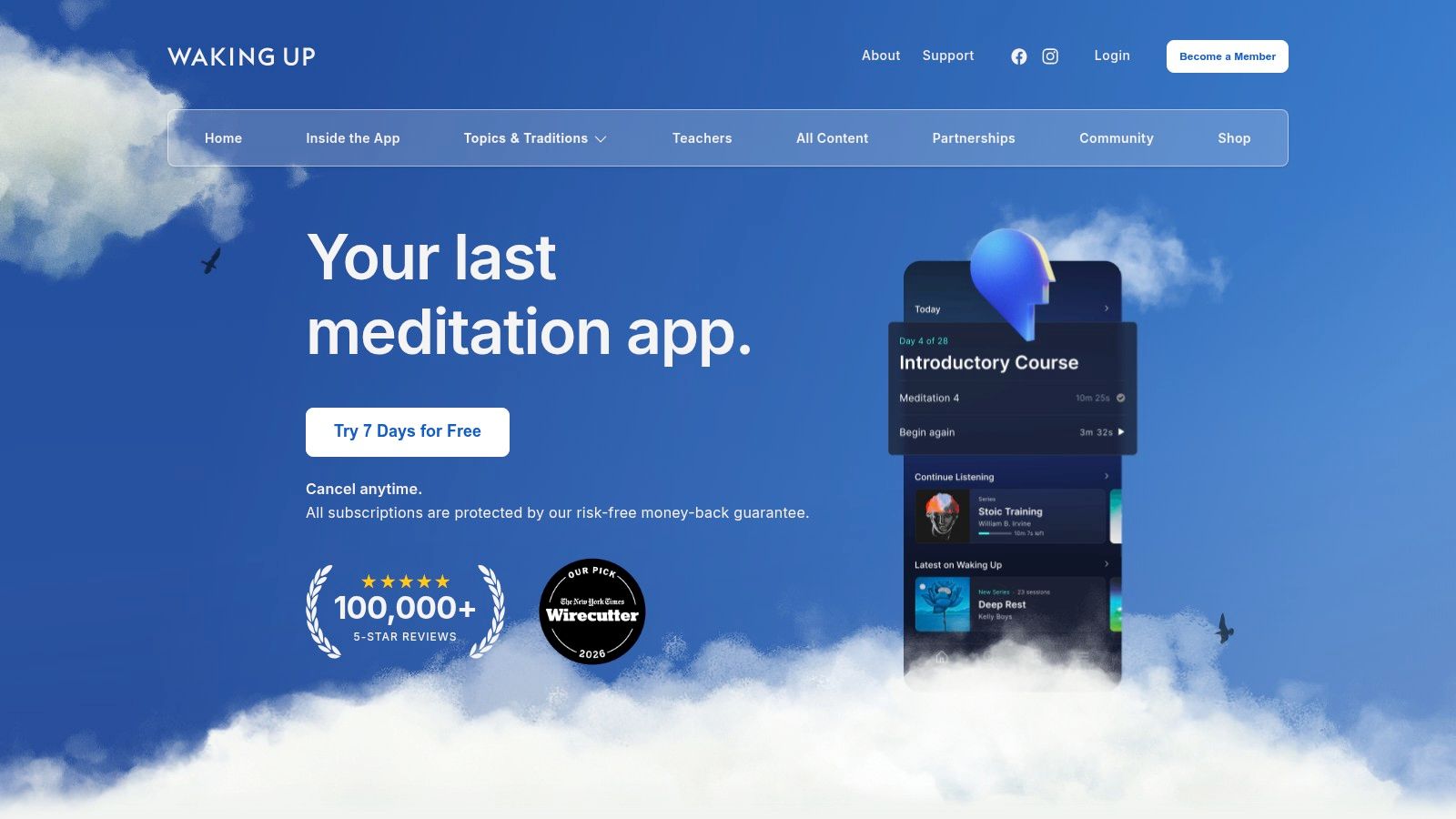
Some people don't want another relaxation recording. They want to understand what they're practicing and why. Waking Up combines meditation instruction with theory, conversations, and material about applying practice to everyday life.
Its introductory course provides an entry point, while longer sessions and discussions give experienced meditators more to explore. The attraction is intellectual as well as practical: you can listen, reflect, and then test an idea during meditation.
Choose depth, not instant soothing
That approach won't suit every moment. After an exhausting day, a philosophical conversation may feel like homework when you want a quiet voice and a sleep story.
- Best fit: Curious beginners and experienced practitioners who want explanation alongside instruction.
- Access: The full library is paid, with a scholarship program for people unable to afford a subscription.
- Limitation: Reflective depth doesn't make it a clinical treatment or a personalized mental-health plan.
Before building a long-term routine in any app, consider how you'll leave it, too. Our account-deletion information provides that detail for our service; review Waking Up's own terms separately.
I'd prioritize Waking Up when understanding meditation is itself motivating. If explanations make you postpone practicing, a simpler daily session may serve you better.
6. Medito
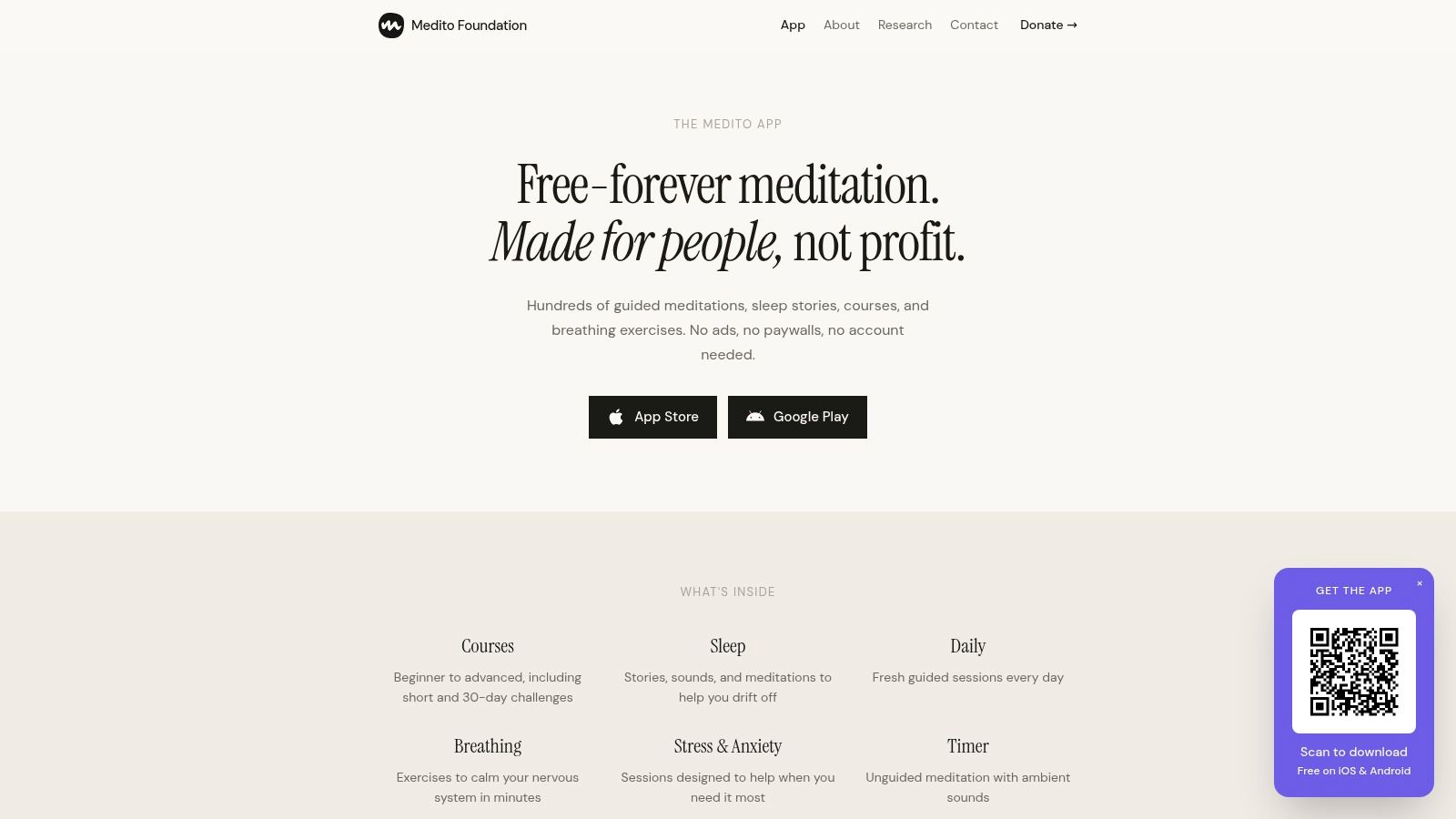
A subscription shouldn't be the entry requirement for learning to meditate. Medito is a nonprofit option with free guided sessions, courses, breathing exercises, sleep stories, and an unguided timer.
You don't need an account to get started on iOS or Android. There isn't a premium tier waiting at the end of a trial, which makes it particularly practical if subscription management already feels like another chore.
The strongest reason to choose it is straightforward access. Start with a beginner course rather than jumping between sleep, breathing, and meditation content whenever something new catches your attention.
- Advantages: Free access without a trial deadline, a nonprofit and open-source orientation, and tools for both guided and independent practice.
- Compromise: The experience is less individualized than a plan generated from your changing check-ins.
- Boundary: Anyone seeking live guidance, diagnosis, or clinical support needs a different service.
The World Health Organization's overview of psychological self-help recognizes structured self-help as a useful approach, including guided and unguided formats. That supports taking self-help seriously, not assuming every meditation app has equivalent clinical evidence.
Medito is a good choice when your immediate goal is to begin practicing without paying or creating an account.
7. Aura
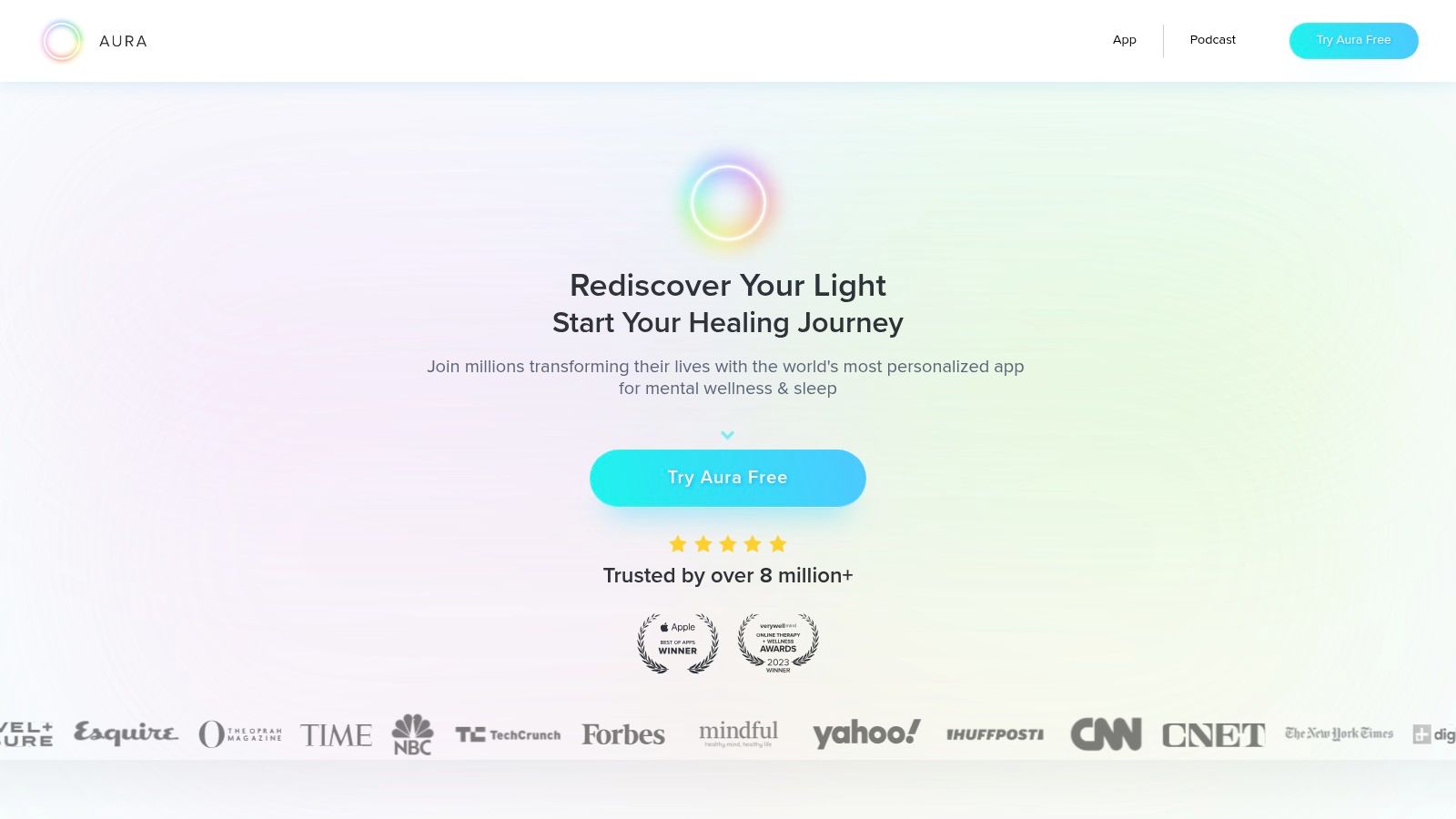
Your available attention might change from day to day. Aura accommodates that through short audio sessions and a mix of meditation, sleep stories, music, coaching, hypnosis, and CBT-related material.
Recommendations adapt to your preferences, and contributors include coaches, therapists, and storytellers. The useful distinction is format flexibility: you aren't committing to the same kind of exercise whenever you open the app.
Flexible listening versus progressive work
A varied catalog can help you find something approachable during a busy day. It can also make it easy to consume comforting content without practicing a skill repeatedly enough to judge whether it's useful.
Limited free access lets you sample the experience. Unlimited listening requires a subscription, and Premium includes offline listening; prices and offers vary.
- Choose Aura when: You want brief sessions and different ways to engage with self-care.
- Watch for: Repeated browsing without a clear connection to your goal.
- Keep expectations grounded: A CBT-related audio track isn't equivalent to an individualized course of CBT.
Try saving content around a single need, such as winding down after work, before exploring everything else. If you need a program that deliberately builds from earlier exercises, compare Aura's recommendations with a sequenced course rather than judging only the breadth of its library.
8. Finch
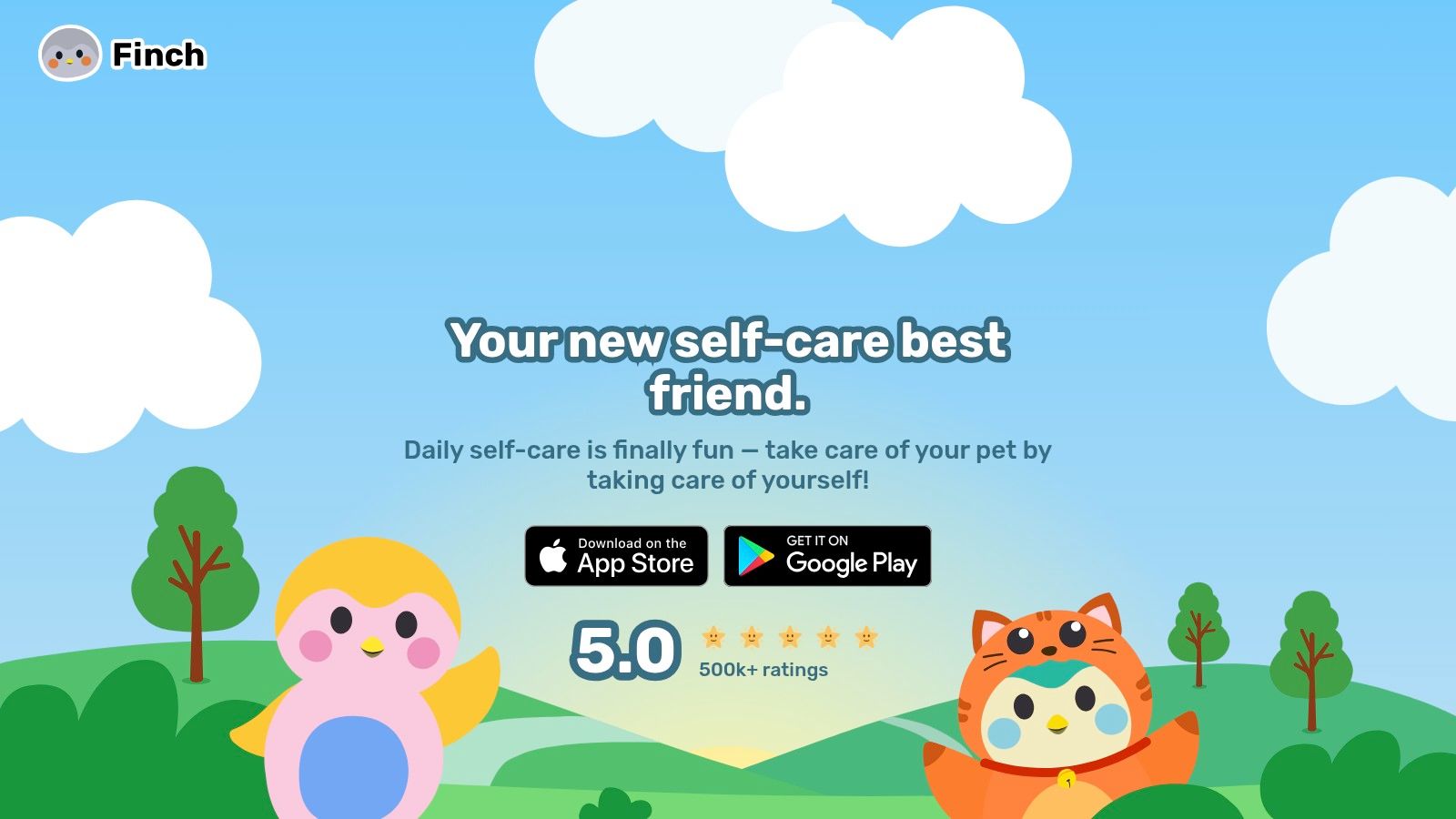
With Finch, you care for a virtual bird while completing personal goals, reflections, and self-care activities. It's a different proposition from a meditation course, and that's exactly why it may appeal when conventional wellness apps feel demanding.
The playful design gives small actions a visible reward. Optional friend encouragement and seasonal events add reasons to return, while free core features include goals and reflections on iOS and Android.
Start smaller: Set a goal you can complete on a difficult day, not only on your most motivated day.
Finch is worth considering when getting started is the main obstacle. You might use it to prompt a short reflection or a basic daily action rather than expecting yourself to complete a formal meditation session.
- What works: Gentle, engaging reinforcement for everyday routines.
- What won't suit everyone: Virtual-pet mechanics can feel distracting or overly playful.
- What it isn't: Therapy, a structured clinical program, or a direct replacement for meditation instruction.
Reflection tools also deserve privacy scrutiny. Our privacy policy describes our service, not Finch's; review each app's own data practices before entering sensitive information.
Choose Finch because its style makes self-care approachable, not because completing goals proves that a mental-health condition is improving.
9. Smiling Mind
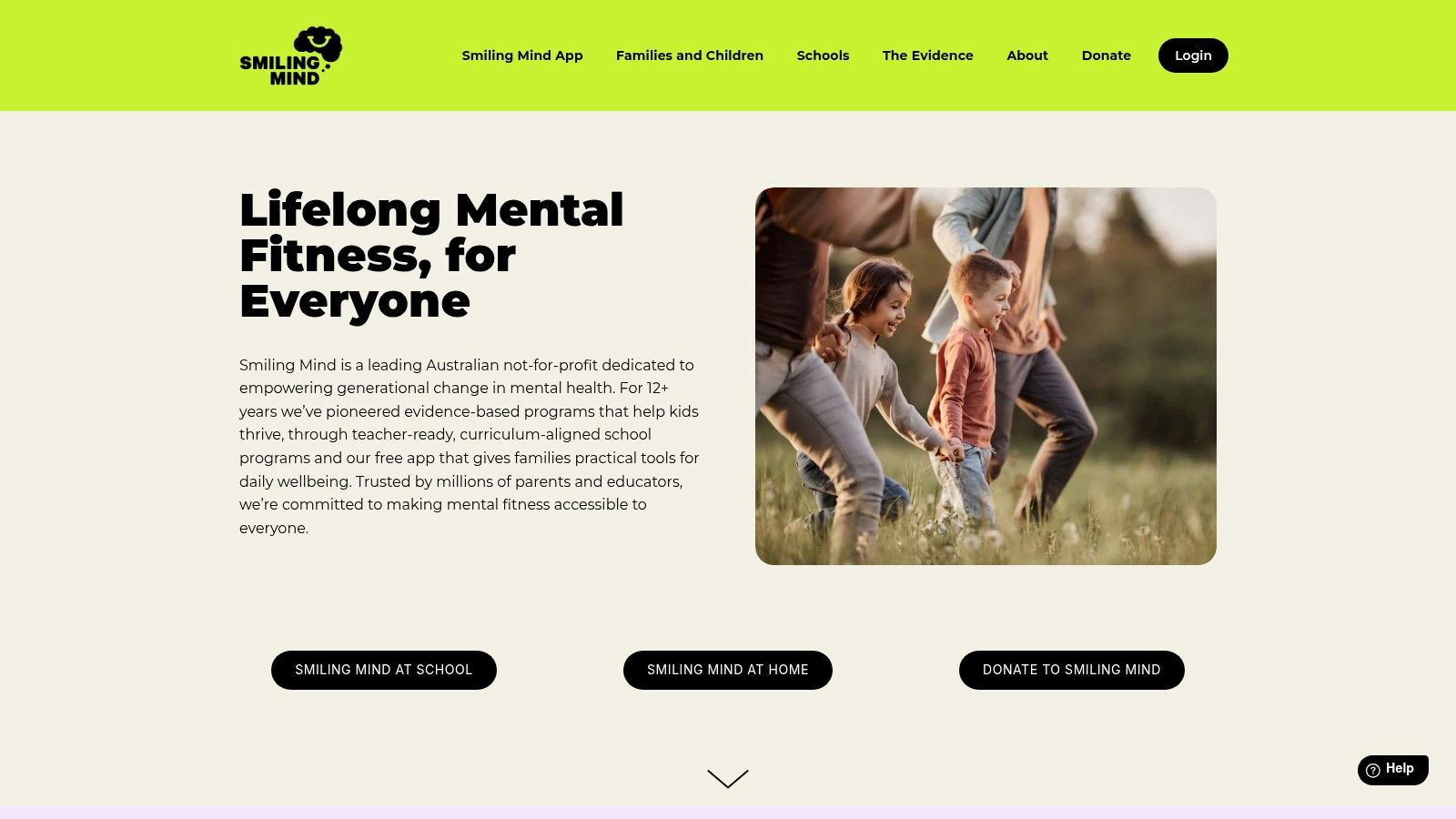
Family practice changes what matters in an app. You may need age-appropriate guidance, a repeatable routine, and content an adult and child can approach together, rather than a larger entertainment library.
Smiling Mind is a nonprofit mindfulness and mental-wellbeing option with self-guided programs for adults, children, and families. Its content is developed by psychologists and educators, and the organization says the app is free to access.
A shared routine without a subscription
Programs organized around different ages and needs make it easier to choose an appropriate starting point. Account-based progress tracking and personalized features support ongoing use across iOS, Android, and the web.
- Strengths: Free access, family-oriented content, and structured programs rather than only standalone sessions.
- Trade-offs: An account is required, so it isn't an anonymous-access option. Its focus is narrower than apps built around extensive sleep-story and entertainment catalogs.
- Practical approach: Try a program that matches the participant's age and current need, then keep the routine predictable.
Don't assume that psychologist-developed content means every exercise will suit every child or adult. If a practice causes discomfort, stop and choose something more appropriate rather than treating completion as the goal.
Smiling Mind makes sense when you want mindfulness to be an accessible household practice, with separate needs respected rather than everyone following the same adult session.
10. Healthy Minds Program

Healthy Minds Program combines guided meditation with podcast-style lessons around awareness, connection, insight, and purpose. It's a useful alternative if you want to learn skills and ideas, not only settle down.
The provider describes the app as free and ad-free. Its self-guided iOS and Android content addresses attention, emotional understanding, connection, and values-based action.
The practical appeal is the connection between explanation and exercise. Listen to a lesson, practice the corresponding skill, and consider where it fits into ordinary activities rather than treating meditation as a separate achievement.
- Good fit: Learners who appreciate a coherent wellbeing framework.
- Main advantage: Explanatory lessons alongside meditation without a subscription.
- Main limitation: Lessons may feel less immediately soothing than bedtime audio, and the program isn't built around individualized check-ins or adaptive next-day plans.
Keep the distinction between general evidence and product evidence clear. A Johns Hopkins systematic review found moderate evidence for improvements in anxiety and depression from meditation programs, but insufficient evidence for several other outcomes, including attention and sleep. Those findings don't establish results for this particular app.
For anyone considering our service alongside a learning-focused app, our safety information explains the boundaries of self-guided support.
How the Headspace alternatives compare on pricing, free access, and best-for use
Prices and free access differ across these apps. The table compares each app's cost structure with what readers can try without paying and the kind of support it offers.
| Item | Pricing | Free Access | Best For |
|---|---|---|---|
| Luno: Self Care | Seed $4.99/month; Grow $9.99/month; Bloom $12.99/month | 3-day free trial with full access to the chosen tier | Adaptive daily plans, mood check-ins, and structured self-guided support |
| Calm | Free tier; Premium subscription unlocks the full catalog | Some content available free | Sleep stories and bedtime relaxation |
| Insight Timer | Free core library; optional MemberPlus subscription for premium courses and offline downloads | Extensive free library and tools | Exploring meditation teachers and styles |
| Balance | Free Foundations and Advanced plans; paid membership for a broader experience | Foundations and Advanced plans | Personalized, progressive meditation routines |
| Waking Up | Paid subscription; scholarship access available | Scholarship access available | Meditation practice with lessons and theory |
| Medito | Free | Full access; no account required to start | Subscription-free meditation and sleep content |
| Aura | Limited free sampling; subscription for unlimited listening and offline access | Limited daily access | Short, varied personalized audio sessions |
| Finch | Free core features; optional paid extras | Free core features | Gamified self-care goals and routines |
| Smiling Mind | Free | Full access | Structured mindfulness programs for individuals and families |
| Healthy Minds Program | Free | Full access; ad-free according to the provider | Meditation combined with well-being lessons |
Luno's trial includes full access to the selected plan for three days, with no credit card required. Its monthly plans range from Seed at $4.99 to Bloom at $12.99; annual billing is also available, and in-app checkout shows current pricing, which may vary by region or currency.
Choose the Support That Keeps You Coming Back
The best Headspace alternative is the one you'll open on an ordinary Tuesday, not the one with the longest catalog. Match it to the problem you're trying to solve: bedtime listening, affordable exploration, structured learning, gentle habit-building, or daily guidance that adjusts to how you feel.
Choose for your hardest ordinary day. A philosophical course can be rewarding when you're curious, but a poor fit when you're exhausted. A broad free library can be generous and still leave you unsure what to do next.
Test the routine, not just the content
Try a small shortlist over a week or two. Notice whether starting feels manageable, whether you understand the next step, and what happens after you miss a day.
- For bedtime: Compare how Calm or Aura fits your wind-down routine.
- For free practice: Start with Medito, Insight Timer, Smiling Mind, or Healthy Minds Program.
- For guided learning: Consider Balance or Waking Up.
- For follow-through: Compare Finch's gentle rewards with our adaptive plans and remembered context.
Returning matters more than enjoying an introductory session. In a longitudinal study of new meditation-app users, only 18.86% remained active after 14 days. That finding describes the studied users, not every app, but it makes continuity a practical buying criterion.
Our three-day free trial requires no credit card, includes full access to your chosen tier, and can be canceled before it ends. Monthly and annual billing are available, with current regional pricing shown in the app at checkout.
Keep support and treatment distinct
Our AI-generated content isn't reviewed by a human professional before it reaches you unless you use an Expert question. An adaptive plan can help organize reflection and practice, but it can't replace individualized assessment or professional care.
If symptoms persist, worsen, or interfere with daily life, seek qualified clinical support rather than repeatedly switching apps. In an immediate crisis, use local emergency or crisis services, not a self-guided companion.
You don't have to choose between taking self-help seriously and recognizing its limits. Used thoughtfully, these tools can provide structure between appointments or a manageable first step when you're not ready for therapy. The right choice should make caring for yourself easier to resume, not give you another standard to fail.
If you're looking for Headspace alternatives with more continuity, Luno: Self Care offers daily check-ins, personalized next-day plans, and structured journeys that remember your context after missed days. Explore the three-day trial and choose a starting topic that fits what you need now, while keeping self-guided support distinct from therapy.