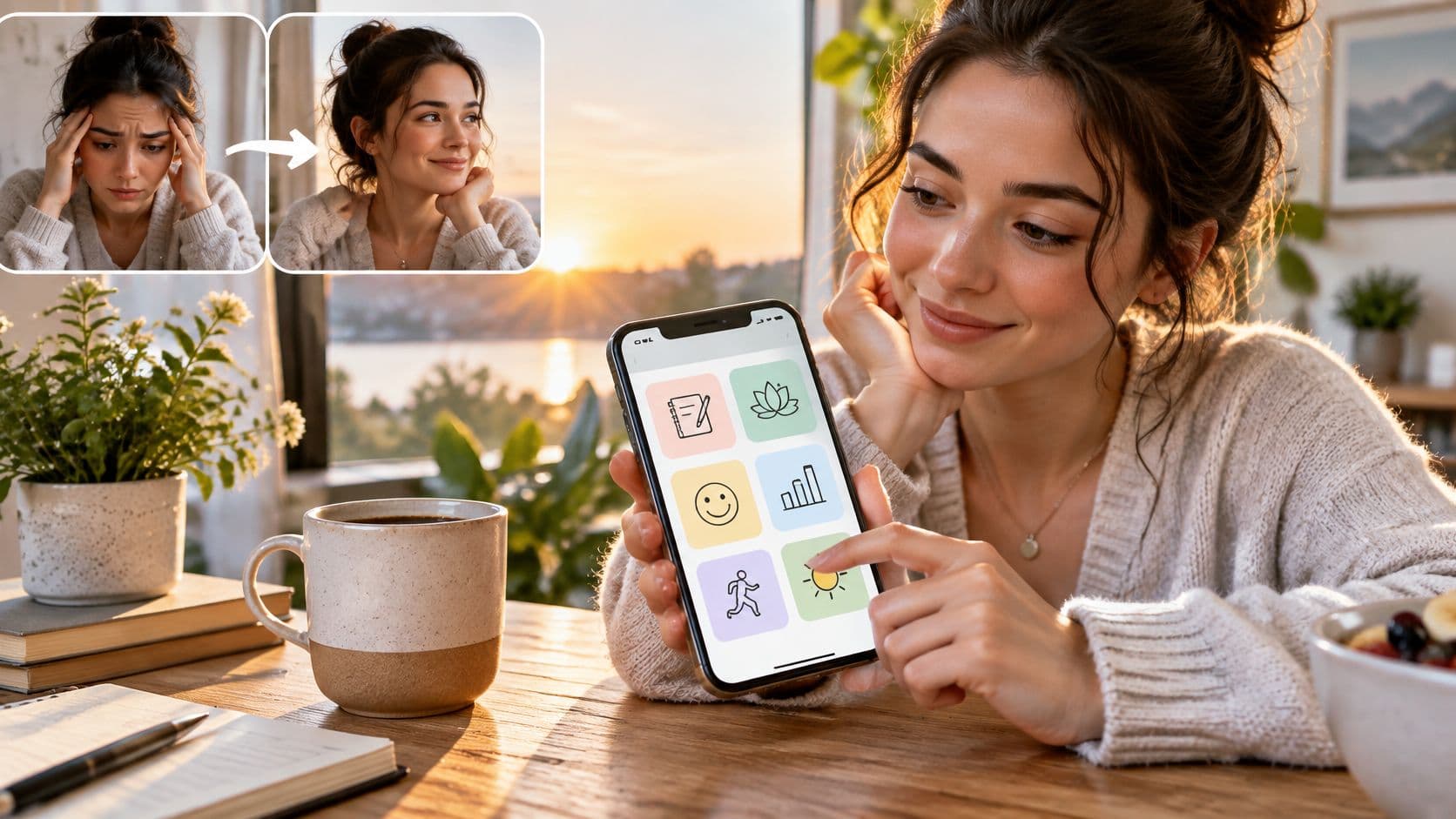
You wake at 7 A.M., reach for your phone, and feel the day's worries arrive before the coffee does. You've downloaded wellness apps before, then abandoned most of them within a week because their routines didn't fit the way your life was going. The best self-help app isn't the one with the largest library. It's the one that matches the problem you're facing and the routine you can actually keep.
Luno can feel like having therapy homework designed for you, but it's self-guided support, not therapy. One user said, “I've started a hundred wellness apps. This is the first one that changed because I did.” Another said, “By week two it stopped feeling like an app and started feeling like someone who was paying attention.” Those are customer stories, not clinical evidence, but they point to a useful difference: adaptation can make daily practice feel more relevant. Here are seven options, judged on what happens between sessions, the kind of evidence behind the approach, the cost of continued use, and who each app suits best.
1. Luno: Self Care
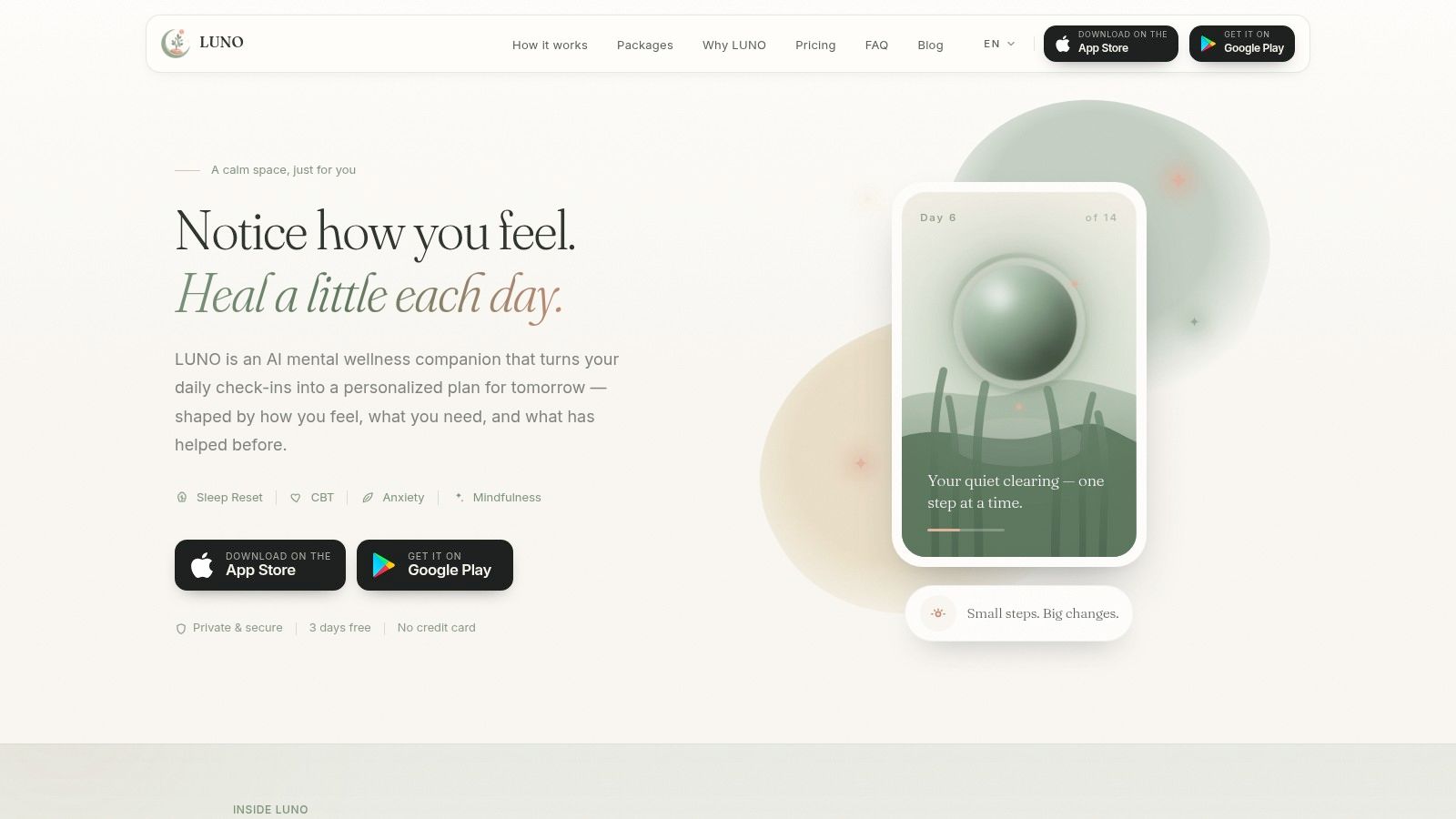
Luno is built around a daily check-in, not a fixed playlist of exercises. You share how you're doing, and it uses your recent reflections to shape a plan for the next day. Its Living Memory carries forward patterns, helpful strategies, and setbacks, so a missed stretch doesn't have to mean starting over. That can matter when your energy or attention is inconsistent.
Its ten 14-day journeys cover anxiety, sleep, burnout, depression, grief, self-esteem, trauma, relationships, focus and ADHD, plus a custom option. The exercises draw on approaches such as CBT, CBT-I, ACT, DBT, IFS, behavioral activation, mindfulness, and somatic methods. Journaling and context-aware notifications support the routine, while eligible plans add Apple Health or Oura integrations.
“It felt like therapy homework that someone actually designed for me.” That captures the intended feel, not a clinical relationship or a promise of treatment.
The distinction matters. The NHS description of guided self-help explains a structured approach based on CBT, while noting that guided self-help typically includes support from a practitioner. Luno is designed for independent use. It can offer structured self-management support, but it can't diagnose, provide psychotherapy, assess emergencies, or replace a clinician. The American Psychiatric Association's app guidance also makes clear that wellness apps for unguided self-help are different from apps used alongside a mental-health professional.
Seed costs $4.99 per month, Grow $9.99, and Bloom $12.99, with Bloom including a five-seat family plan. Every tier starts with a three-day free trial; monthly billing and cancellation are available. Luno says reflections are encrypted in transit and at rest, aren't sold or used to train third-party models, and can be exported or deleted. Testimonials describe perceived changes during journeys, but customer stories aren't formal clinical evidence, and no awards or certifications are listed.
Best for: Someone who wants a structured, adaptive self-care routine for a specific concern and understands it isn't a substitute for therapy or crisis support.
2. Wysa
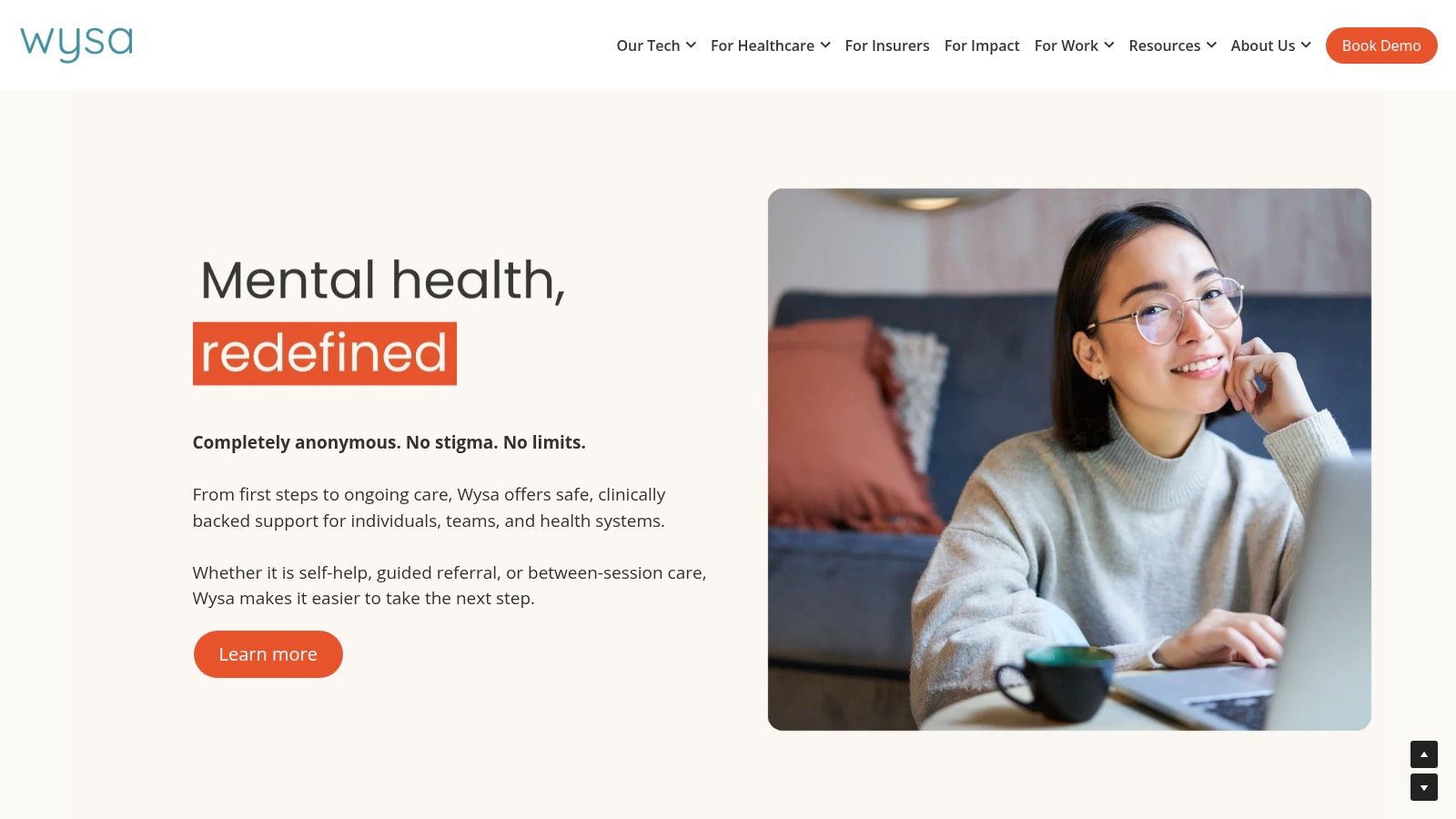
Wysa makes reflection conversational. Instead of choosing an exercise from a menu, you can use its AI-guided conversations and prompts to work through what's on your mind, then try practical exercises or relaxation and mindfulness audio. Its tools draw on CBT, mindfulness, and solution-focused techniques, with support for common concerns such as stress, low mood, and anxiety.
Core AI conversations are free according to Wysa's FAQ, and eligible users may get access through an employer, insurer, or another institution. That can make it a reasonable starting point if you want to explore coping tools without immediately taking on a subscription. Premium features and human coaching vary by location and access route, so the price and availability you see may depend on how you sign up.
The trade-off is scope. A responsive chat format may feel more engaging than browsing a static library, but an AI companion isn't a human therapist. Wysa doesn't provide diagnosis or medical advice, and it isn't designed for crises or severe, enduring mental-health problems. If you're comparing any app with professional support, read Luno's safety guidance for a clear explanation of why self-guided tools shouldn't be treated as emergency care.
Best for: Someone who wants free conversational reflection and coping exercises for everyday wellbeing, not crisis support or treatment.
3. MindShift CBT
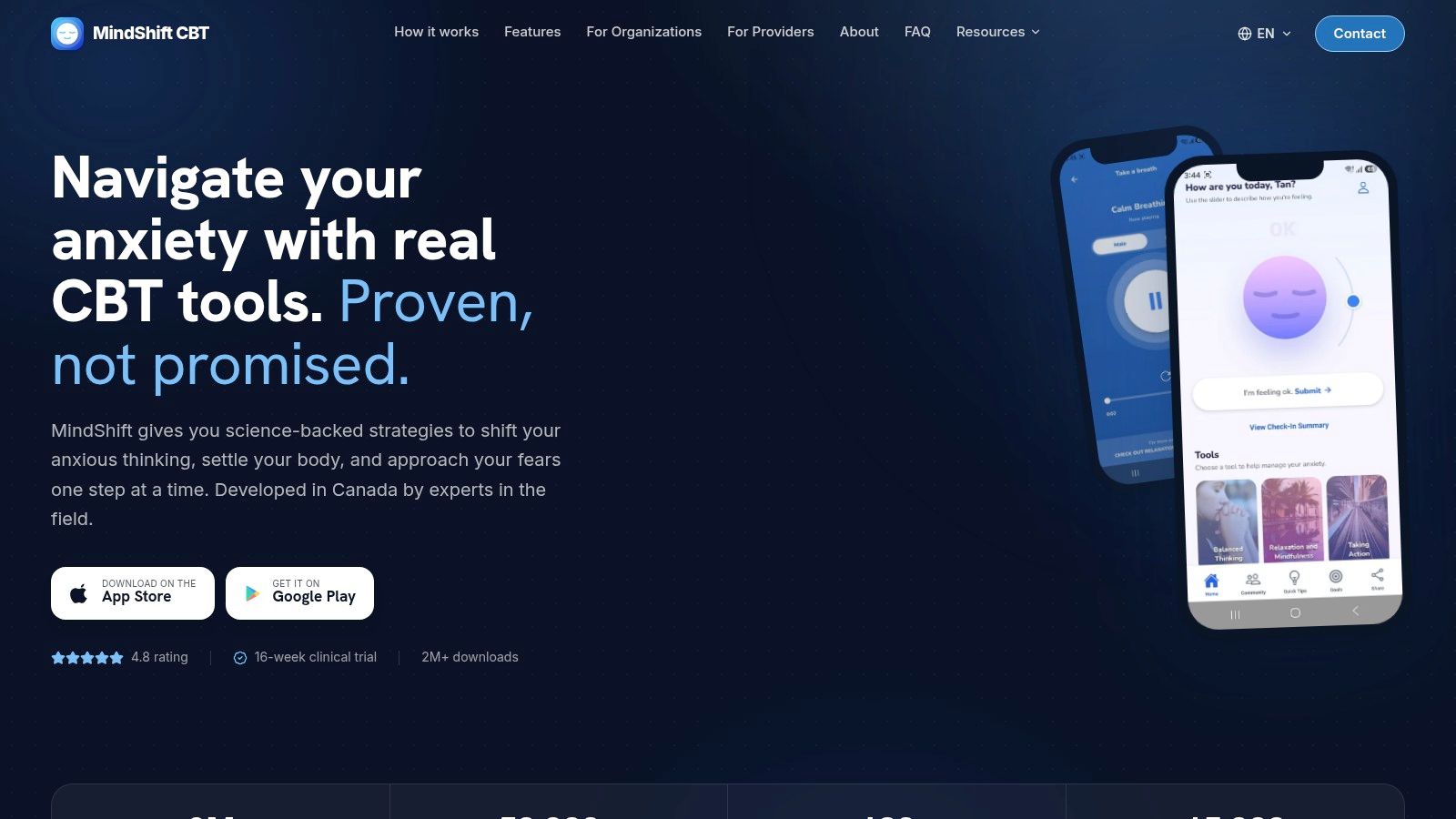
If anxiety is the main problem you want help with, MindShift CBT gives you practical tools rather than a broad wellness library. Daily check-ins can help you track feelings and triggers, while guided thought records give you a way to examine anxious thoughts. The Facing Fears tools break feared situations into smaller steps, and breathing, grounding, relaxation, and goal-setting exercises round out the toolkit.
The app's strongest feature is its focus: it's built around CBT techniques for anxiety. You can try its core tools for free on iOS and Android, without creating an account. Progress reports can also be exported and shared with a clinician, which can make the app useful alongside therapy rather than a replacement for it.
That same focus is the limitation. MindShift isn't designed as a general companion for sleep, grief, or burnout, and its workbook-like structure may feel less personal than an app that adapts a plan around your daily check-ins. For anyone weighing self-guided support against professional care, Luno's FAQ explains the distinction between using an app for daily practice and relying on a clinician for assessment and treatment.
Best for: Someone who wants a free, structured anxiety toolkit and is comfortable working through CBT exercises independently.
4. Headspace
Headspace is strongest when you want an expert-led audio routine you can press play on. It offers guided meditation courses, short on-demand sessions, sleep content, focus audio, and mindful movement. Sleepcasts, sounds, and wind-down practices make it easy to pick something for bedtime without needing to write a reflection or work through a personalized plan.
The format suits beginners who want an organized place to learn meditation and build a repeatable routine. Plans are available for individuals, students, and families, and some users may have access through an employer. A trial and sample content let you explore before paying, but the subscription library can cost more than free, single-focus tools.
Headspace's main trade-off is that most of its support is pre-recorded. That's a strength if you want polished audio at a predictable time, but it isn't individualized therapeutic guidance. If you're choosing between a meditation library and an adaptive self-help app, consider whether you want to select a session yourself or have daily check-ins shape what comes next. You can also compare the distinct approaches at Luno: Self Care.
Best for: Someone who wants guided meditation, focus practices, or bedtime audio rather than sustained journaling or an adaptive daily plan.
5. Calm
Calm is an audio-first choice for winding down. Its library includes guided and timed meditations for stress, anxiety, focus, and sleep, as well as Sleep Stories, music, ambient soundscapes, breathing exercises, and daily offerings. That variety helps when your immediate need is to relax, settle before bed, or find a short practice for a busy day.
Some sessions are free, so you can try the style before paying. Much of the full catalog requires a subscription, though, and offers may differ by checkout route or promotion. Family subscriptions or employer benefits may reduce the cost for some users.
Calm doesn't offer the same kind of structured step-by-step CBT program or ongoing personalized reflection plan you might want for a specific mental wellness goal. Its strength is convenience: choose something, listen, and return to your day. If you find that audio helps you relax but doesn't give you enough guidance to work through a recurring pattern, a more structured self-help app may be a better fit.
Best for: Someone who prefers low-effort audio, meditation, and bedtime content over journaling or a therapeutic-style program.
6. Finch
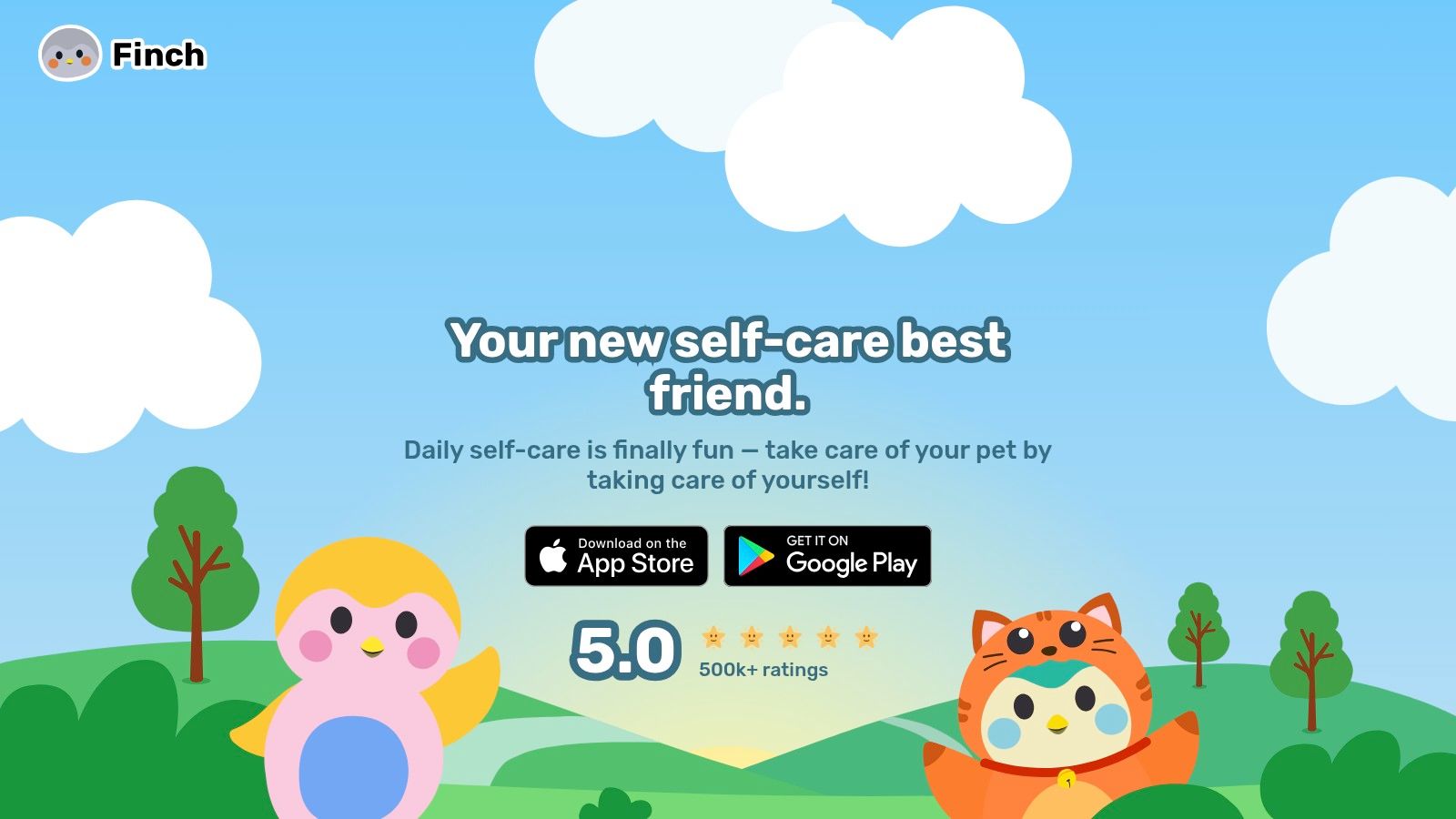
Finch makes routine-building feel playful. You set small self-care goals, complete daily activities, and write reflections while caring for a virtual bird that responds to your progress. Friends, seasonal events, and optional customization add a social and game-like layer without requiring you to follow a rigid program.
The core features, including goals, reflections, and the pet-care loop, are free. That's a helpful starting point if your main obstacle is getting yourself to begin a small habit. Finch Plus adds extra content and customization, but you don't need it to try the basic routine.
The style won't suit everyone. A virtual pet can make a habit feel more approachable, but it isn't clinical guidance or a structured treatment program. If playful motivation feels distracting, or you want an evidence-protocol-led approach, choose a different tool. If account access and control over personal information matter to you, Luno's account-deletion information is one example of the kind of practical privacy detail worth checking before you commit to a wellness app.
Best for: Someone who wants gentle, game-like encouragement to start small self-care routines, not clinical direction.
7. Daylio
Daylio suits the person who wants to capture a mood in seconds and decide what it means later. Logging a mood and activities takes a tap, and you can attach notes, photos, or voice memos when a day needs more context. Calendar views, charts, and summaries turn those entries into patterns you can scan, while goals, reminders, and habit tracking support the check-in habit itself.
Between entries, Daylio waits. It does not adapt tomorrow's suggestions from yesterday's log or interpret a difficult week for you; the record is the product, and the interpretation is yours. That trade-off is the point for some users and the limitation for others. If your evidence of progress is an accumulated personal history, a diary can be enough. If you need structured coping steps for anxiety, low mood, or sleep, pair it with a tool that gives you a plan.
The price of consistent use is low. The free version stays free indefinitely, according to Daylio, and covers daily logging. PIN or biometric lock, backups, and PDF or CSV export are useful controls, though advanced statistics, templates, and some backup and export options sit behind Premium. Before storing sensitive notes, check Daylio's privacy information on its official site. When comparing apps, read each product's own policy, such as Luno's privacy information, rather than assuming they all handle data the same way.
Best for: Someone who wants a fast, free ongoing mood diary and is happy drawing their own conclusions from the trends.
How the seven best self help app options compare on pricing, free access, focus, and best use
| App | Pricing model | Free option | Core focus | Best for |
|---|---|---|---|---|
| Luno: Self Care | Seed $4.99/month, Grow $9.99/month, Bloom $12.99/month; 3-day free trial | Trial with full access to the chosen tier | Adaptive daily plans, check-ins, mood tracking, and evidence-based protocols | Structured support that adjusts to your check-ins and carries context between days |
| Wysa | Premium features and coaching vary by access route | Free core AI conversations | AI-guided reflection and coping exercises | Interactive self-help and everyday wellbeing |
| MindShift CBT | Free app | Core tools are free | CBT tools for anxiety | Practical anxiety skills and progress tracking |
| Headspace | Subscription with trial and sample content | Some sample content | Meditation, mindfulness, and sleep audio | Guided practices and ready-made routines |
| Calm | Subscription for full library | Some free content | Meditation, relaxation, and sleep | Audio-led unwinding and bedtime listening |
| Finch | Free core features; optional paid plan | Goals, reflections, and virtual pet | Self-care habits and motivation | Making small routines more approachable |
| Daylio | Free version with optional Premium features | Free indefinitely | Mood and activity tracking | Logging moods and spotting personal patterns |
Choose One App, Try It for Three Days, Then Decide
Start with the kind of support you'll use day to day. If you want an adaptive daily plan that remembers past patterns, compare Luno's tiers: Seed is $4.99 per month, Grow is $9.99, and Bloom is $12.99 with a five-seat family plan. Each plan starts with a three-day free trial, requires no credit card, and can be cancelled before the trial ends.
If you want a free anxiety toolkit, begin with MindShift CBT and try its thought records or gradual exposure tools. If you prefer audio, choose Headspace for guided meditation and focus practices, or Calm for relaxation and sleep content. For mood tracking, Daylio is a straightforward option; for playful habit-building, try Finch.
Judge an app by whether its format fits your difficult days, not only the days when motivation comes easily. A fixed library may be the right choice if you like choosing your own session. A check-in-based plan may suit you better if deciding what to do next is part of the problem. A tracker is useful when noticing patterns is your priority, but it won't tell you what those patterns mean.
Luno can feel like therapy homework, but it is self-guided support and not therapy. It can't replace clinical treatment, diagnose a condition, or respond to an emergency. If you're facing a crisis, contact emergency services or a crisis line rather than relying on any app.
Pick one app this week and use it consistently for 14 days before deciding whether it fits. Keep the practice small enough to repeat, and notice whether the app helps you return after a disrupted day.
Luno: Self Care turns daily check-ins into personalized next-day plans, with structured journeys for concerns such as anxiety, sleep, burnout, and focus. If you want a self-help app that adapts to your reflections while keeping clear limits around what it can provide, visit Luno: Self Care.