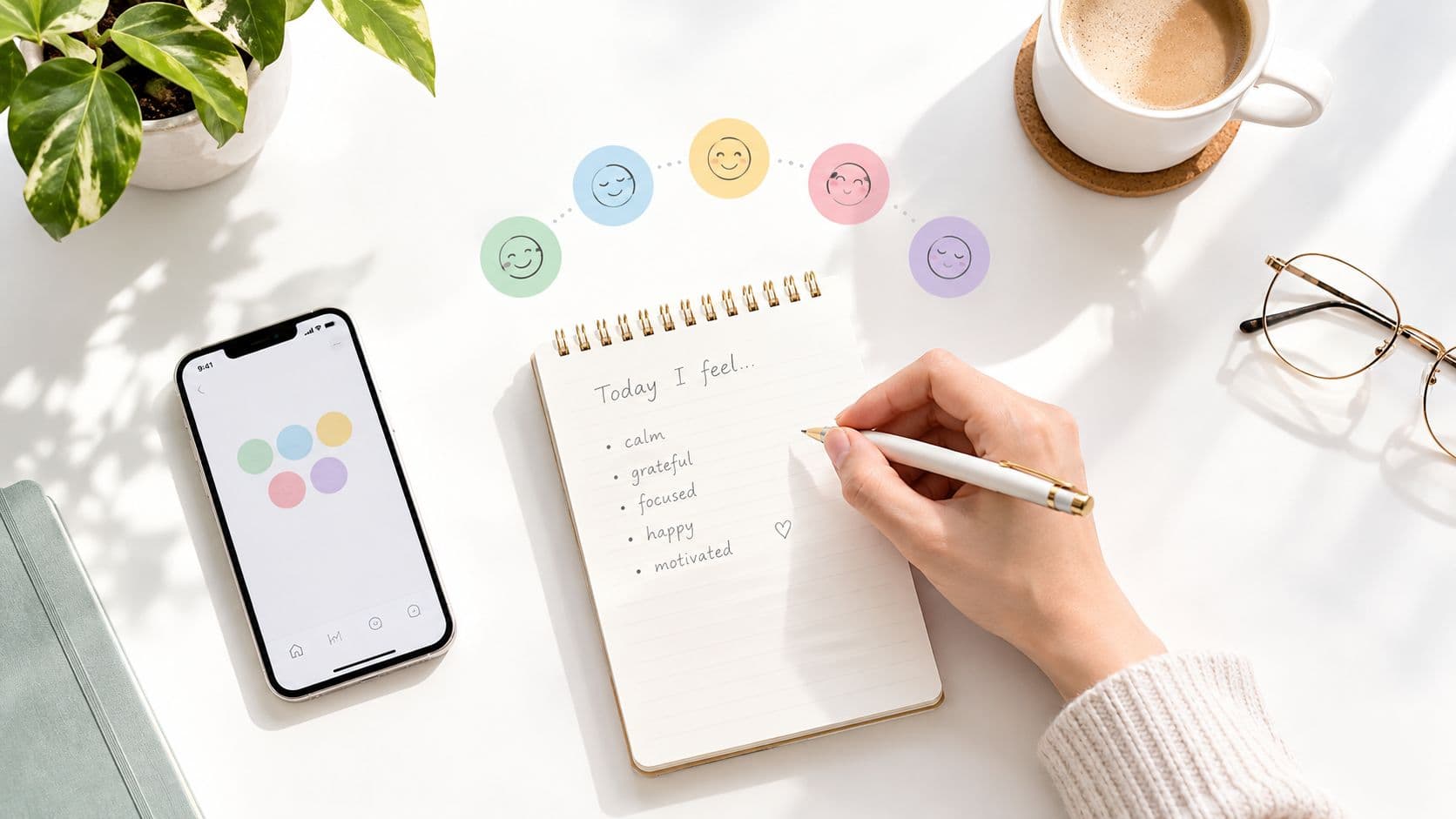
You wake up, reach for your phone, and remember that the holiday is over. The decorations are still up, but your calendar is filling with meetings, errands, unfinished work, and ordinary responsibilities. You may feel tired despite sleeping, distracted during simple tasks, or strangely flat after weeks of anticipation.
That reaction doesn't mean you're ungrateful. Post holiday blues often arrive when excitement, social contact, autonomy, and rest disappear faster than your body can adjust. The recovery process becomes easier when you stop demanding instant positivity and start rebuilding the conditions your nervous system needs.
Why the Return to Reality Feels So Heavy
On the first morning back, Maya opens her laptop before breakfast. During the holidays, she chose when to wake up, where to go, and whom to see. Now she has messages waiting, a crowded inbox, and a long list of tasks that seemed far away a few days earlier. She isn't in crisis, but she can't focus. Her energy feels unavailable, and even enjoyable plans seem like work.
Many people recognize this uncomfortable gap between how life felt during the break and how it feels afterward. A holiday can offer novelty, connection, travel, family time, or just permission to pause. Regular life may offer fewer immediate rewards, more obligations, and less control over the day. The contrast can feel like an emotional drop, especially when the season carried its own pressure.
The strain often begins before the holiday ends. A 2023 American Heart Association survey reported that 51% of respondents needed weeks to feel less stressed after the holidays, while more than one-quarter of mothers said recovery took a month or more. The survey also found that 63% considered the holiday season more stressful than tax season, and 79% often overlooked their own needs while focusing on others.
That context changes the question. Instead of asking, “Why can't I get back to normal?” ask, “What did my body and mind just move through?”
A low mood after a demanding season isn't proof that you've failed. It may be a signal that your routines, sleep, and emotional reserves need time to settle.
Give yourself a softer transition. Lower the pressure to feel enthusiastic immediately, protect a small amount of quiet, and treat the first days back as a period of readjustment. If you're using a wellness app, review its privacy approach before entering personal reflections, just as you would with any digital support tool.
The Biology Behind the Holiday Letdown
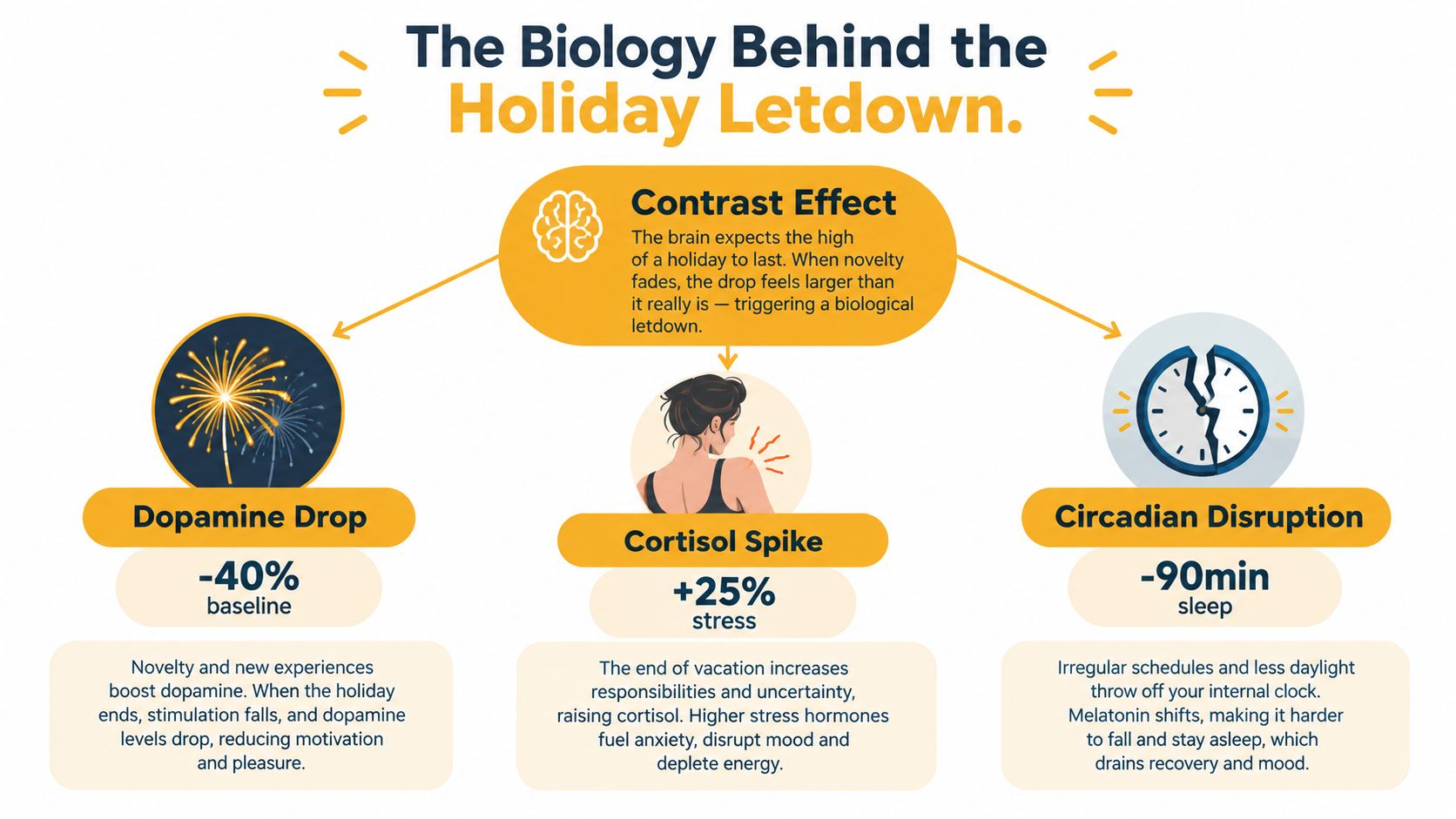
The post-holiday crash makes more sense when you view it as a contrast effect. During a break, your brain may receive more novelty, social stimulation, pleasurable activity, and personal choice. When those rewards stop abruptly, ordinary tasks can feel unusually dull even though nothing objectively terrible has happened.
Travel can intensify the shift. One travel-focused source reports that 21% of Australian travelers experienced post-holiday blues after returning home and connects the experience with disrupted circadian rhythms, sleep debt, and reduced daily autonomy. You can read the discussion of post-holiday circadian disruption and mood for more detail on how sleep and mood can reinforce each other.
Sleep disruption creates a practical problem. Late nights, sleeping in, changing time zones, irregular meals, and evening stimulation can move your internal clock away from your workday schedule. Then poor sleep can make concentration and emotional regulation harder, while a low mood can make it harder to establish a consistent bedtime. That creates a bidirectional loop, not a character flaw.
Winter daylight may add another layer. Clinical guidance on holiday blues and reduced sunlight explains that less sunlight can affect serotonin, melatonin, circadian timing, fatigue, concentration, and mood. This doesn't mean every January slump is seasonal depression. It means light exposure and sleep timing deserve more attention than vague advice to “cheer up.”
Why positivity alone falls short
The biology points toward targeted actions. Rest can help, but unstructured rest may leave your sleep schedule drifting further. Positive thinking can offer perspective, but it won't replace morning light, predictable meals, or a manageable workload.
The most useful response is often simple: restore timing, light, movement, and choice. When your day becomes predictable again, your brain has fewer decisions to manage and your body gets clearer signals about when to wake, work, relax, and sleep.
Recognizing the Signs and Setting Boundaries
Post-holiday blues isn't a formal clinical diagnosis. Reputable medical guidance describes it as a short-term low mood after a holiday or vacation, while persistent symptoms that interfere with daily life deserve professional attention. The typical cluster can include insomnia, low energy, irritability, anxiety, sadness, and difficulty concentrating, as described by HealthCentral's overview of post-holiday depression.
A temporary readjustment usually has a clear context. You feel worse after the break, notice that your routines are unsettled, and gradually regain energy as sleep, structure, and connection return. Clinical depression or another mental health condition may involve more persistent symptoms, broader loss of interest, significant changes in sleep or appetite, or increasing difficulty functioning.
The University of Rochester Medical Center's clinical guidance specifically identifies changes in sleep or appetite and symptoms that continue after the holidays as reasons to seek medical attention. It also distinguishes holiday blues from clinical depression, which may require treatment such as medication.
| Pattern | What it may look like | Helpful response |
|---|---|---|
| Temporary slump | Low energy, irritability, or fogginess during the return to routine | Rebuild sleep, light, meals, movement, and social contact |
| Extended low mood | Symptoms continue, intensify, or begin affecting work, relationships, or self-care | Contact a doctor, therapist, or psychologist |
| Clinical concern | Significant functional impairment, severe hopelessness, or thoughts of self-harm | Seek urgent professional or crisis support |
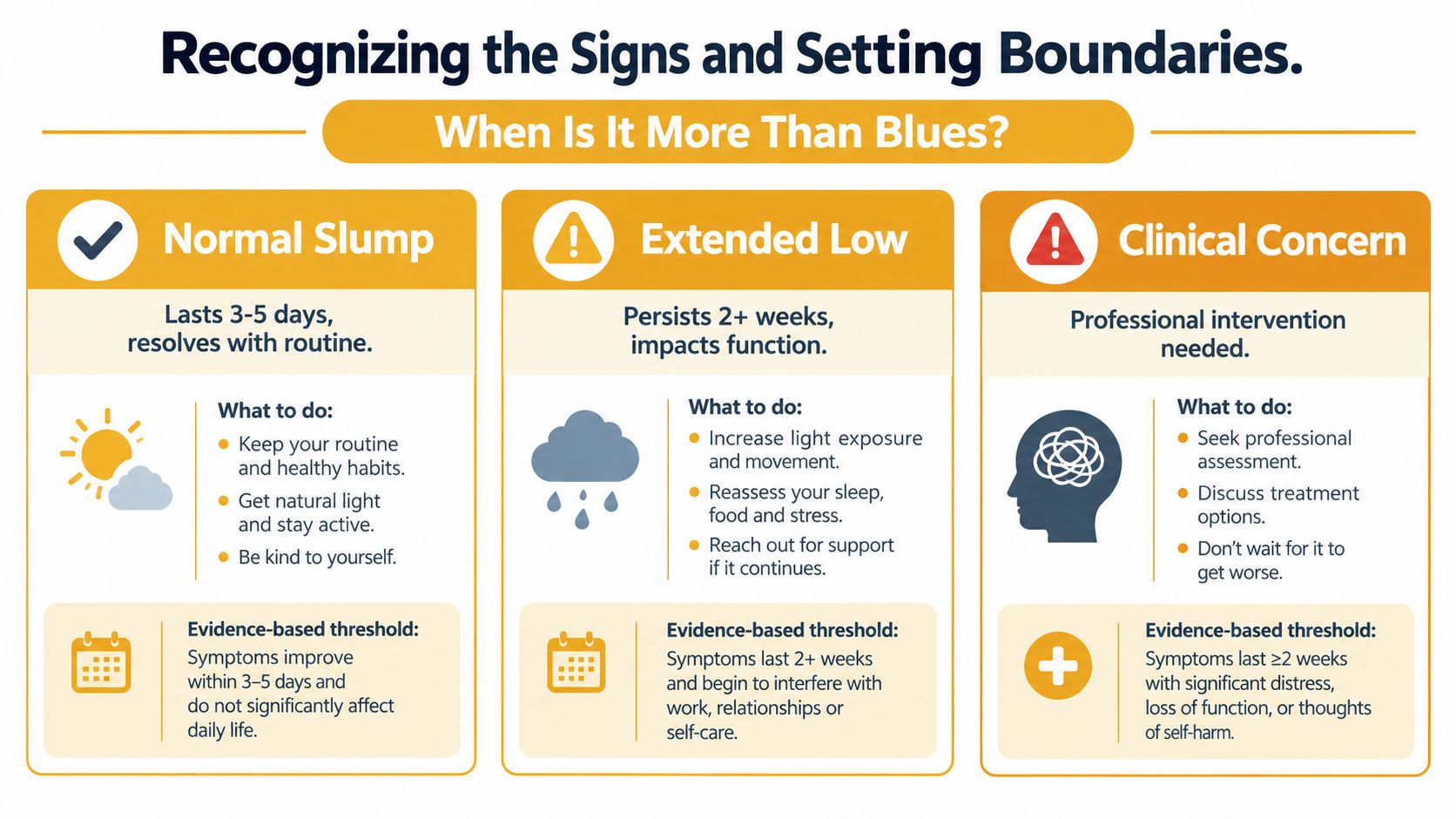
Self-guided habits are appropriate only within safe boundaries. If symptoms are worsening, disrupting daily life, or raising safety concerns, use a service with clear mental health safety information and contact a qualified professional. You don't have to diagnose yourself before asking for help.
Rebuilding Your Routine and Daily Structure
Your first goal isn't to create a perfect new lifestyle. It's to give your body a few reliable signals each day.
Start with the morning
Choose a wake time you can maintain on workdays and days off. Keep it steady rather than trying to compensate for every difficult night by sleeping far later. A consistent wake time helps reduce sleep-phase drift and gives the rest of your schedule a stable starting point.
Get outside or sit near bright natural light early in the day. Morning light helps your circadian system distinguish daytime from evening, particularly during darker seasons. Pair it with a simple action you already take, such as drinking water, feeding a pet, or walking to collect coffee.
Build a small sequence
Don't schedule an entire life overhaul. Create a repeatable morning chain:
Wake at a consistent time.
Open curtains or go outdoors.
Eat something nourishing.
Move gently, even if motivation is low.
Choose one meaningful task before checking every message.
The point is behavioral predictability. When the next action is obvious, you spend less energy negotiating with yourself.
Make the return gentler
Reserve a small amount of capacity for transition. Put demanding tasks after your first stabilizing routines, limit unnecessary evening stimulation, and plan one low-pressure point of connection instead of filling the calendar with social obligations.
A walk, a balanced meal, a tidy room, or a short conversation can function as a behavioral bridge between holiday life and ordinary life. These actions don't need to feel inspiring. They need to be repeatable.
This short video can help you think about practical routine changes without turning recovery into a performance.
Keep the plan adjustable. If a routine becomes too demanding, reduce it until you can complete it on a low-energy day. You can also review account deletion options before committing to any app, because control over your data is part of responsible self-care.
Using Self-Guided Tools for Lasting Support
Knowing that morning light and consistent sleep may help is different from remembering to use them when you're tired. The difficult part is often follow-through, not information. A structured self-guided tool can turn a broad intention such as “take better care of myself” into a small action for the next day.
Self-guided mental health support is a recognized format when it's structured, self-paced, and designed for people to learn and apply techniques on their own, though it doesn't involve a licensed therapist. HelpGuide's explanation of self-guided online support also makes the boundary clear: these tools aren't substitutes for professional care when symptoms persist or worsen.
Turning reflection into a next action
A useful check-in can ask:
What am I feeling right now?
What made today harder?
What helped, even briefly?
What is one realistic action for tomorrow morning?
The value comes from connecting reflection with behavior. If you report restless sleep, tomorrow's plan might focus on a consistent wake time and a calmer evening. If you report dread about work, it might suggest breaking the first task into a smaller start and protecting a short pause before the workday begins.
Luno: Self Care uses daily check-ins and reflections to generate personalized next-day plans. Its self-guided packages include support related to anxiety, sleep, burnout, low mood, grief, self-esteem, relationships, focus, and other concerns, with methods drawn from approaches such as CBT, ACT, DBT, somatic work, and sleep-focused techniques. People can find a topic that fits what they're dealing with rather than forcing every experience into a single generic routine.
The experience can feel like therapy because it responds to what you share and offers structured exercises. It is not therapy, it doesn't involve a licensed therapist, and it isn't a crisis service or replacement for clinical treatment. Use it as a self-guided companion for practicing skills, tracking patterns, and maintaining gentle accountability. Explore the Luno self-care platform alongside other support options, and choose the level of help that matches your needs.
Moving Forward with Intention and Grace
The end of the holidays can expose more than tiredness. You may notice financial pressure, loneliness, unresolved family feelings, or dread about returning to work. A 2014 National Alliance on Mental Illness survey found that 64% of respondents said the holidays negatively affected their mental health. Reported stressors included financial strain for 68%, loneliness for 66%, pressure for 63%, unrealistic expectations for 57%, and nostalgia for happier times for 55%.
Those figures don't predict how you'll feel, but they show why a gentle recovery plan matters. The season can ask you to spend, travel, perform happiness, manage relationships, and neglect your own needs. When it ends, your body may need recovery while your responsibilities return immediately.
A resilient response has three parts:
Respect the adjustment. Don't judge a temporary drop in energy as laziness or ingratitude.
Protect biological anchors. Keep wake time, morning light, movement, meals, and evening wind-downs as consistent as possible.
Choose support with clear limits. Self-guided tools can organize practice, but persistent or worsening symptoms call for a qualified professional.
You don't need to preserve the holiday mood forever. Instead, carry forward what worked. If you enjoyed unhurried mornings, create one protected morning ritual. If connection helped, schedule a manageable check-in. If constant commitments exhausted you, set a boundary before the next busy period rather than waiting until you're depleted.
Recovery becomes sustainable when your self-care baseline is small enough to repeat and meaningful enough to matter.
Let the return to ordinary life teach you something about the life you want to build. You can use answers to common Luno questions to understand how a self-guided tool fits into that process, while keeping professional care available when you need more than an app can provide.
Luno: Self Care offers personalized next-day plans from daily check-ins, with self-guided support for concerns such as disrupted sleep, anxiety, burnout, and low mood. Visit Luno: Self Care to create a steadier post-holiday routine with practical reflection and gentle structure.