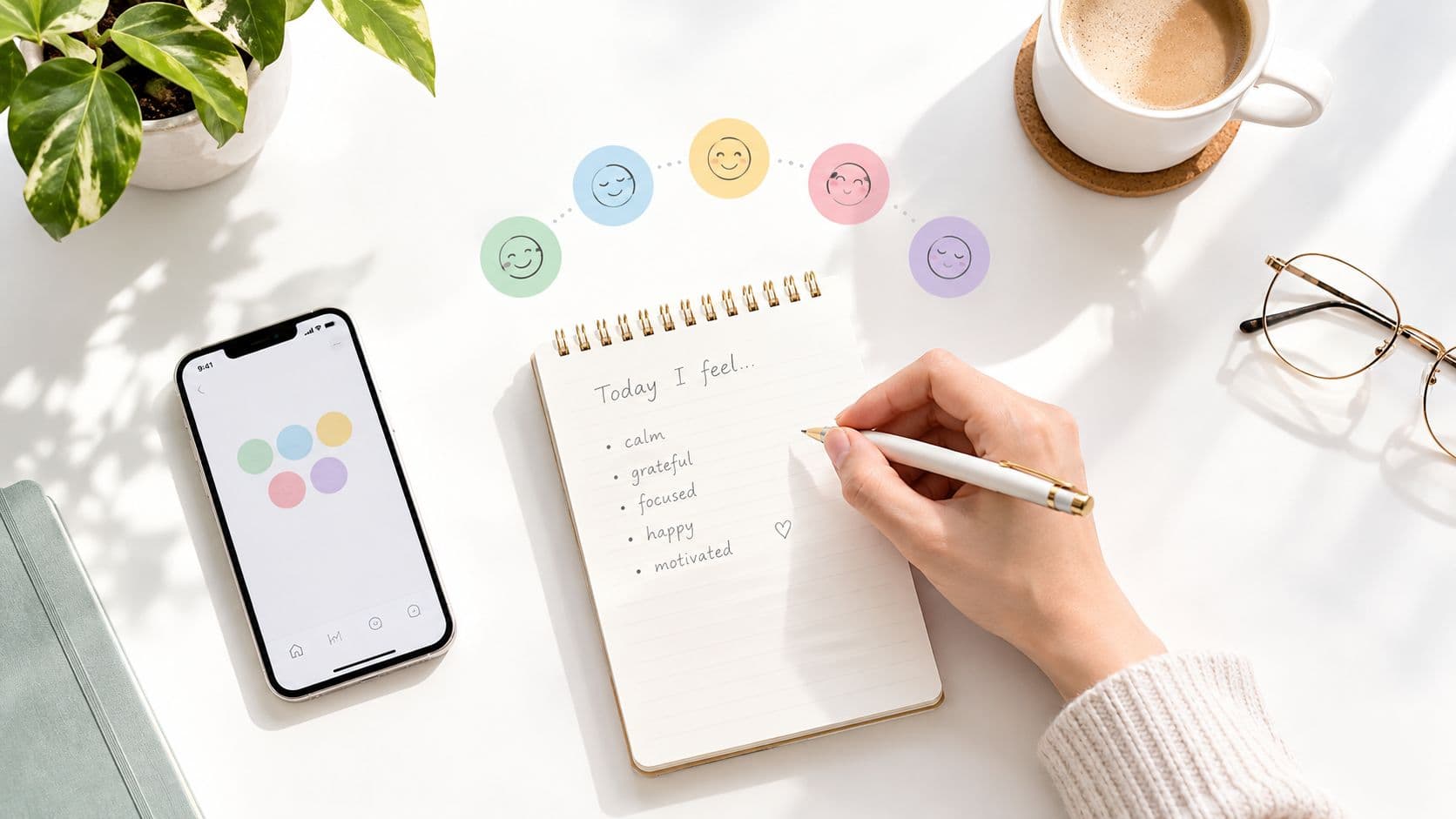
A mood check in is a brief, repeated moment of self-observation, not therapy. With 322 million people worldwide living with depression in 2023, accessible daily self-monitoring can offer useful wellness support, but it can't diagnose a condition or replace professional care.
You might notice the pattern on an ordinary morning. You wake after poor sleep, open your messages, and feel tense before the day has started. Later, you may feel better after a walk, a supportive conversation, or a completed task, yet by evening the morning distress has blurred into one general impression: “Today was bad.”
A mood check in creates a small pause before that impression takes over. You name what you're experiencing, record a few relevant details, and return to your day. Done thoughtfully, it can help you understand yourself with more patience. It shouldn't turn every feeling into a problem to solve.
What a Mood Check In Really Means
After poor sleep, you may notice tension before the day begins, yet struggle to name what is happening. Is it sadness, anxiety, exhaustion, irritation, loneliness, or several feelings together? A mood check in creates a brief pause for observation, so you can describe the moment before rushing to explain or fix it.
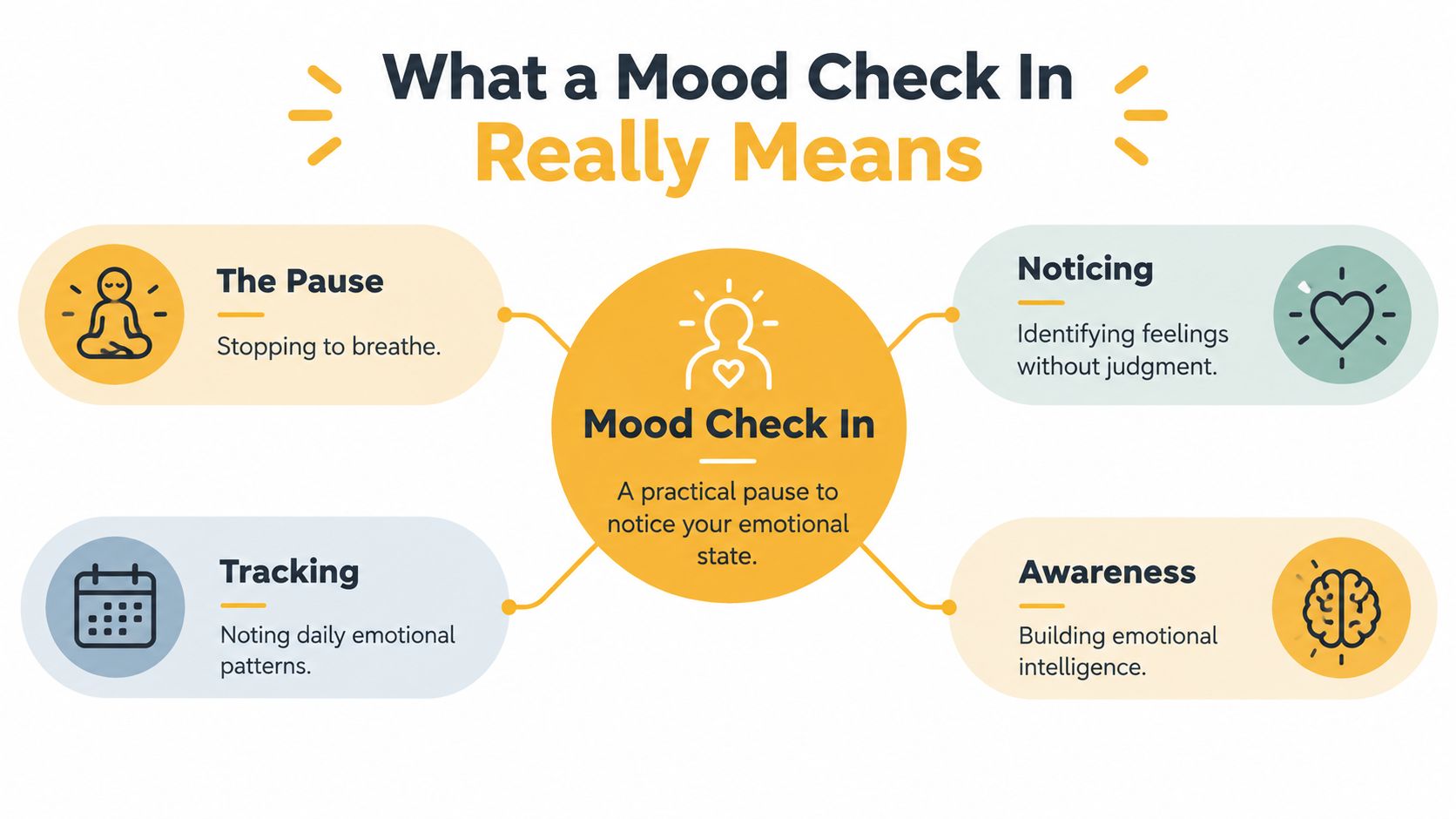
The practice works like taking a weather reading, not receiving a medical assessment. You might record your mood, energy, anxiety, sleep, or a situation that influenced you. The entry describes one moment. It cannot establish a diagnosis, define your personality, or prove that a particular exercise caused improvement.
Practical rule: Treat each entry as information, not a verdict about who you are.
Measurement and intervention serve different purposes. A check in gathers observations, while psychotherapy involves a therapeutic relationship and structured work with a qualified professional. Luno may feel therapy-like because its exercises include noticing emotions, questioning unhelpful thoughts, breathing, mindfulness, and coping skills. However, Luno: Self Care is self-guided support, not therapy with a clinician. You can learn more through Luno: Self Care.
Use language that reflects your experience rather than forcing a perfect label. “I feel flat and distracted after sleeping poorly” may offer more useful information than selecting a precise category. A notebook, phone note, simple form, or structured tool can all work. Keep the process curious and flexible, and stop if tracking increases distress or self-judgment.
Accessible support matters because the World Health Organization's mental-disorders fact sheet describes depression as affecting hundreds of millions of people globally. A low mood entry does not indicate depression by itself. It can, however, help you notice changes and consider professional support when concerns persist, intensify, or interfere with daily life.
Why Consistent Check Ins Build Real Insights
One mood rating is a snapshot. Repeated check ins create a sequence, and a sequence can reveal context that memory often smooths over. You might remember feeling anxious all week, then discover that the strongest entries occurred after fragmented sleep, demanding meetings, or long stretches without food or rest.
This approach is known as ecological momentary assessment, or EMA. Instead of asking you to reconstruct an entire week from memory, it captures experiences close to when they happen in everyday settings. Research on mobile EMA indicates that repeated assessments improve the reliability and validity of individual emotional patterns compared with a single retrospective report, as described in this review of mobile EMA research.
The method has a practical implication: don't overinterpret one unusual answer. A low score after difficult news may be completely understandable, while a gradual change across several entries may deserve closer attention. Trends should be built from multiple observations, not from a single number.
What repetition can reveal
Consider the difference between these two questions:
- Snapshot: “How have you been lately?”
- Repeated observation: “How did you feel this morning, after lunch, and before bed across several days?”
The first invites a broad summary. The second can show fluctuations, recovery periods, and recurring triggers. It may also reveal positive changes that intense distress hides, such as slightly better energy after a consistent bedtime or more calm after reducing notifications.
A useful routine records a small set of state variables, such as current mood, anxiety, energy, and sleep. Keep the scale consistent so today's response has a meaningful relationship to your earlier responses. If you miss an entry, leave it missing rather than treating the gap as a neutral mood report.
Adherence isn't automatic. The review reports completion rates ranging from 64.6% to 89.5% across mobile EMA studies, showing that participation is feasible but affected by burden and context. A brief check in, supportive reminders, and optional context questions are more sustainable than a long daily questionnaire.
How People Actually Use Mood Check Ins Daily
Maya notices morning dread before work. She records “anxious, low energy” and adds that she slept poorly. She doesn't spend the morning analyzing the entry. Instead, she uses it as a cue to lower the first task's difficulty, eat before her first meeting, and take a short breathing pause.
After several days, Maya notices that the dread isn't identical each morning. It rises most sharply after late nights and on days packed with back-to-back commitments. The check in hasn't solved the problem, but it has changed an indistinct feeling into a pattern she can discuss with a clinician or address through practical planning.

Jordan uses the same practice differently. His anxiety tends to appear during uncertain situations, so he adds a short context note when it rises: what happened, what he feared, and what helped him return to the present. He doesn't need to write an essay. A few honest words help him distinguish a temporary reaction from a recurring concern.
Someone else may use check ins to notice recovery rather than distress. A person experiencing burnout might record low energy for several days, then notice a small improvement after protecting a quiet evening. That improvement deserves attention too. Tracking isn't only about finding what's wrong. It can identify conditions that support steadier days.
The best format depends on the person. Some people prefer a paper journal, others want a phone prompt or a structured app. Luno's FAQ can help readers understand how its self-guided check-ins and planning features fit into a broader wellness routine.
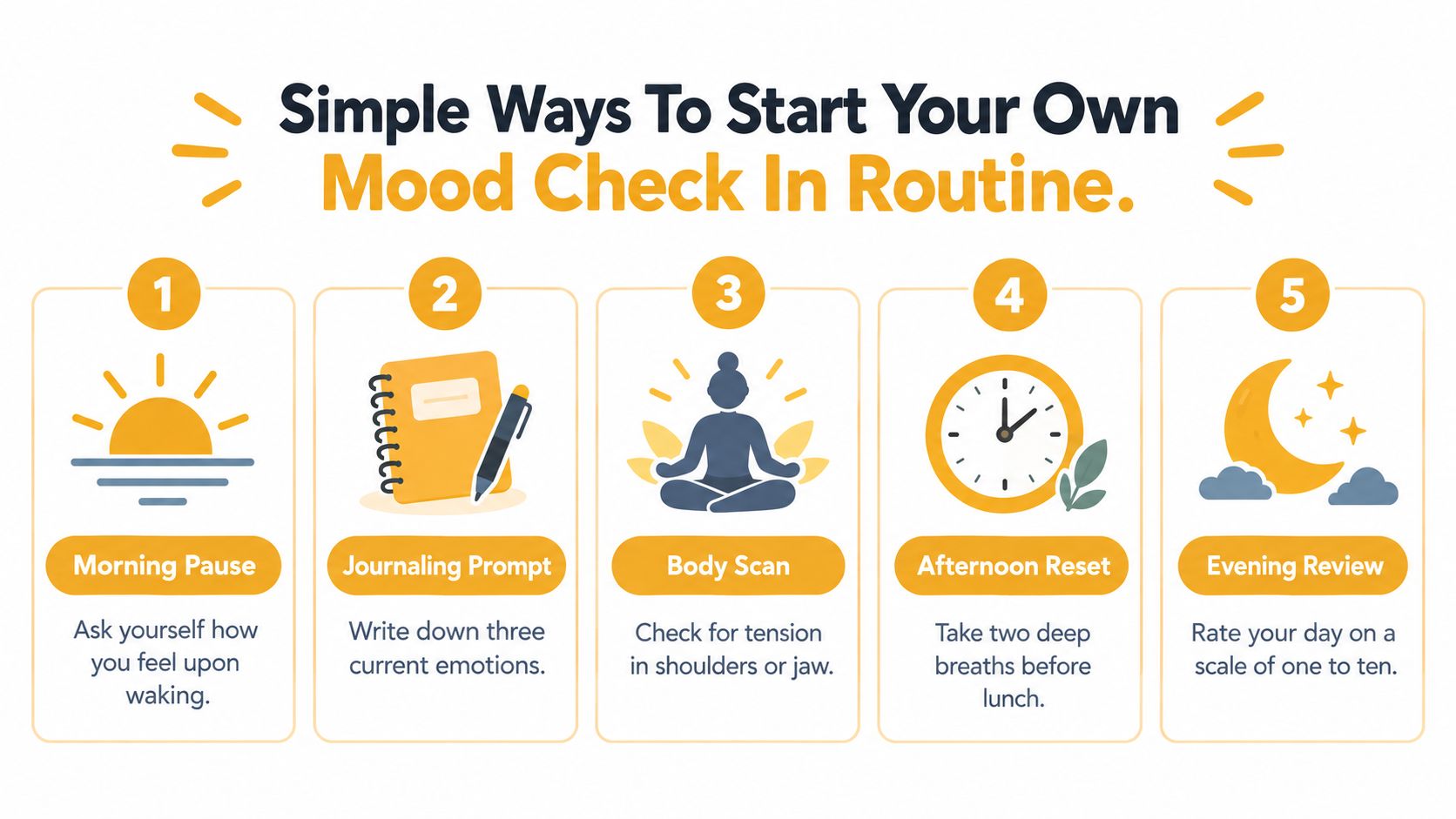
Simple Ways To Start Your Own Mood Check In Routine
A useful routine should still work on a difficult day. Choose one reliable anchor, such as waking, brushing your teeth, eating lunch, or turning off the light. Keep the core check in brief, then record:
- Name the present feeling. Choose words such as calm, tense, sad, hopeful, numb, or irritated.
- Rate intensity without judgment. A rating helps compare your own entries over time, but it is not a clinical score.
- Add one context clue. Note sleep, a conversation, physical tension, workload, or another relevant factor.
- Choose a gentle response. Stretch, drink water, step outside, write one sentence, or contact someone you trust.
- Review patterns later. Look for repeated relationships instead of demanding an explanation from every entry.
Separate the core check in from optional reflection. The first entry may take a minute. A second entry can help during a difficult period, yet extra prompts should not create pressure. Research on EMA supports brief, consistent measurement and also shows that missed entries may cluster around disengagement, symptom severity, or particular times of day. Those gaps are information about how the routine is working, not a reason to judge yourself.
Before entering sensitive reflections into any tool, check how you can remove them. Luno's account deletion page explains that process.
A structured wellness tool can turn an observation into a practical next-day experiment. Luno: Self Care uses daily check-ins and reflections to generate personalized plans, with topic pathways covering anxiety, sleep, burnout, low mood, grief, self-esteem, trauma-informed support, relationships, focus, and custom goals. Its exercises may feel therapy-like, but it isn't therapy. Choose a relevant topic without treating a generalized plan as clinical treatment.
Structured self-help also has support from WHO guidance, which notes that guided interventions can help people manage symptoms independently and expand access to mental-health support. Use such tools thoughtfully, keep their limits clear, and seek professional help when concerns become serious.
Common Misconceptions About Mood Tracking Safety
A low mood entry isn't a diagnosis. It may reflect a difficult event, poor sleep, physical discomfort, ongoing stress, or a mental-health condition, but the entry alone can't tell you which explanation is correct. Clinical assessment requires more than a daily rating.
Another misconception is that more tracking is always better. For some people, repeated monitoring can increase rumination, self-judgment, or worry. If you find yourself checking compulsively, rewriting answers to make them look acceptable, or feeling distressed whenever you miss a day, reduce the frequency or pause the practice.
The evidence also doesn't support presenting monitoring alone as a treatment. A recent systematic review found no solid evidence that mood monitoring alone improves depression symptoms, and it identified limited evidence about whether monitoring helps or harms in different circumstances. A check in can support awareness and planning, but it shouldn't be marketed as a standalone solution.
Boundaries that protect the practice
- Don't convert scores into labels. Use entries to notice personal patterns, not to diagnose yourself.
- Don't punish gaps. Resume when you're ready. A missed day is missing information, not evidence of failure.
- Don't ignore deterioration. Persistent worsening, impaired functioning, or thoughts of self-harm call for qualified professional or emergency support.
- Don't expect crisis care from an app. Self-guided wellness tools aren't emergency services and can't provide real-time clinical intervention.
A safe system should explain what happens when an answer suggests possible risk. It should provide clear scope messaging and direct people toward local emergency or professional resources. Luno's safety information is relevant for understanding those boundaries before relying on any self-guided tool.
Making Daily Mood Check Ins a Sustainable Practice
Sustainability comes from making the practice forgiving. Keep the check in short enough that you can complete it during a busy week, and let the timing adapt when a fixed reminder becomes irritating or unrealistic. A missed entry shouldn't force you to restart a program or make you feel you've failed at self-care.
Review your notes with one useful question: “What might I try next?” The answer can stay small. You might protect sleep, reduce an avoidable demand, schedule a conversation, use a breathing exercise, or bring a pattern to therapy. The check in becomes valuable when it informs a humane action, not when it produces more data for its own sake.
Keep observation separate from treatment
A mood check in tells you what may be happening. It doesn't establish why it happened, and it doesn't prove that your response caused a change. If low mood, anxiety, sleep disruption, or functional difficulties persist or worsen, professional assessment is more appropriate than endlessly refining your tracking system.
Luno's adaptive planning can support continuity after gaps by using earlier context rather than forcing a complete restart. That kind of continuity may make self-guided practice easier to resume, but it remains wellness support. Its privacy information explains the product's data controls, which should be reviewed before entering sensitive reflections into any digital service.
The World Health Organization's self-care guidance makes the boundary clear: self-care interventions supplement, rather than replace, the health-care system. You can use daily check ins alongside therapy, medical care, trusted relationships, or other appropriate support.
A sustainable routine leaves room for choice. Use a notebook if that feels private and calming. Use a digital tool if prompts and continuity help you follow through. Stop or scale back if tracking increases distress, and seek help when your experience exceeds what self-guided support can safely address.
Luno: Self Care offers daily mood check-ins, reflective journaling, and personalized next-day wellness plans across topics such as anxiety, sleep, burnout, low mood, grief, relationships, and focus. Visit Luno: Self Care to explore a structured, self-guided way to turn brief observations into practical daily support, while keeping professional care available when you need it.