Your hands start trembling before the meeting begins. Your knees feel unreliable, your voice quivers, and each attempt to check whether the shaking has stopped seems to make you notice it more. The experience is physical, frightening, and often misunderstood.
Nervous shaking is a recognized anxiety symptom, not merely a subjective feeling. The NHS lists trembling, shaking, sweating, dizziness, breathlessness, and a noticeable heartbeat among common anxiety symptoms, and panic attacks can combine shaking with rapid breathing and a racing heart (NHS guidance on anxiety). The practical answer isn't to force your body into stillness. First, decide whether the pattern is safe to manage in the moment. Then use a gentle reset that lowers arousal without accidentally intensifying panic.
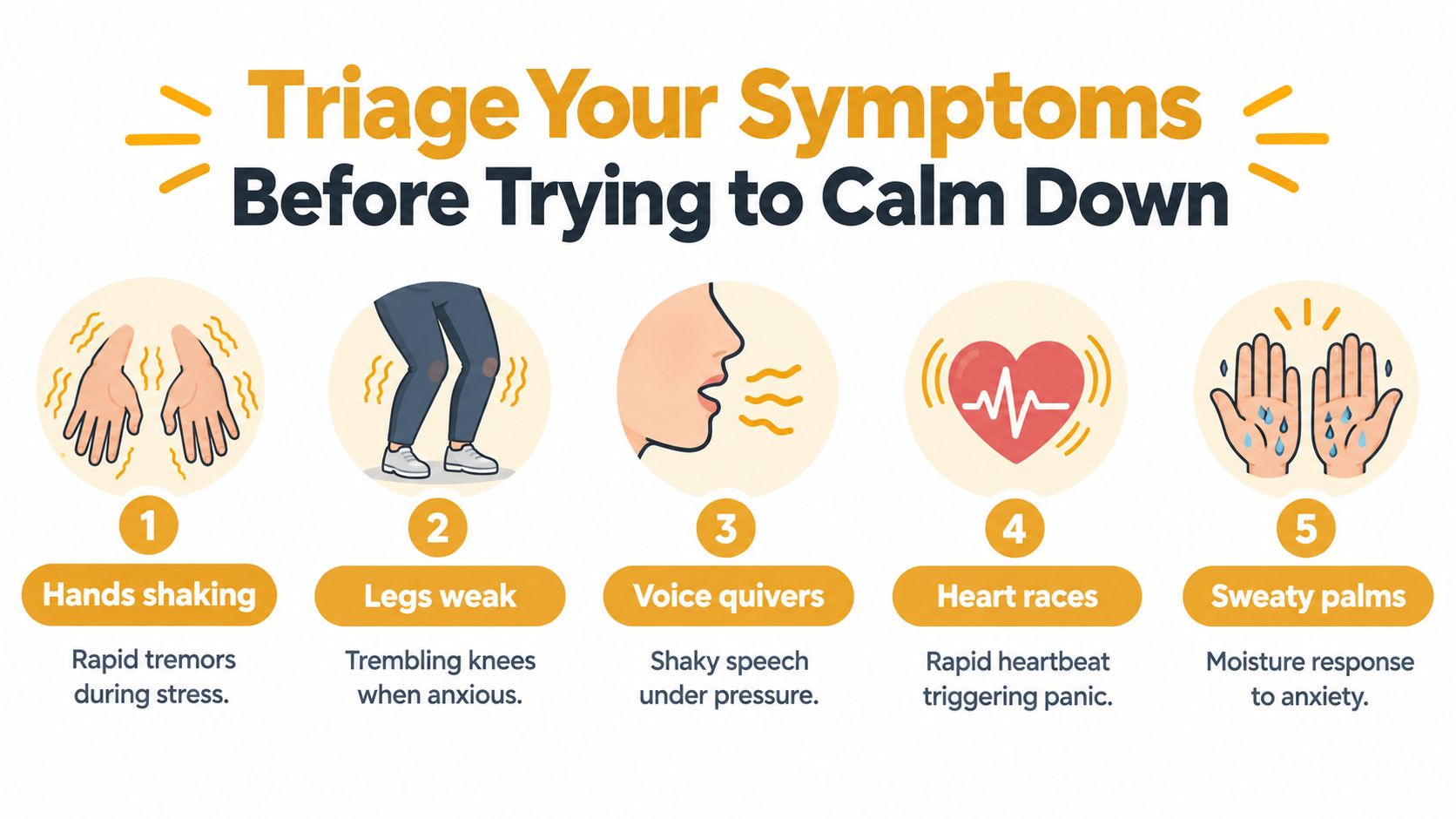
Triage Your Symptoms Before Trying to Calm Down
Your hands start shaking, and the urge is to stop it fast. Start somewhere else. Ask “Is this my usual anxiety response, or is something new happening?” That question changes what you do next.
Shaking that shows up around conflict, presentations, poor sleep, caffeine, or a surge of anxious thoughts often fits a stress-response pattern. In fight-or-flight, the body mobilizes quickly. Muscles tense, adrenaline rises, and tremor can show up in the hands, legs, jaw, or voice. That can feel dramatic, but it is still a body response, not proof that you are losing control.
Use a quick safety screen
Do not push through self-calming first if the shaking begins suddenly with one-sided weakness, confusion, difficulty speaking, difficulty walking, a seizure, fever, fainting, chest pain, or severe breathlessness. The same applies if symptoms are escalating fast, you lose consciousness, or a new neurological symptom appears. Those patterns need urgent medical assessment, not grounding exercises.
If the shaking is recurrent rather than urgent, book a clinical review when it happens outside anxious situations, gets worse over time, affects writing or daily tasks, or starts after a medication or substance change. The American Family Physician tremor assessment notes that alcohol or benzodiazepine withdrawal can cause agitation and fine tremor 24–72 hours after the last use, and sudden discontinuation can be dangerous. Do not stop prescribed medication without medical guidance.
If the episode feels familiar and none of those red flags are present, shift into calming with structure. Before using self-guided support, review Luno's safety information. That helps you sort ordinary anxiety symptoms from situations that need a clinician first.
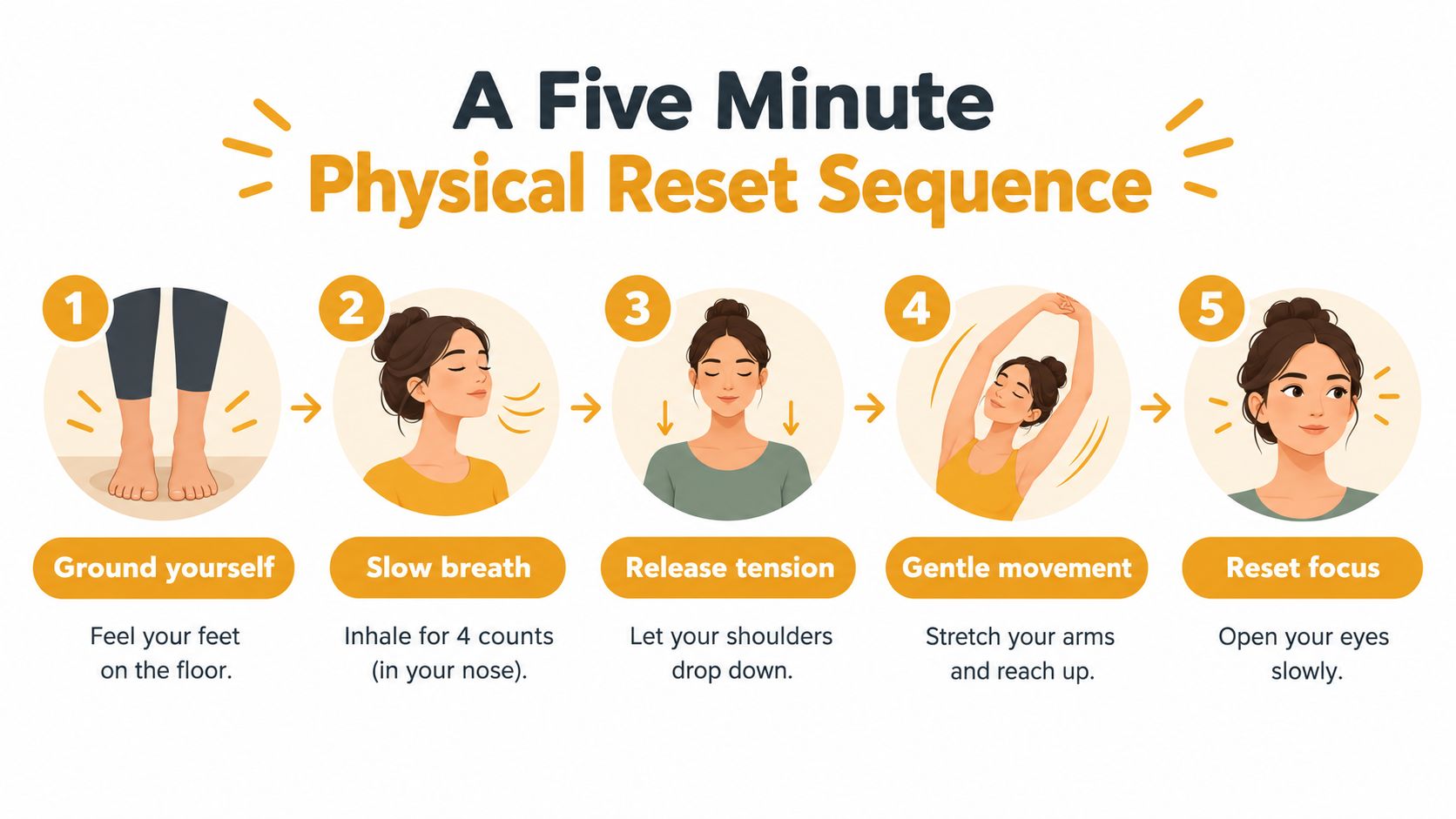
A Five Minute Physical Reset Sequence
When the shaking feels familiar and tied to stress, stop checking it every few seconds. Watching your hands, testing your legs, or asking, “Can you see it?” keeps your nervous system focused on danger. The fastest way out is usually less inspection and more physical support.
Start with physical support
Set your base. Sit down if you feel wobbly. If you stay standing, place both feet on the floor, soften your knees, and let your weight drop through your heels. Feel the chair under your hips, the floor under your shoes, or the support under your back. That contact matters because a body in fight-or-flight responds better to steadiness than to self-monitoring.
Make the breath quieter. Aim for about 6–8 breaths per minute with a small inhale and a longer, easy exhale. Keep going for about five minutes. Do not force a huge breath. A laboratory study summarized in an NIH review of slow breathing compared slow breathing at 8 breaths per minute with faster and spontaneous breathing during threat anticipation, which supports paced breathing over rapid over-breathing.
Anchor attention outside your body. Let your eyes rest on a few neutral details. Notice the line of a table, the temperature of the room, or the feel of fabric on your skin. When your mind asks whether the shaking has stopped, return to what you can see and feel around you.
Release extra effort. Unclench your jaw. Drop your shoulders. Loosen your hands. You are not trying to hold yourself perfectly still. Let the small movements be there while you reduce the added muscle tension that keeps the shaking going.
Reassess function, not perfection. After five minutes, check whether you can speak clearly, walk safely, sip water, or do the next simple task. The goal is regaining function and reducing fear, not making your body completely motionless.
If you become faint, develop chest pain, or feel much worse during the reset, stop and get medical help. If you use self-guided tools as part of your routine, read Luno's terms for self-guided support so the limits are clear.
Why Deep Breathing Can Make Shaking Worse
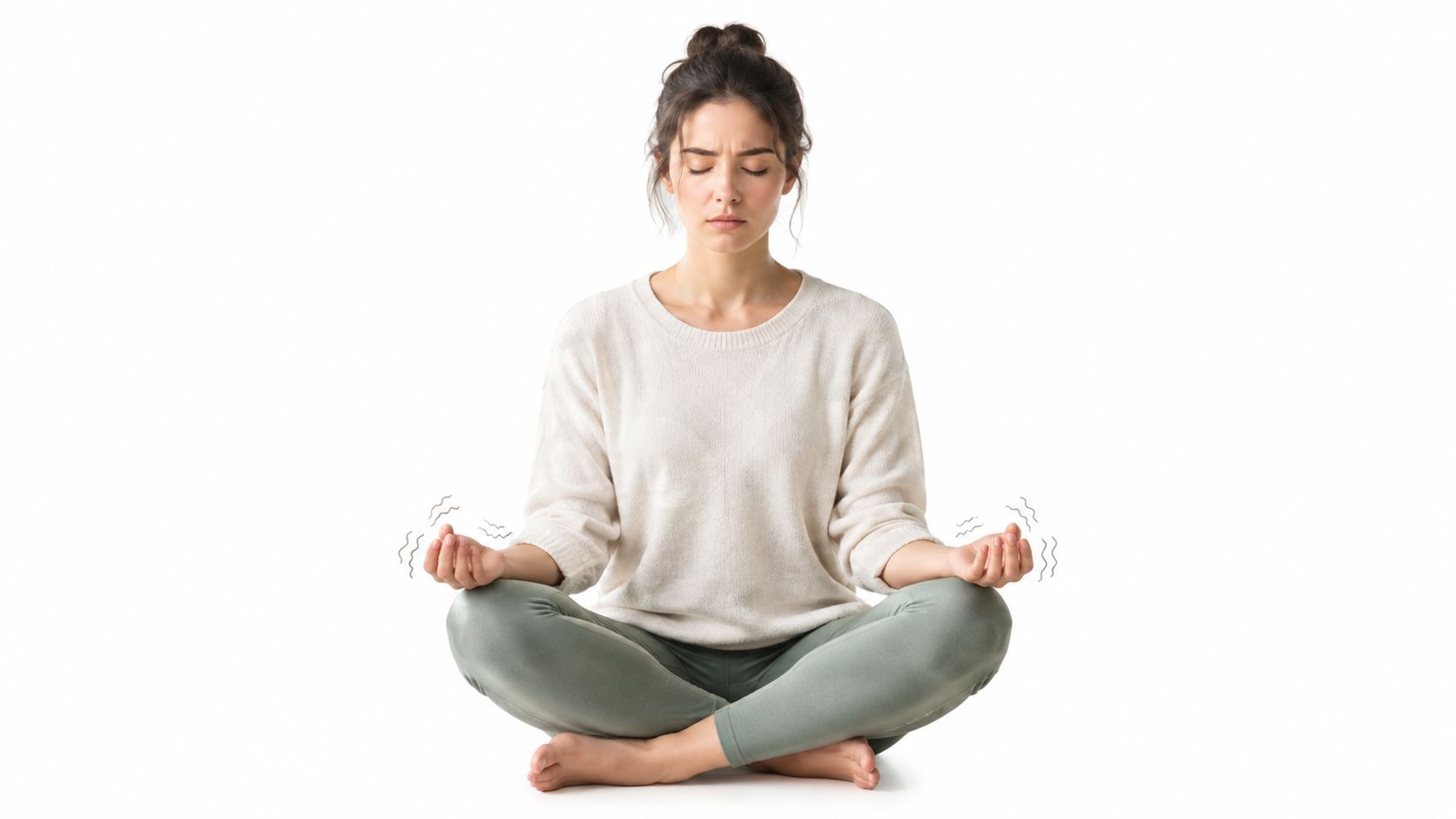
Your body can shake harder when you try to calm it with big, urgent breaths. That surprises people, because breathing advice is usually framed as harmless. In a fight-or-flight state, though, forceful breathing can add more sensation to a system that already feels overloaded.
The problem is usually not breathing itself. It is how you breathe when fear is rising. Repeated large inhales, fast mouth breathing, and “trying to get enough air” can push you into over-breathing. That can lower carbon dioxide levels in the blood, a process called hypocapnia. Then come the light-headed, tingly, unreal, buzzy feelings that many people read as proof that panic is getting worse. Once that loop starts, shaking often follows.
Trade force for comfort
A 2024 systematic review of breathing interventions found that breathing practices can help anxiety and stress, while also noting that larger randomized controlled trials are still limited. That matches what shows up in practice. Breathing can be useful, but it is not a universal off switch, and the wrong style can make a frightened body feel less safe.
Use a small, quiet inhale. Let the exhale get a little longer if that feels easy. Do not drag in air, hold your breath to prove control, or push the exhale out hard. If counting makes you monitor yourself too closely, drop the numbers and aim for a rhythm that feels steady and unforced.
Practical rule: If a breathing exercise makes you dizzy, tingly, or more frightened, make the breath smaller and easier.
The NHS panic and anxiety guidance recommends slow, comfortable breathing. That word matters. Comfortable breathing is controlled and quiet, not exaggerated. It also helps to sit with support under you, soften your shoulders, and avoid caffeine or alcohol while your system is already activated.
Building Long Term Nervous System Resilience
A fast reset can settle an episode enough to help you function. Long term resilience comes from learning what sets your system off, catching patterns early, and practicing regulation before your body is already in full alarm.
Start with a short daily log. Track sleep quality, stress level, caffeine or substance intake, medications, where the shaking shows up, whether it starts at rest or during action, how long it lasts, and what happened right before it began. Keep it brief. The goal is not constant self-monitoring. The goal is to spot whether your body tends to shake after poor sleep, anticipatory stress, medication changes, conflict, or overstimulating environments.
That kind of pattern recognition matters. If you know your nervous system is more reactive after a bad night, too much caffeine, or a high-pressure meeting, you can intervene earlier instead of waiting for symptoms to build.
Build practice into ordinary days
Use a short routine at the same time each day, especially on days when you feel relatively steady. That is when the body learns best.
- Morning check-in: Name your mood, physical tension, and the situations most likely to raise your stress today.
- Midday regulation: Use a few minutes of grounding, gentle movement, or quiet breathing before symptoms spike.
- Evening review: Write down what helped, what made sensations stronger, and what you want to change tomorrow.
- Weekly pattern check: Review links between sleep, caffeine, workload, conflict, and tremor.
Cognitive behavioural techniques can also reduce the secondary fear that keeps shaking going. Thoughts like “Everyone can see this” or “I'm losing control” push the body further into threat mode. A better response is more accurate and more useful: “My body is activated. I can steady it, and I can choose my next step.”
Lifestyle basics still matter. Regular movement, enough sleep, and less caffeine can lower background arousal over time. They do not replace medical assessment when shaking is severe, new, unexplained, or repeatedly disruptive. If symptoms keep interfering with daily life, professional support may help.
If you want a digital tool for private tracking, review Luno privacy details for self-care records before choosing a service.
Using Luno for Structured Daily Self Care
Self-care often fails at the exact point people need it most. When you're tired, anxious, or overwhelmed, deciding which exercise to use and remembering what helped yesterday can feel like another task. A structured daily check-in reduces that decision load by turning reflection into a repeatable practice.
Luno: Self Care is an AI mental wellness companion that converts daily check-ins and reflections into personalized next-day plans. Its available protocol packages include Anxiety Relief, which uses CBT and breathing tools, and Burnout Recovery, which combines somatic methods and boundary work. The app can also support journaling and ongoing pattern tracking, so your routine doesn't depend on remembering every previous episode.
Keep the clinical boundary clear
Luno may feel like therapy because it offers deep, structured reflection and exercises informed by approaches such as CBT and ACT. It is not therapy. The APA defines psychotherapy as a psychological service provided by a trained professional who assesses, diagnoses, and treats dysfunctional emotional reactions, thinking patterns, and behaviours (APA definition of psychotherapy).
A self-guided app doesn't establish a therapist-patient treatment relationship, create an individualized clinical formulation, or provide diagnosis, crisis intervention, or medical treatment. The APA also describes psychotherapy as a process involving discussion of a person's concerns, agreed goals and procedures, and a regular treatment schedule with a qualified professional (APA guidance on psychotherapy).
Luno can help you practice coping skills and organize self-care. It shouldn't be used to explain away a new tremor or delay urgent care.
The World Health Organization includes digital products among possible self-care interventions used partly or fully outside formal health services, with or without direct supervision (WHO explanation of self-care). That makes Luno suitable as self-guided mental-wellness support, including between professional sessions or as a daily routine, while severe, worsening, or urgent symptoms require clinical services.
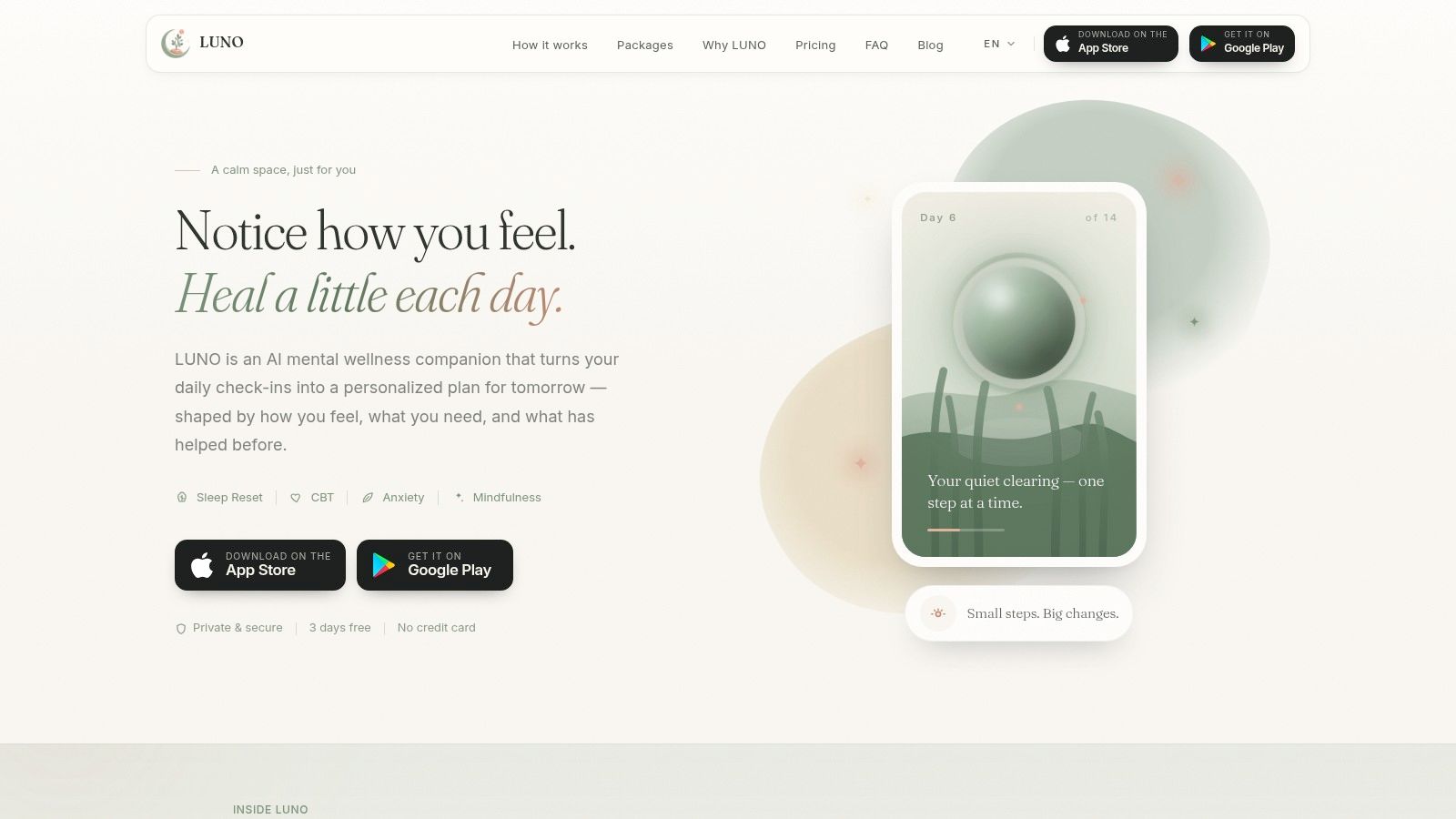
You can explore the available self-care tools and protocol options at Luno: Self Care.
What to Do After the Shaking Stops
When the tremor fades, don't immediately interrogate the episode or label it a failure. Take a few minutes to drink water, sit somewhere stable, and return to an ordinary activity at a manageable pace. Your body may feel tired after a surge of arousal, so choose steady movement and a calm transition instead of demanding instant productivity.
Later that day, write a short account while the details are fresh. Record the setting, what happened immediately beforehand, sleep quality, caffeine or substance intake, recent medication changes, the body area affected, whether the shaking occurred at rest or during action, and how long it lasted. The purpose isn't to create another anxiety ritual. It's to give you and, if needed, a clinician useful information.
Turn the episode into a decision
A familiar tremor that follows a clear stressor and settles with time may call for routine maintenance and continued observation. Recurrent attacks, persistent worry about another attack, avoidance of work or relationships, or interference with daily life are reasons to seek professional support. Panic episodes commonly last approximately 5–30 minutes, although duration and intensity vary by person (NHS anxiety guidance).
Don't rely on self-care alone when the onset is sudden, symptoms are progressing, or shaking occurs with fainting, chest pain, weakness, fever, confusion, speech or gait changes, or other neurological symptoms. A clinician may use your symptom log, a focused history, and a neurological examination to decide whether targeted tests or medication review are appropriate.
If you want structured prompts for tracking patterns and practicing coping skills between episodes, review the Luno FAQ. The aim isn't to promise that shaking will never happen again. It's to replace fear and guesswork with safety checks, practical skills, and the right level of support.
Luno: Self Care offers guided daily check-ins, personalized next-day plans, journaling, and structured Anxiety Relief tools that can help you practice steady coping skills around nervous shaking. Visit Luno: Self Care to build a self-guided routine, while contacting a qualified professional for diagnosis, treatment, or urgent support when needed.