You're sitting on the sofa, breathing more evenly, but you still don't feel like yourself. The intense fear has eased, yet your legs feel weak, your thoughts seem foggy, and you're wondering whether another wave is coming. After a panic attack, feeling calmer and feeling recovered aren't necessarily the same thing.
Why Calm Does Not Always Mean Recovered
Perhaps someone has told you that you look better. You nod, but answering a message or deciding what to eat still feels surprisingly difficult. That gap between how you appear and how you feel deserves attention, not pressure to get back to normal.
So, how do you feel after a panic attack? You may feel exhausted, shaky, emotionally exposed, or uneasy rather than immediately relieved. Mayo Clinic's explanation of panic attacks specifically recognizes feeling fatigued and worn out after an attack subsides.
Feeling safe and physically quiet may return before your energy and confidence do.
Think of finishing a sprint. Stopping the run doesn't mean your body has finished recovering. Similarly, the end of intense panic doesn't require you to feel ready for conversation, work, or errands immediately.
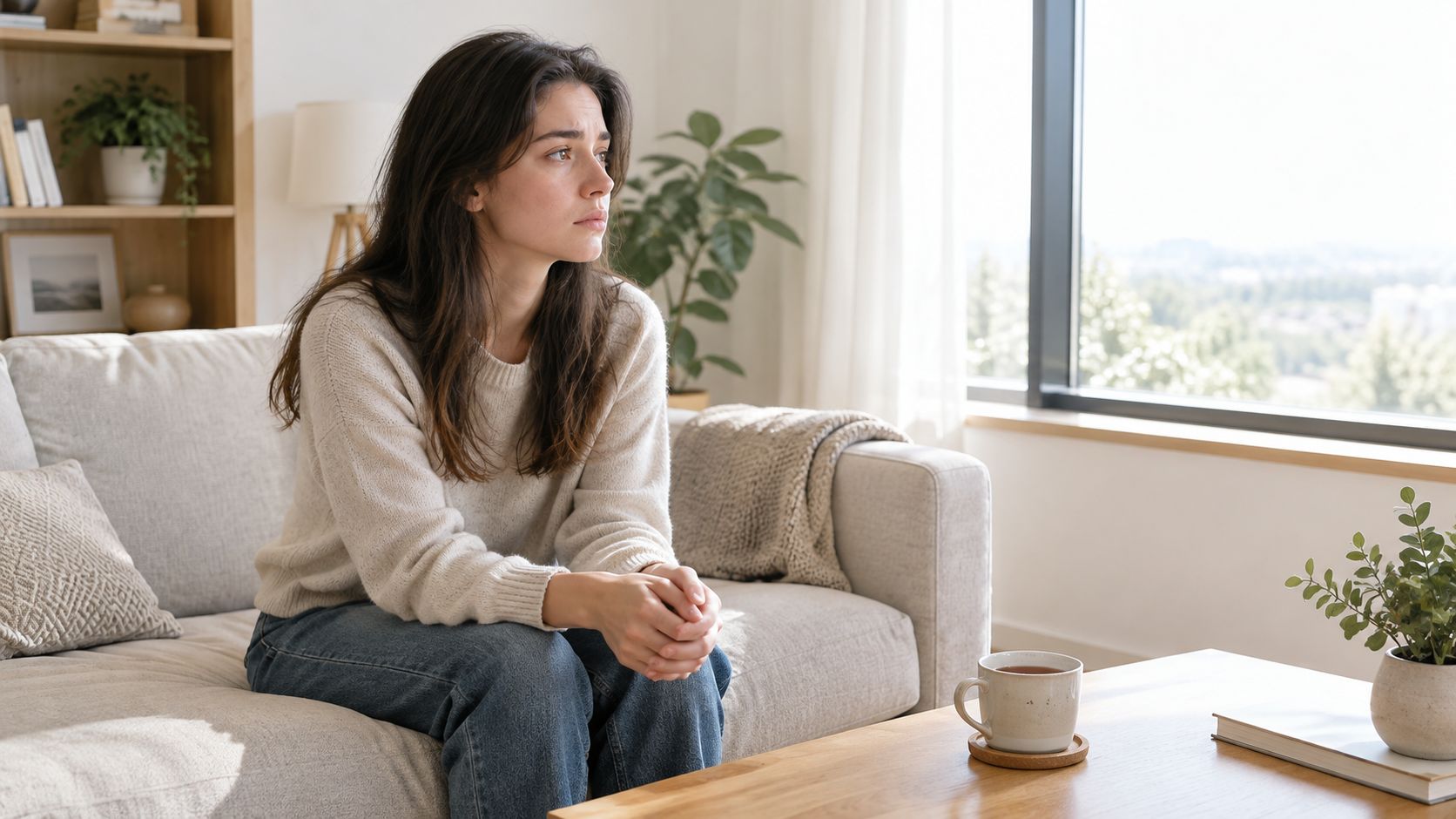
Your emotional response can vary, too. You might feel grateful that the fear has eased, upset by what happened, or unsure what to make of it.
It helps to separate different questions: What am I noticing? Is it improving? What support do I need? Recognizing the aftermath as a distinct recovery phase gives you room to answer without assuming either that everything is fine or that every lingering sensation means danger.
Common Symptoms in the Panic Aftermath
Post-panic experiences are easier to understand when you separate physical sensations, emotions, and thinking changes. These aren't diagnostic categories or a checklist you must match.
The symptom map below shows how these experiences can overlap.
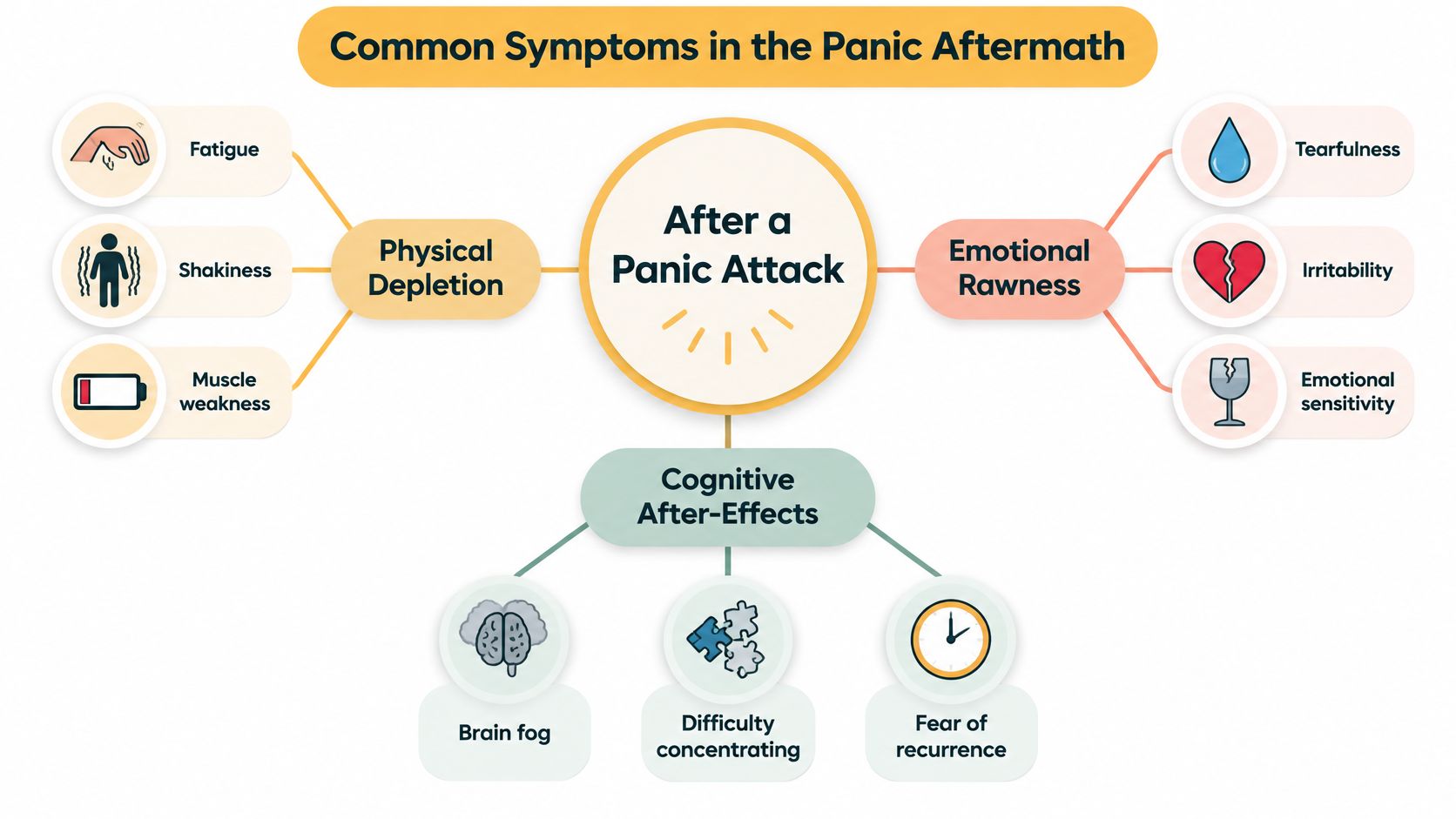
- Physical depletion: You may notice fatigue, weakness, trembling, nausea, or unsettled breathing.
- Emotional rawness: You might feel vulnerable, embarrassed, discouraged, or frightened by the possibility of another attack.
- Cognitive after-effects: Concentrating may take more effort. You may feel detached from your surroundings or keep checking your body for signs that panic is returning.
Physical symptoms and feelings of unreality are described in MedlinePlus's overview of panic disorder, which notes that some symptoms can continue for an hour or longer.
What the overlap can look like
Consider an illustrative situation, not a clinical case: someone returns to their desk after an attack. Their hands are steadier, but they reread the same email because they can't concentrate. Then they notice their heartbeat and become frightened again.
That person isn't necessarily having a new attack because they still feel unsettled. Equally, a familiar label shouldn't be used to dismiss symptoms that need assessment.
The following video offers another format for exploring panic-related experiences.
Residual anxiety or shakiness can continue for hours. How composed someone looks isn't a reliable measure of how recovered they feel, and there's no benefit in comparing your recovery with someone else's.
Why Your Body May Feel Worn Out
During panic, your body activates its fight-or-flight response. Your heart works faster, breathing changes, muscles prepare for action, and attention becomes focused on possible danger. Even when you haven't been running or lifting anything, you've experienced a demanding period of physical arousal.
When the perceived threat subsides, you don't necessarily switch straight back to your usual energy level. The effort involved in sustained alertness can help explain feeling physically drained, mentally foggy, or emotionally depleted afterward.
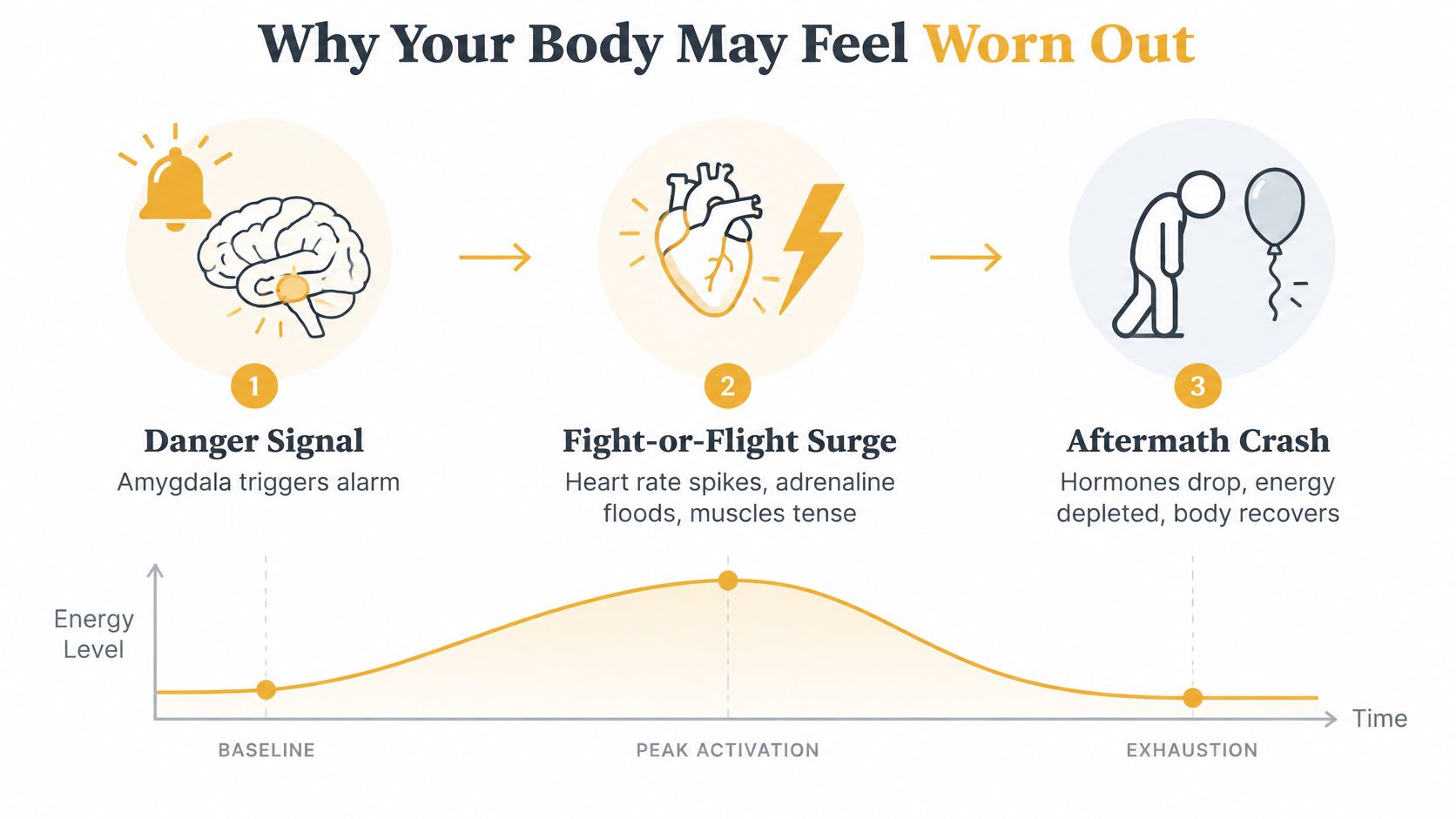
The attack and recovery have different timelines
An NHS panic resource from Forum Health Centre describes an experience in which recovery took about 10 minutes, while exhaustion persisted for the rest of the day. That's an example of how the timelines can differ, not a deadline your body must follow.
Breathing changes can also contribute. Hyperventilation means breathing faster or more deeply than your body needs, which lowers carbon dioxide in the blood. This can contribute to dizziness, tingling, faintness, breathlessness, and chest tightness.
Helpful distinction: Feeling short of breath doesn't always mean you need to take bigger breaths.
Those sensations can be frightening, particularly when you interpret them as proof that something dangerous is happening. The aim isn't to argue with yourself about every sensation, but to understand why forcing extra air may be unhelpful.
Variable recovery time doesn't automatically mean something is wrong. Still, a body-based explanation isn't a diagnosis, and new or worsening symptoms deserve more than reassurance.
Ground Yourself During the First Hour
Start with safety rather than a calming technique. If symptoms are severe, unfamiliar, or concerning, seek assessment instead of trying to complete an aftercare routine.
For familiar symptoms that are settling, choose a few manageable actions. You don't have to perform every step or make yourself relax on command.
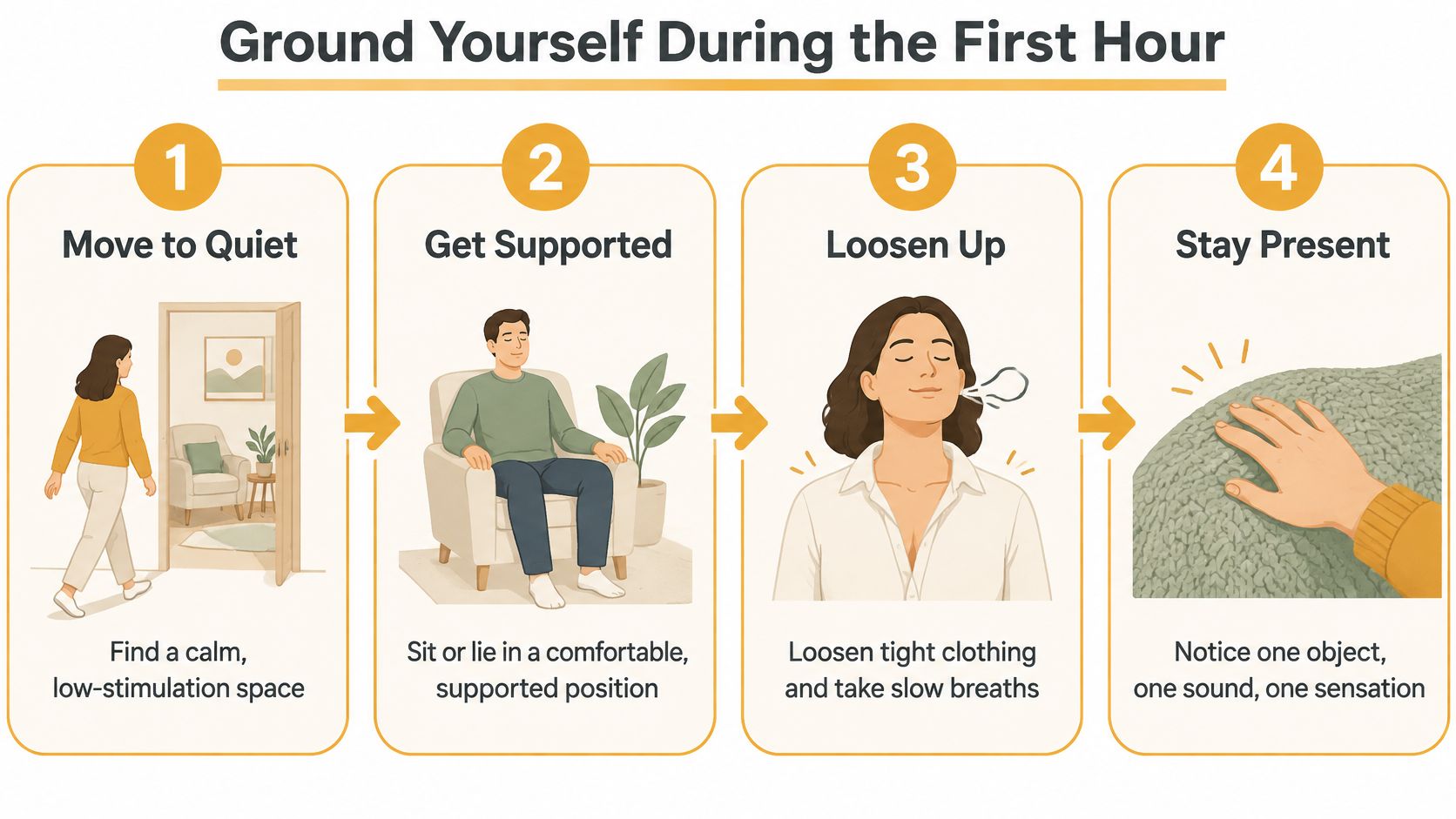
Make the environment easier to tolerate
- Move somewhere quieter: Step away from noise, bright screens, or a demanding conversation if you can.
- Get supported: Sit with your back supported or lie somewhere safe. Loosen clothing that feels restrictive.
- Attend to basic needs: Sip water and eat something if you need food. These are ordinary care steps, not treatments for unexplained symptoms.
Let breathing become gentle
Try a slow nasal inhale followed by a longer, unforced exhale. Keep the breaths comfortable rather than deliberately large. NHS guidance on managing panic explains breathing-related symptoms and supports controlled breathing rather than over-breathing.
Don't gulp air, force deep breaths, or breathe into a paper bag. If focusing on breathing makes you feel worse, stop forcing the exercise. Persistent breathing difficulty needs medical attention.
For grounding, name neutral objects around you: a wooden table, a closed door, a blue mug. Feel the chair beneath you or your feet against the floor. Use factual self-talk, such as noticing where you are and what you can see, rather than promising yourself that nothing could be wrong.
Keep the next hour simple. Consider postponing demanding tasks and avoiding caffeine or other stimulants while you settle. If recording the experience feels useful, jot down when it began, what you noticed, and whether symptoms are easing.
These actions reduce demands and stimulation. They aren't a cure, a test of willpower, or a substitute for care.
Recognize Warning Signs Between Recovery and Concern
The safest distinction isn't "panic symptoms" versus "medical symptoms." The same sensation can occur in different conditions, and a symptom list can't establish the cause.
Panic can resemble heart, respiratory, neurological, or metabolic illness. A conservative approach considers whether symptoms are familiar, whether they're improving, and whether anything is severe or unusual. Clinical discussion of panic assessment provides context for why physical symptoms shouldn't automatically be attributed to anxiety.
Post-Panic Symptoms and Sensible Responses
| Situation | Why It Matters | Suggested Response |
|---|---|---|
| Familiar sensations that steadily become milder | This may fit your previously assessed recovery pattern | Rest and monitor, following any clinician-provided plan |
| Chest discomfort that is new, persistent, severe, or worsening | Panic and serious physical illness can overlap | Seek urgent medical assessment |
| Significant or persistent breathing difficulty | Breathing exercises can't establish the cause | Obtain urgent medical help |
| Fainting or pronounced near-fainting | It shouldn't be dismissed as anxiety | Sit or lie safely and seek prompt assessment, urgently after fainting |
| Confusion, one-sided weakness, or other new neurological changes | These require assessment beyond panic self-care | Contact emergency services |
| Suicidal thoughts or inability to stay safe | Immediate emotional safety takes priority | Seek urgent crisis support or emergency care |
When you're unsure
First-ever or unusually severe symptoms deserve professional assessment. Having experienced panic before doesn't establish that a new episode has the same cause.
If you're deciding whether to call for help, describe what's happening plainly: when symptoms started, whether they're changing, and what feels different from previous episodes. You don't need to prove that it isn't panic before seeking care.
For immediate danger, contact local emergency services. If you feel unable to stay safe emotionally, reach a crisis service and ask someone you trust to stay with you while help is arranged. Journaling, grounding, and app-based exercises should never delay that response.
Support the Rest of Your Day After Panic
Consider two hypothetical recovery days. In one, a person's intense fear settles, but they feel too depleted to shop for groceries. They postpone the errand, eat something simple, and let a trusted person know they're having a difficult afternoon.
In the other, someone feels physically steadier but cancels a familiar outing because they're afraid panic will return. By the next day, their main difficulty isn't exhaustion. It's uncertainty about leaving home.
Choose support for the difficulty you actually have
The first person may need lower expectations and rest. The second may benefit from discussing a manageable return to ordinary activities, especially if avoidance starts spreading. Neither needs to prove recovery by forcing a packed schedule.
- If decisions feel demanding: Choose a familiar meal and postpone nonessential choices.
- If company feels helpful: Ask someone to sit with you or check in, without requiring a detailed explanation.
- If you want movement: Consider gentle, ordinary activity when you feel physically well enough.
- If worry dominates: Notice which activities you're beginning to avoid and bring that pattern to a clinician.
Avoidance deserves attention rather than shame. Longitudinal research on panic disorder recovery found different recovery patterns depending on whether agoraphobia was present, supporting the importance of assessing restrictions in daily life.
A brief note can make an appointment more useful. Record the peak, how long recovery seemed to take, the sensations you noticed, and what you couldn't comfortably do afterward.
Think of aftercare as a menu, not a fixed sequence. Rest, food, quiet, company, reflection, or time may fit different moments, but relaxation alone shouldn't be expected to resolve recurring attacks.
When Aftermath May Extend Beyond One Attack
An isolated panic attack doesn't by itself mean you have panic disorder. Feeling shaken afterward is different from developing an ongoing pattern of unexpected attacks, persistent fear, and changes in daily behavior.
NIMH describes panic disorder as recurrent, unexpected attacks accompanied by at least one month of concern about further attacks, worry about their meaning, or behavior changes intended to avoid them. That definition helps clinicians assess a pattern; it isn't a reason to delay asking for help.
Look at interference, not just intensity
Temporary distress might involve needing a quieter evening after a frightening experience. A more persistent difficulty might mean repeatedly checking your pulse, losing sleep worrying about another attack, or arranging your week around avoiding places.
Shame can make this harder to discuss. You may minimize what happened because you managed to finish work, even though you spent the day monitoring every bodily sensation.
You don't have to wait until panic controls your daily life before asking for professional support.
The course varies substantially. Some people recover without formal treatment, while others experience recurring or fluctuating symptoms, as summarized in NIMH's panic disorder information.
If fear, avoidance, or disrupted sleep continues to affect work, relationships, or ordinary activities, arrange an evaluation. The purpose isn't to label you. It's to understand what's happening and choose support that matches your needs.
Build a Calm Recovery Practice
A useful recovery practice should still be usable when you're tired. It doesn't need an elaborate routine, constant body monitoring, or a promise that panic will never happen again.
Prepare something simple when you're feeling more settled: a note on your phone, a paper reminder, or a plan discussed with your clinician. Include a trusted contact and any individualized medical advice you've received.
Keep the essentials visible
- Protect immediate safety: Put urgent assessment ahead of self-care when symptoms are severe or unfamiliar.
- Reduce demands: Choose a quieter setting and leave nonessential tasks for later.
- Use comfortable breathing: Aim for steady rather than bigger breaths.
- Select manageable activity: Let your current capacity guide the next task.
- Notice patterns: Bring recurring attacks, increasing avoidance, or difficult recovery to a qualified professional.
This is a reference, not another standard to meet. If all you can manage is asking someone to sit beside you, that's a concrete next step.
Where self-guided support fits
Alongside paper journaling, clinician-provided exercises, and support from trusted people, Luno offers structured, personalized plans based on daily check-ins and reflections. You can find topics that match what you need, including anxiety relief, sleep repair, burnout recovery, depression support, grief, self-esteem, trauma-informed pacing, relationship patterns, and focus.
Luno can feel like therapy, but it is not therapy. Its guided format can provide structure for reflection and coping, but it's a self-guided wellness app, not psychotherapy, diagnosis, crisis care, or a substitute for clinical treatment.
That boundary matters. A systematic review of smartphone mental health interventions found no significant benefit over controls for panic symptoms in the studies analyzed. An app shouldn't be presented as a proven treatment for panic.
You don't need forced reassurance or automatic alarm about every sensation. Give familiar, improving symptoms room to settle, keep track of meaningful changes, and obtain professional help when the situation calls for it.
Luno: Self Care offers daily check-ins, journaling, and personalized next-day plans for structured self-guided support. If you'd like help organizing gentle coping steps and reflections after panic, visit Luno: Self Care, while keeping medical assessment and professional treatment part of your plan when needed.