
You know the kind of day that starts with a quick scroll, turns into another cup of coffee, then somehow ends with you feeling even flatter than when you began. The chores are fine, your phone is full of distractions, and still nothing feels worth the effort. That's often boredom at work, not a lack of character. Modern psychology treats boredom as a signal that something is missing, often structure, novelty, meaning, attention, or agency, and the right cure for boredom depends on which of those is gone.
These nine activities, habits, and mindset shifts give you practical ways to meet that moment without pretending every kind of boredom is the same. Some bring direction. Some restore challenge. Some help you move when you feel stuck. Luno feels like therapy to many users, but it is not therapy. It's a self-guided support tool, not a crisis service, and people can bring any topic they need into their daily check-ins.
1. Luno Self Care Daily Check Ins and Personalized Plans
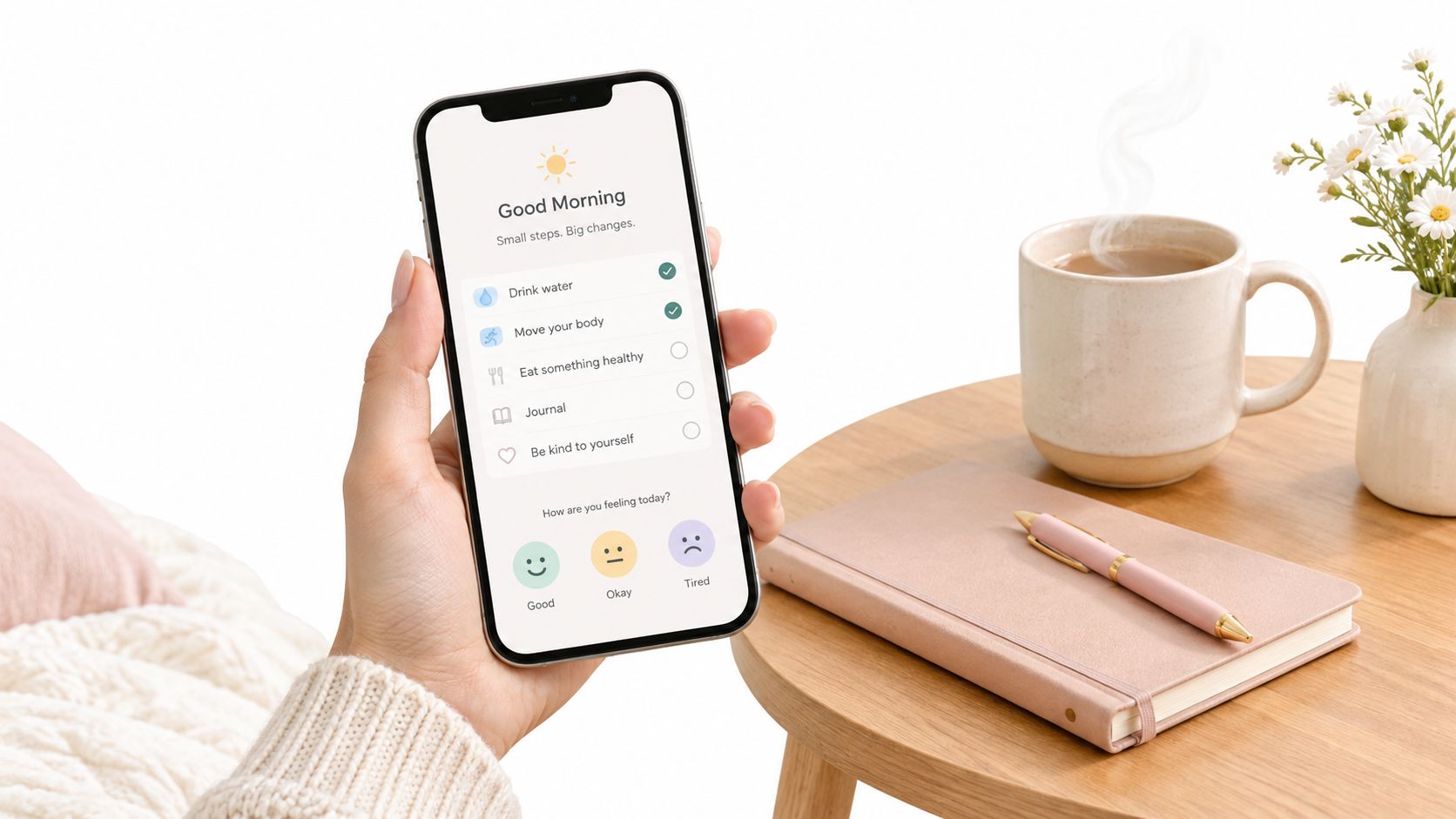
When boredom comes from a day with no shape, a daily check-in can be the fastest way to make the hours feel usable again. Luno: Self Care turns a mood reflection into a personalized next-day plan, so you're not staring at an empty stretch of time and asking yourself what you should do first. It feels therapeutic because it helps you name what's going on, but it's still self-guided support, not clinical treatment, and it can adapt to whatever topic is on your mind. Luno: Self Care
Give the day a frame
A lot of boredom isn't about needing more entertainment, it's about needing a clearer sequence. If you're drained after remote work, a burnout-recovery plan with boundary-setting tasks and short somatic exercises can make the day feel less amorphous. If your nights are messy, a sleep-repair routine can give evening time a purpose instead of letting it dissolve into passive scrolling.
Practical rule: check in at the same time each day, and be specific about what felt boring, draining, or flat. The more honest the reflection, the more useful the next-day plan tends to be.
That kind of structure matters when the problem is lack of direction, not lack of stimulation. Start with the 3-day free trial if you want to see whether the daily rhythm fits your routine. If more than one person at home needs a shared system, the Family plan on Bloom gives five seats, which makes it easier for households to build a common structure without everyone using the same approach.
2. Expressive Writing
Boredom often gets louder when you do not pause long enough to see what feels missing. Expressive writing helps because it slows the mind and turns a vague drag into something you can examine. Set a timer, write freely, and the flatness usually starts to look less random. Often it has a more specific name underneath it, under-challenge, loneliness, low inspiration, or a task that feels too heavy to start.
Use writing to name the flatness
Pennebaker's research on written emotional disclosure is a useful reference point here, because the practice is not about sounding polished. It is about getting internal static out of your head and onto the page, where patterns become easier to spot. Fifteen minutes is enough. Keep the goal simple, honest observation.
A basic structure helps:
- Name the flatness: Write what felt dull today and when it showed up.
- Mark the spark: Note one thing you enjoyed, even briefly.
- Look ahead one step: Write one small thing you would like to try tomorrow.
Reviewing entries later can show the same boredom triggers repeating on certain days, at certain times, or around certain people. If the writing brings up material that feels too heavy, stop and talk with a qualified professional. The point is clarity, not emotional flood.
3. Duolingo
Some boredom comes from too little challenge, especially when your routine has become so familiar that your brain can almost run it on autopilot. A language app like Duolingo helps because it gives you a tiny daily task with immediate feedback. The lesson is short enough to start, but real enough to create momentum.
Make progress visible
Duolingo was founded in 2011 by Luis von Ahn and Severin Hacker, and its game-like design matters because boredom often drops when progress becomes visible. Points, streaks, and levels make the next step feel concrete. That's useful if you keep telling yourself you need to “learn something new” but never settle on a single, manageable habit.
The best use is simple. Pick one language, choose a daily time, and keep the session short enough that it doesn't feel like a second job. A morning coffee routine works well because it links the lesson to something you already do. Some learners pair the app with a weekly conversation or listening session, which turns passive repetition into actual language use.
A streak should stay light, not punishing. If it starts to feel like pressure, the app stops serving the boredom problem and becomes another obligation. The goal is small, achievable challenge, not a performance test.
4. Microadventures
Some boredom is less about thinking and more about stale environment. If the same four walls, the same commute, and the same weekend patterns are wearing you down, a microadventure can reset the feeling without requiring a big trip or much planning. British adventurer Alastair Humphreys popularized the idea in his book Microadventures, and the appeal is obvious, novelty doesn't have to be expensive.
Change the setting fast
A microadventure can be as simple as a sunrise walk, a local overnight camp, or an evening swim near home. The value is that it breaks the loop of default behavior. Even a different route home on foot can wake up attention in a way that a long list of hobbies never will.
Simple test: if you can start the outing within 24 hours, it's probably small enough to actually happen.
That rule keeps the idea practical. Check weather, sunset times, and local rules before you go, and tell someone your plan and expected return time. If you're restless but short on time, keep a list of nearby parks, hills, shorelines, and neighborhoods so you can choose quickly instead of talking yourself out of it.
Later in the day, the novelty often helps your mind keep working in a cleaner way. The point isn't adventure for its own sake. It's replacing the mental sameness that makes ordinary weekends feel deadened.
Here's a visual reminder that a change of scene can do a lot more than another hour online.

5. Pomodoro Technique
When boredom shows up as resistance, the task usually isn't too dull, it's too big in your mind. The Pomodoro Technique solves that by shrinking the commitment until you can start without a fight. Instead of promising to “work on the project,” you promise one focused interval and then stop.
Use short work blocks to beat inertia
Francesco Cirillo developed the method in the late 1980s, and its strength is still the same. You work for 25 minutes, rest for 5, and after four cycles you take a longer break. That structure helps when the problem isn't lack of interest, but difficulty getting moving.
A student drafting an essay outline can use four pomodoros and then take a walk. A freelancer facing a messy client project can break the work into small slices and give each slice its own timer. What makes this useful for boredom is the way it lowers emotional resistance. The clock says the job is temporary, and your nervous system usually cooperates.
Write the one task before each interval starts. A visible timer helps too, because it keeps your eyes on the work instead of on your phone.
If 25 minutes feels too long, shorten the interval to 15. The point is to create a repeatable start, not to prove toughness. Track completed pomodoros for a week and you'll usually see when your focus is strongest and when boredom turns into procrastination.

6. Learning How to Learn
Boredom can show up when studying feels like a dead ritual, all input and no traction. A course that explains how learning works can be a strong antidote because it makes the process feel less random. Learning How to Learn, the Coursera course created by Barbara Oakley and Terrence Sejnowski of UC San Diego, is useful precisely because it gives you methods instead of just encouragement.
Rebuild interest through method
The course was launched in 2014 and covers focused and diffuse thinking, memory techniques, and ways to handle procrastination. That mix matters if your boredom comes from feeling stuck in unproductive study habits. Once you see learning as a set of repeatable moves, the task feels less like slogging and more like skill-building.
Use a weekly schedule with two or three short sessions. Apply one technique from each module within a day so the material stays active instead of drifting into background noise. A notebook helps here because it gives you a place to capture concepts, examples, and questions you can revisit later.
This is especially helpful for professionals preparing for certifications or anyone who keeps restarting a learning goal without much follow-through. The cure for boredom isn't always entertainment. Sometimes it's knowing how to make your mind work in a way that feels rewarding again.
7. Sketching and Drawing
Creative boredom is a different problem. You're not under-stimulated in the abstract, you're starving for a place to make something with your hands. Sketching is one of the easiest ways to answer that because it needs almost nothing to begin, just paper and a pencil.
Draw for process, not performance
Betty Edwards' Drawing on the Right Side of the Brain helped popularize exercises that focus on shapes and values instead of symbols. That matters because many adults stop drawing after they decide they're “not artistic.” In practice, boredom often softens when you stop judging the result and start noticing what you see.
A 10-minute daily sketch is enough. Pick one object, one view, or one texture, and date the page so you can see progress over time. A coffee mug, the corner of a room, or the pattern on a sleeve can all become worthwhile subjects when the goal is attention rather than perfection.
If you want community, join an urban sketch group or look for local meetups. Social drawing adds feedback and keeps the habit from feeling like another private task. Julia Cameron's The Artist's Way has long used regular creative exercises to keep people in creative motion, and that basic insight still holds.
Here, the benefit is not just entertainment. It's the sense that your attention can become visible on paper.

8. Volunteering
When boredom comes with a sense that your week has no meaning, volunteering can change the texture of your time in a way entertainment can't. It gives your attention a place to land outside your own loop. That often matters more than people expect, because purposelessness is one of the most draining forms of boredom.
Put your energy where people need it
Habitat for Humanity, founded in 1976 by Millard and Linda Fuller, is one example of a volunteer organization that offers concrete, hands-on work. Build days, food bank shifts, gardening help, tutoring, and event support all give boredom a direct opponent, because they replace passive time with contribution.
Start small. One one-time event is enough to test whether the setting, the pace, and the social energy fit you. Ask about time commitments and training before you commit, especially if you're trying something new. If the role matches your interests, it's easier to keep showing up.
A recurring calendar reminder helps the habit survive the first burst of motivation. You're not just filling time. You're giving the week a reason to contain other people's needs, which often makes your own restlessness feel less self-centered and less heavy.
9. Mindfulness Meditation
Not every bored moment needs to be solved immediately. Sometimes the most useful move is to sit with the restlessness long enough to see what it's made of. Mindfulness meditation helps because it trains you to notice boredom without automatically feeding it.
Stay with the sensation
Mindfulness-Based Stress Reduction, developed by Jon Kabat-Zinn at the University of Massachusetts Medical School in 1979, is a good reference point because it frames attention as a practice, not a personality trait. Guided apps such as Headspace and Calm make the first step easier with short sessions you can fit into a normal day. The point isn't to empty your mind. It's to see what boredom feels like before you react.
Start with five minutes after brushing your teeth or before opening your laptop. If your mind keeps reaching for escape, notice that too. A label like “restless” or “itchy” can be enough. You're building tolerance for the uncomfortable gap between impulse and action, and that gap is often where better choices begin.
Boredom isn't always a problem to eliminate. Sometimes it's a signal that your attention needs a different job.
If practice brings up distressing memories or strong emotion, pause and seek support from a qualified professional. For safety guidance around self-guided support, Luno's safety information is the right place to look when you want a clearer sense of what a wellness app can and can't do.
9-Way Comparison of Boredom Cures
| Item | Implementation complexity 🔄 | Resource & Time ⚡ | Expected outcomes ⭐📊 | Ideal use cases 💡 | Key advantages ⭐ |
|---|---|---|---|---|---|
| Luno: Self Care Daily Check-Ins and Personalized Plans | 🔄 Medium, app onboarding + adaptive plan logic | ⚡ Low–Medium, daily 5–10 min; subscription tiers for features | ⭐⭐⭐⭐, improved routine, mood tracking; measurable adherence 📊 | People who want structured, daily self-guided mental wellness | ⭐ Personalized adaptive plans, living memory, privacy controls |
| Expressive Writing (Structured Journaling) | 🔄 Low, establish a writing habit | ⚡ Very low, 15–20 min sessions; paper or notes app | ⭐⭐⭐, greater self-insight; modest mood/health effects 📊 | Reflecting on causes of boredom and identifying values | ⭐ Simple, evidence-backed, minimal setup |
| Duolingo (Language Learning) | 🔄 Low, install app and follow lessons | ⚡ Very low, ~5 min lessons; free or paid subscription | ⭐⭐⭐, steady microprogress, motivation via gamification 📊 | Adding a brief daily challenge; beginner language practice | ⭐ Gamified, highly maintainable, visible progress |
| Microadventures | 🔄 Low–Medium, short planning and basic safety prep | ⚡ Moderate, few hours to overnight; low equipment cost | ⭐⭐⭐⭐, novelty and mood boost; nature exposure benefits 📊 | Quick escapes to break routine (weekend or evening) | ⭐ Low-cost novelty, outdoor exposure, refreshes perspective |
| Pomodoro Technique (Focused Work Intervals) | 🔄 Low, timer and simple task planning | ⚡ Low, 25/5 cycles; flexible to shorten/lengthen | ⭐⭐⭐⭐, easier task starts, predictable focus rhythm 📊 | Overcoming procrastination; structured study/work blocks | ⭐ Simple, scalable, increases momentum |
| Learning How to Learn (Coursera) | 🔄 Medium, course modules + applied practice | ⚡ Moderate, self-paced weekly sessions; optional paid cert. | ⭐⭐⭐⭐, improved learning strategies; long-term gains 📊 | Re-engaging with study, improving study habits and retention | ⭐ Evidence-informed techniques, broad applicability |
| Sketching and Drawing (Creative Hobby) | 🔄 Low, basic supplies and regular practice | ⚡ Low–Moderate, 10+ min daily for steady improvement | ⭐⭐⭐, absorbing creative engagement; visible skill growth 📊 | Creative outlet to reduce boredom and build craft | ⭐ Accessible, calming, shows tangible progress |
| Volunteering (Community Service) | 🔄 Medium, coordination, possible training/DB checks | ⚡ Moderate–High, one-off to recurring shifts; time commitment | ⭐⭐⭐⭐, increased purpose, social ties, skill-building 📊 | Seeking meaning, routine, social connection | ⭐ Purposeful impact, new relationships, structured schedule |
| Mindfulness Meditation (MBSR & Guided Apps) | 🔄 Low–Medium, apps (low) or full MBSR course (medium) | ⚡ Low, 3–20 min daily sessions; class options available | ⭐⭐⭐⭐, better attention and emotional awareness 📊 | Noticing boredom, reducing restlessness, building focus | ⭐ Widely accessible, supports attention and emotional regulation |
Choose One Change to Test This Week
The best cure for boredom is usually the one that matches the kind of boredom you're feeling. If you're aimless, start with structure. If you're under-challenged, add a small skill or timed work block. If you feel numb and overstimulated, choose something that brings your attention back to the present, like writing, sketching, or mindfulness. Pick one change and try it for seven days before you add anything else.
Boredom usually softens through repeated small shifts, not one dramatic reset. Pay attention to what felt lively, what felt flat, and what made starting easier. You're not trying to eliminate every dull moment. You're learning which kind of action restores your sense of direction fastest.
If you want a daily structure that turns those observations into a plan for tomorrow, Luno can help with that. It feels like therapy to many users, but it is not therapy, it is not a crisis service, and any topic that matters to you can be part of your check-in.
If you want boredom relief that adapts to your actual day, Luno: Self Care turns quick check-ins into personalized next-day plans. It's a simple way to bring structure, reflection, and practical follow-through into your routine, especially when nothing feels worth doing. Visit Luno: Self Care to see how daily support can help you turn restless time into a clearer next step.